Nvidia’s slump, Anthropic’s listing turn spotlight on Big AI’s need for new governance frameworks
It may be desirable for independent bodies of various stripes to have influence over corporate behemoths

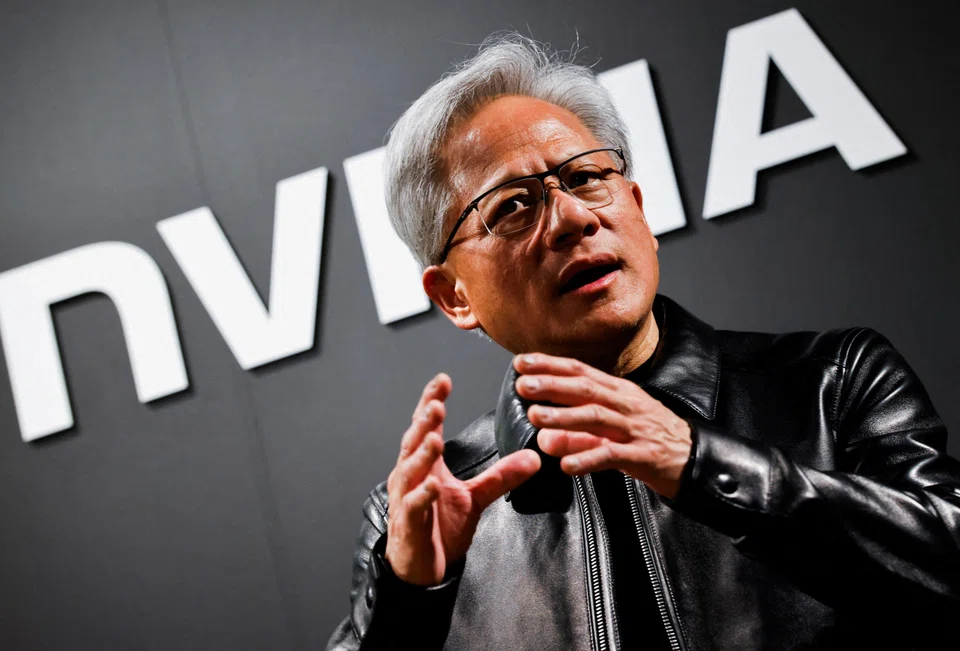
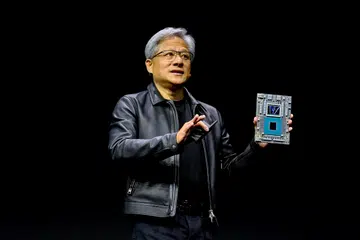
[SINGAPORE] When news of Jensen Huang’s extramarital relationship with an Nvidia executive broke earlier this month, it surprised me that many observers seemed to think he had finally crossed the line.
It was already clear by then that Huang had also been having an affair with a woman US authorities believed was a Chinese spy, and that he had misrepresented the nature of that relationship to senior officials at Nvidia for some time.
In my view, this was objectively much worse than an illicit dalliance with a subordinate. The alleged spy was linked to a major buyer of Nvidia chips in Singapore called Megaspeed, which had ties to Chinese companies. This naturally alarmed the US government, and has already led to tighter restrictions on Nvidia.
Last week, the US Commerce Department announced licence requirements for the export of advanced artificial intelligence chips for use in data centres providing remote computing power to China. Licence requirements were also slapped on the export of advanced AI chips to destinations with “unacceptable risk of diversion” – including Indonesia, Malaysia, Singapore, Brazil and Thailand.
These restrictions and the ouster of Huang – who had advocated for China to be allowed access to AI chips, and provided buyers of AI chips with financial support – have felt like a supply shock for the booming technology sector.
Nvidia’s shares sank a further 22.9 per cent last week, despite the company reporting robust third-quarter financial numbers and strong revenue guidance for 2027. Since the end of last month, when the spy scandal began making headlines, Nvidia’s shares have slumped 38.7 per cent.
The S&P 500 and Nasdaq 100 have fallen 8.8 per cent and 11.8 per cent, respectively, during the same period.
“Indispensable” CEOs
To be clear, I’m not suggesting that Huang should be excused for his affairs with employees of Nvidia – it later emerged that there was more than one.
Illicit relationships with customers, business partners or subordinates are effectively undisclosed conflicts of interests that have the potential to harm a company and its stakeholders. One might also argue that such lapses reveal character flaws that make CEOs unsuited for their roles.
Certainly, cultural attitudes towards this sort of behaviour seem to have become less forgiving. In recent years, major companies such as Nestle, BP, McDonald’s and Intel have given their CEOs the boot for relationships with subordinates.
Yet, Huang’s involvement with the alleged Chinese spy clearly had the potential to cause far more damage to Nvidia and its stakeholders than his affairs with employees – not least by putting all of them in the crosshairs of the US government.
This case is also perplexing as Huang’s exit from Nvidia appears to have weakened confidence in the company and wider AI ecosystem. Many investors, technology sector luminaries as well as Nvidia’s own employees are now calling for Huang’s return.
Nvidia has said it is not considering inviting Huang back.
The way I see it, market regulators and corporate governance experts should begin thinking hard about how seemingly indispensable corporate leaders such as Huang can be effectively checked; and how to ensure fast-growing companies in important new fields do not betray their stakeholders.
Anthropic’s share classes
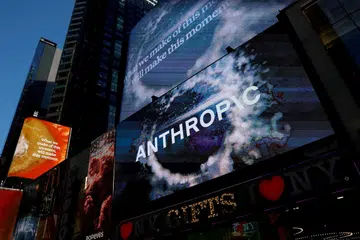
Part of the answer may come from the big AI companies themselves. Anthropic, for one, had some interesting things to say during the run-up to its initial public offering.
In a letter to prospective investors, the company’s founders extolled the potential of AI to boost productivity and accelerate the pace of medical breakthroughs, while also warning of the immense harm the technology may inflict on humanity.
“AI has unusually large externalities, both positive and negative. Cultivating the positive externalities, and defending against the negative ones, is to some degree in tension with the natural incentives of a for-profit company, and with the standard governance structure of a publicly traded company,” the founders said.
To address this, Anthropic was formed as a public benefit corporation, which requires its board to weigh the interests of its shareholders against its public benefit mission and the interests of those materially affected by its conduct.
Within that structure, different groups of stakeholders are accorded influence and interest through five different classes of shares.
Most of the control lies with holders of its Class F and Class T shares. The single Class F share, held by an entity controlled by Anthropic’s seven co-founders, has 50.1 per cent voting power.
On the other hand, an independent body called the Long-Term Benefit Trust (LTBT), holds Anthropic’s single Class T share, giving it the power to appoint four of the seven members of the company’s board.
Anthropic will also issue Class E shares to its non-founder employees over time, giving them a say on some governance matters – including the appointment of one Class T director under certain circumstances.
All the economic benefits of the company belong exclusively to holders of its Class A and Class N shares, though. The difference between the two is that the Class N shares have no voting rights, except where required by law.
The Class N shares are held by Anthropic’s public benefit fund and some strategic partners, such as Amazon and Alphabet. The company plans to contribute 2 per cent of its equity to its public benefit fund for every sustained 50 per cent increase in its share price.
The Class N shares convert to Class A shares when transferred by their holders to non-affiliated parties.
Improve standard practices
Investors who resisted the introduction of dual-class shares in Singapore may well be appalled by Anthropic’s multiple share classes.
Not only will Anthropic’s founders maintain majority voting power even if they dispose of their shares, the trustees of the LTBT may appoint directors opposed to the company maximising its profits. Holders of the Class A shares will also face dilution from the ongoing issue and conversion of Class N shares.
However, Anthropic’s founders pointed out in their letter that the size and structure of the company’s plan to allocate equity to its public benefit fund is “not outside the range” of executive compensation packages at some companies.
It may also be desirable, in my view, for independent bodies of various stripes to have some influence over corporate behemoths that bestride the world.
Anthropic may be more aware of its own power than many other companies in the same league, because of the nature of its business and the fact that it has garnered a US$1.5 trillion valuation within only six years of its founding.
By contrast, Nvidia attained a market capitalisation of US$1 trillion only in 2023, three decades after it began operating. While its CEO Huang should be proud of his achievement, his stunning fall from grace is perhaps a sign that the company needs to be run differently now.
Anthropic’s novel governance framework may well not be the answer, of course – indeed, the company itself says it is a work in progress. Yet, its attempt to improve on standard corporate practices is probably something other companies should emulate as they grow and evolve.
“We will make mistakes, and we expect to learn from others as much as they learn from us. If our competitors adopt our practices and improve on them, we consider that a success,” its founders said.