

OCBC-GE deal: Here’s what I got wrong
While the path to a delisting for Great Eastern could be more complicated than it was for Boustead Projects, it would be unwise to assume SGX RegCo will do nothing

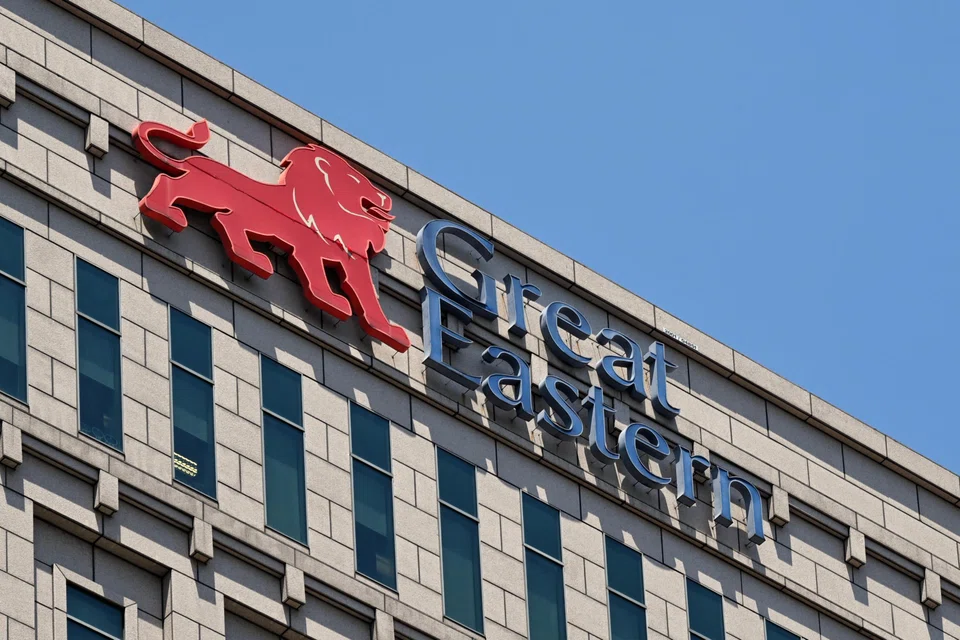
THIS column received some negative feedback after it said on Jun 17 that minority shareholders of Great Eastern might eventually get an exit offer that is higher than the current offer from OCBC, given the precedent set by the delisting of Boustead Projects at the direction of Singapore Exchange Regulation (SGX RegCo).
These critics said I was potentially misleading shareholders of Great Eastern by making this comparison, because the offer for the insurer will probably not play out exactly the way the offer for Boustead Projects did.
Importantly, they pointed out that the offeror in the Boustead Projects case obtained more than 75 per cent of the shares held by independent shareholders at the close of its offer. The offeror for Great Eastern is unlikely to hit that threshold.
First, let me say my detractors are right. Great Eastern will probably not be directed to delist in exactly the same manner as Boustead Projects.
Yet, even if the precise form of SGX RegCo’s remedial action is unclear, the tighter rules it has implemented on voluntary delistings in recent years, and the statements it has made about those rules, suggest it is unwise to assume it will do nothing.
Moreover, the low likelihood of OCBC obtaining 75 per cent of Great Eastern shares held by independent shareholders underscores the comparatively strong influence that minority investors may have in determining the terms of any eventual delisting exercise.
SGX RegCo said in 2019 it would allow a company that is the subject of a general offer to delist only if the offer is “fair and reasonable”, and the offeror has obtained at least 75 per cent of the shares held by independent shareholders.
Boustead Projects became a test case of sorts after an offer last year at S$0.95 per share, which its independent financial adviser (IFA) had said was “not fair but reasonable”, left the company in breach of the minimum free float requirement.
Minority shareholders who had not accepted the offer were left in limbo as trading in the company’s shares was suspended.
SGX RegCo allowed Boustead Projects some time to restore its public float. As the free float was not restored, SGX RegCo directed Boustead Projects to delist; and ordered the company and the offeror to come up with a “fair and reasonable” exit offer.
Boustead Singapore subsequently made an exit offer for Boustead Projects at S$1.18 per share. The company said when it announced the exit offer that it would be delisted regardless of the final level of acceptances.
Trading in Great Eastern’s shares is set to be similarly suspended after OCBC’s offer for the insurer closes on Jul 12. As at Jun 26, OCBC had amassed 90.5 per cent of Great Eastern’s shares – leaving less than 10 per cent in the hands of the public.
However, Great Eastern cannot be delisted in conjunction with OCBC’s current offer of S$25.60 per share. In the first place, Great Eastern’s IFA has said the offer is “not fair but reasonable”.
Also, in order to obtain 75 per cent of Great Eastern’s shares held by independent shareholders, OCBC (and its concert parties) would have to increase their stake in the insurer to nearly 97.2 per cent by the close of the offer.
This may not be achievable if some key minority shareholders of Great Eastern – who collectively hold more than 3 per cent of its shares – do not accept the offer.
As a result, the path to a delisting for Great Eastern could be more complicated than it was for Boustead Projects; and investors who hold out may have to endure a longer trading suspension.
Holding above offer price
SGX RegCo highlighted in its Regulator’s Column in May 2020 the risks investors face when companies that are the subject of a general offer lose their free float but the requisite conditions for a delisting – including the 75 per cent acceptance condition – have not been met.
To mitigate the risks, the frontline regulator said documents relating to these general offers should contain appropriate disclosures to highlight the risk of a prolonged trading suspension. It also said investors should be notified when the offeror has achieved the 75 per cent acceptance condition, and when the issuer has lost its free float.
Such disclosures will not placate investors who feel they are being lowballed by the offeror, of course. Indeed, warnings of a prolonged trading suspension may just make them feel they are being bullied into accepting an inadequate offer.
This is why the action SGX RegCo took in the Boustead Projects case was noteworthy. It demonstrated the regulator’s capacity and inclination to ensure that the principles of its rules on voluntary delistings are observed even after an issuer loses its free float.
It is perhaps also why Great Eastern’s share price has been holding above S$25.60 even after OCBC said on Jun 14 that it would not revise its offer price.
My bet is the market’s apparent confidence that Great Eastern will not be delisted without an appropriate exit offer will prove to be well founded, and that local investor confidence and expectations will be further enhanced by this episode.
The exit offer for Boustead Projects only needed to be fair and reasonable. Not surprisingly, it was set at the lower bound of its IFA’s estimated valuation range of S$1.18 per share to S$1.42 per share.
Any exit offer for Great Eastern will need to breach the 75 per cent acceptance threshold on top of being fair and reasonable. This suggests key minority shareholders of Great Eastern will have to be engaged about the terms of any eventual delisting exercise to ensure its success.
No certainty of exit offer
What does all this mean for investors in Great Eastern?
To be clear, there is no certainty that minority shareholders who hold out will eventually benefit from a higher exit offer.
Great Eastern could try to restore its free float by issuing new shares to investors in order to lift its trading suspension. The result could be that the market price of Great Eastern shares slides back down to where it was before OCBC announced its offer.
Minority investors of Great Eastern should also be prepared for things to change quickly as the closing date of OCBC’s offer approaches. While many investors may hold the view that the offer price of S$25.60 does not adequately reflect the value of their Great Eastern shares, some may choose to sell in the market or accept the offer in order to avoid the looming trading suspension.
Conversely, some long-term investors might view the next two weeks as their last chance to buy Great Eastern shares at a big discount to its embedded value, which stood at S$36.59 per share as at Dec 31.
On Friday (Jun 28), Great Eastern shares closed up 0.1 per cent or S$0.02, at S$25.66.
The writer owns shares in Great Eastern and OCBC
Meet Ben Paul and his guests at Mark to Market ‘Live’ 2024, taking place at Guoco Midtown Network Hub on Saturday, Jul 13, from 10 am to 12.30 pm. Register now at bt.sg/m2m24.






