

Olympic Esports Week: Can a cross between Olympic sports and online gaming lure an international audience?
Bryan Kow
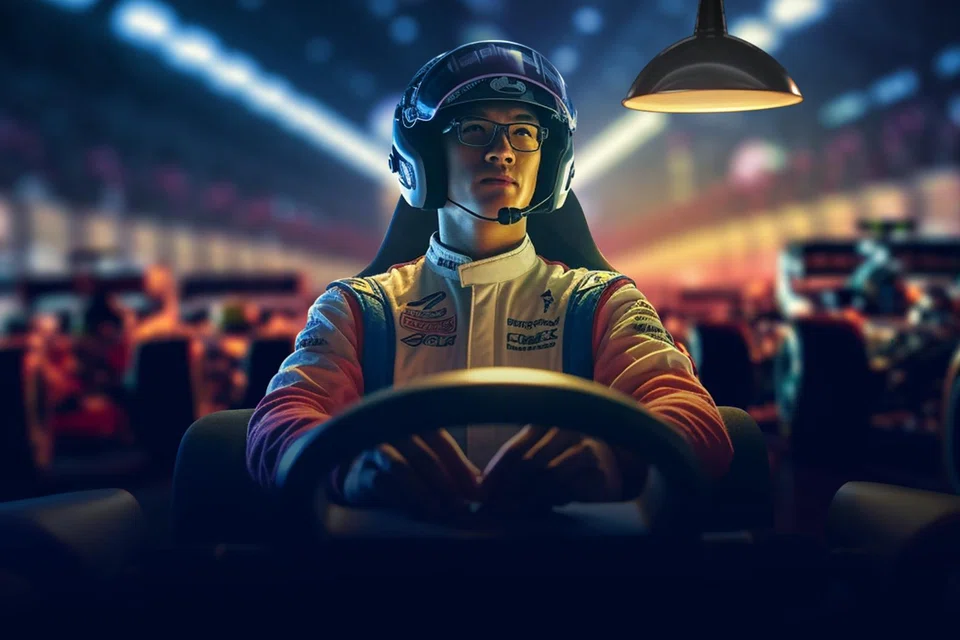
GROWING up, Ar Muhammad Aleef Mohamed Rafik was a huge fan of Formula One and always wanted to race cars.
During the Formula One Singapore Grand Prix in 2008, Aleef had the chance to test-drive a simulator. The experience sparked his interest in virtual motorsports.
“The cheapest way of learning how to drive cars was through games,” he said.
Aleef got his first taste of competitive virtual racing in 2011. He decided to turn professional in 2018.
Since then, he has participated in various competitions locally and internationally. At the recent 2022 FIA Motorsports Games in France, Aleef finished seventh out of 57 nations in the esports event.
This year, Aleef will be competing in PlayStation 5 racing game Gran Turismo on home turf at the finals of the Olympic Esports Series – a global virtual and simulated sports competition created in collaboration with the International Sports Federations.
The in-person live finals of this year’s series are set to be the highlight of the inaugural Olympic Esports Week (OEW), which takes place in Singapore from Jun 22 to 25.
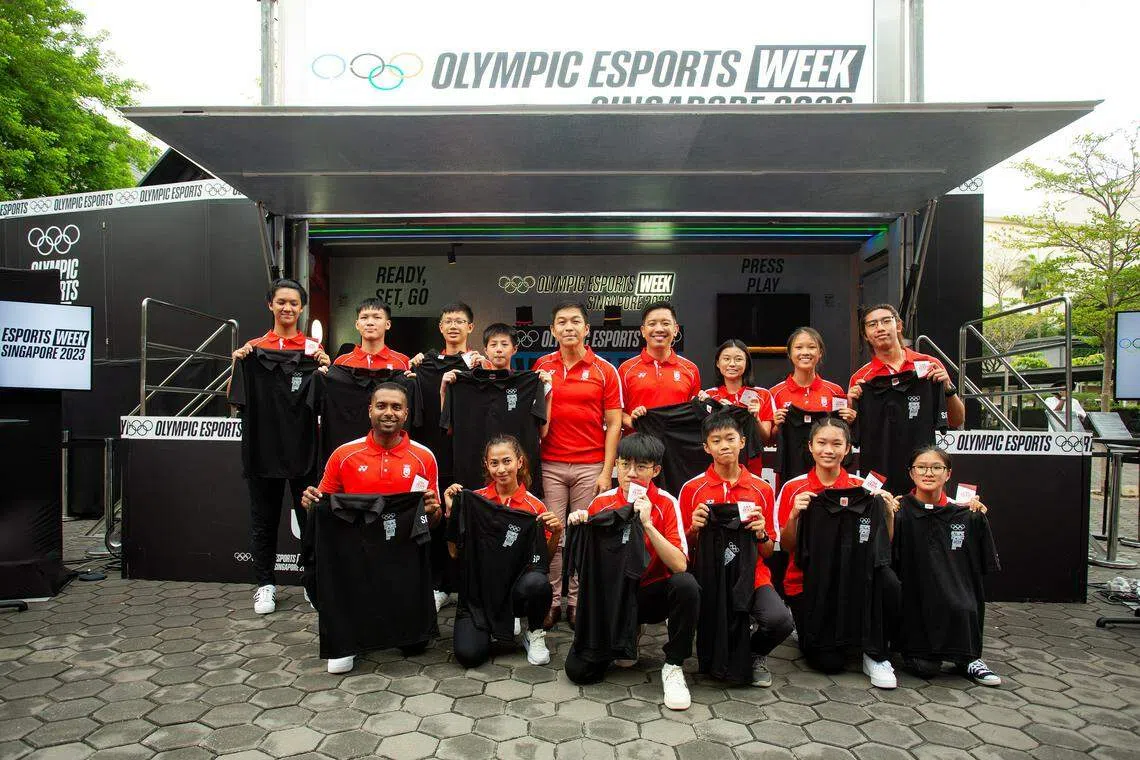
OEW will mark several firsts – not just for Singapore, but also for the esports world. The event bears similarities with the Olympic Games, but players will compete virtually.
With the exception of chess, the 10 virtual sports to be featured at the OEW finals were selected based on existing Olympic sports.
Two of the titles – Tic Tac Bow and Virtual Taekwondo – were developed by local game developers, said OEW’s Local Organising Committee (LOC) co-chair Roy Teo.
As at May 27, 14 players across six virtual sports have been selected to represent Singapore at the finals. There could be further additions to the lineup as final qualifications are still ongoing for the remaining virtual sports.
Apart from competitive matches, other activities at OEW will include exhibitions of new technologies and panel discussions.
Virtual sports vs physical sports
Although the concept of virtual sports is not new, competitive formats have only started to gain popularity recently. Some of the events taking place this year include the Eurosaf eSailing European Championship and the UCI Cycling Esports World Championships.
Online chess garnered a more fervent following in 2020 due to the success of period chess drama miniseries The Queen’s Gambit, and fuelled by the pandemic, said chief executive of the Singapore Chess Federation (SCF) Kevin Goh. “This led to the growth of a huge influx of online content creators who provide educational and entertaining commentary about the game.”
As for virtual motor sports, the pandemic placed the limelight on enthusiasts who have been playing for leisure with their friends.
Since 2021, Motor Sports Singapore (MSS) has been working with local esports promoters to grow the online community in games such as Gran Turismo and iRacing, said its vice-president for digital motor sports Alvin Choong.
“While we used to have only a handful of competitive players in the past, the pool has definitely grown bigger in the last few years,” added Choong.
The only combat sport to feature at the OEW is Virtual Taekwondo.
The game, first unveiled in 2021, was developed from a partnership between World Taekwondo and Singapore-based Refract Technologies.
Athletes compete in non-contact, one-to-one sparring matches. Each athlete is equipped with real-time motion tracking technology that monitors their body movements on a large screen.
Whenever one athlete delivers a kick or punch, it will inflict damage on the health bar of the opponent’s avatar, akin to the video game Street Fighter.
The biggest difference between taekwondo and Virtual Taekwondo is the lack of a contact point, said former Singapore taekwondo athlete Ng Ming Wei.
Ng previously won a gold medal in the 2017 Commonwealth Taekwondo Championships and a bronze medal in the 2015 South-east Asian Games.
Speaking to The Business Times on the sidelines of an OEW community event he was involved in, Ng said there is an added element of safety in Virtual Taekwondo due to the absence of physical contact.
“This helps people from different backgrounds, skill levels and genders to compete together, as they are not really attacking each other,” added Ng.
He believes Virtual Taekwondo could serve as a training tool for taekwondo athletes, especially those recuperating from injuries: “They can train even if they are injured, through simulations… rather than just doing conditioning or rehab exercises.”
Though Ng admits Virtual Taekwondo does not capture the same experience of being in a real taekwondo match, he is optimistic there is potential for the game to improve once it is rolled out to more people.

Unlike Virtual Taekwondo, chess has been played widely online for a long time.
SCF’s Goh said there have been online chess servers since the late 1990s for players all over the world to compete virtually.
Tin Jingyao – Singapore’s top-ranked chess player – will be competing at OEW, where games will be played on the Internet chess platform Chess.com.
Although there is not much difference in the level of competition between virtual chess and over-the-board chess, Tin said playing virtually allows for interesting formats.
For instance, virtual chess is often used for speed chess. In this format, players are given less time to consider their moves.
Speed chess “tends to be more exciting to watch, so hopefully that can help spark some interest”, said Tin.
Challenges
The term “esports” is more commonly associated with multiplayer video game competitions. Among the more popular esports tournaments that take place are the multiplayer online battle arena video game Dota 2 and the first-person shooter Valorant, both of which have attracted large viewer followings.
The games being played at OEW, however, are likely to target a separate fanbase from those of traditional esports titles, said Roy Kek, chief executive of Emerge Group.
Emerge, established in 2020, is a commercialisation and digitalisation partner for esports teams and content creators.
One of the challenges Kek foresees in the lead-up to the OEW is getting esports fans excited about virtual sports.
“There are going to be racing games or reaction-based games, but it is not something that is up everyone’s alley,” said Kek.
To generate interest and awareness in the lead-up to OEW, the LOC has organised pre-event festivities and community activations. At the core of these efforts is a roving trailer around Singapore as part of the 50-day countdown to the event, said LOC co-chair Mark Chay.
At the trailer, visitors can try out games such as Just Dance. They will also get to listen to insights from players and professionals in the esports industry, such as streamer and creator Denise Teo, better known by her online alias, supercatkei.
Another concern lies in the selection of games for OEW.
While titles such as Just Dance are pay-to-play and already have a wide following, others such as Tic Tac Bow and Tennis: Clash are free mobile games.
A check on the Google Play Store and the Apple App Store reveals several negative reviews from players of these games.
Recent reviews for Tic Tac Bow labelled the game a “buggy mess” and “actually terrible”, with major server issues preventing it from running properly. This led some of the game’s players to question its suitability for an Olympic event.
Woody Butler – known by his online moniker wTheRockb – had built unofficial Tic Tac Bow gaming communities on messaging platform Discord and social news site Reddit where players could share strategies with each other.
Butler told The Business Times he was surprised about the game’s inclusion in OEW as it did not simulate real-life archery. He noted that four of the six finalists at the Olympic Esports Series were from his gaming community: “I will watch it now, to have some laughs with friends in our community, and out of respect for the players who qualified.”
For Chay, organising the maiden edition of OEW comes with the challenge of not having any past events from which to draw reference.
He added, however, that the International Olympic Committee and local partners have been sharing their expertise and knowledge on best practices with him. “We are confident of being in a good position to highlight Singapore’s capabilities to the esports world this June.”
A boon for both esports and sports
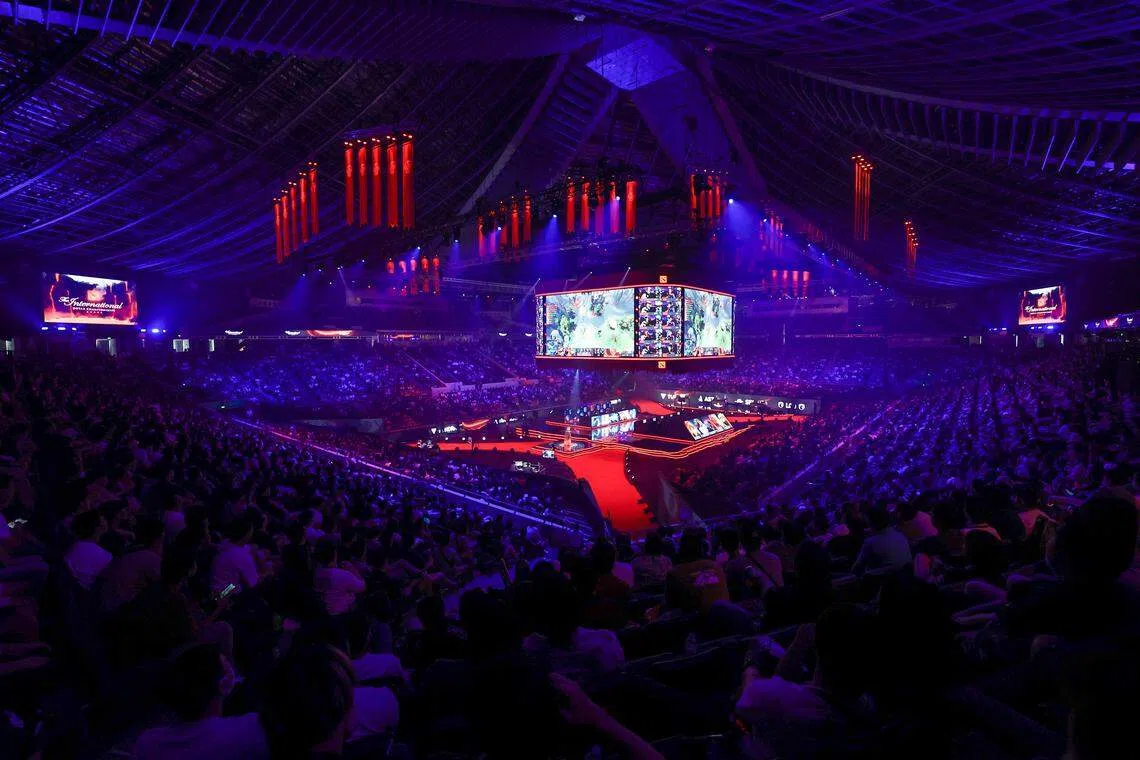
The Republic has played host to several high-profile esports events in recent years. Among them are The International 2022, a Dota 2 world championship tournament with a multimillion-dollar prize pool; and the Mobile Legends Bang Bang M3 World Championship in 2021.
Deloitte’s South-east Asia sports business group leader James Walton said Singapore’s success at hosting such events has contributed to a growing awareness of esports locally.
He cited Singapore’s world-class telecommunications infrastructure and international-standard meeting and convention facilities as some of the country’s competitive strengths.
“Hosting the Olympic Esports Week will further solidify Singapore’s position as an international sporting hub for the most popular and emerging sports, which in turn can boost tourism and the economy,” added Walton.
Emerge’s Kek said the association of esports with the Olympics is a big step forward for the industry: “As the first (event) of its kind, it’s a good way for us to get a case study to see how well it turns out and whether fans are open to the idea.”
Singaporean Street Fighter player Brandon Chia, meanwhile, believes OEW will promote the take-up of physical sports.
For instance, players of virtual taekwondo might develop an interest in martial arts once they have an “in-game feel” of participating in a taekwondo match.
“This kind of exposure may also bring some fighting game players to try out actual martial arts,” added Chia.
LOC’s Teo expects an increase in the number of games developed by local companies with the growth of the local esports fraternity.
“We have started off on the right foot with two locally developed game titles to be featured at the OEW. This has helped to place Singapore on the global map of the esports world, and we will continue to grow our presence,” added Teo.
As virtual sports see wider adoption, LOC’s Chay believes it is only “a matter of time” before the price of technologies being used for the games falls and becomes more accessible to the public.
For youths and adults who are at an experimental phase of their interest, MSS’ Choong said OEW could be an opportunity to gain valuable insights into a sport.
The event could also help parents understand that motor esports is not purely a computer game, but involves technical knowledge and skills in areas such as driving and engineering as well.
“The skills gained can and will be valuable in their daily life in the future.”
As for Aleef, he is keen to observe champions from all over the world race at OEW.
Competing in Gran Turismo is new territory for him, as his past competitions have usually been on the iRacing and Assetto Corsa platforms.
He typically trains for about 50 hours a week, and has been having coaching sessions with a professional Gran Turismo player based in Malaysia to prepare.
Being able to compete in Singapore brings him an extra sense of pride: “I’m going to train like I want to win. If I don’t train that way, then there’s no point in me joining it.”
TRENDING NOW

Britain’s mansion tax shows the difficulty of targeting wealth

Once staunchly pro-China, Malaysian Chinese businesses are now distancing themselves from Beijing

The only common thing in S-E Asia is that we all eat rice: Cisco’s Asean president

Singapore data centre operator DayOne opts for US IPO at likely US$20 billion valuation

