Olympic-sized sporting challenge facing France
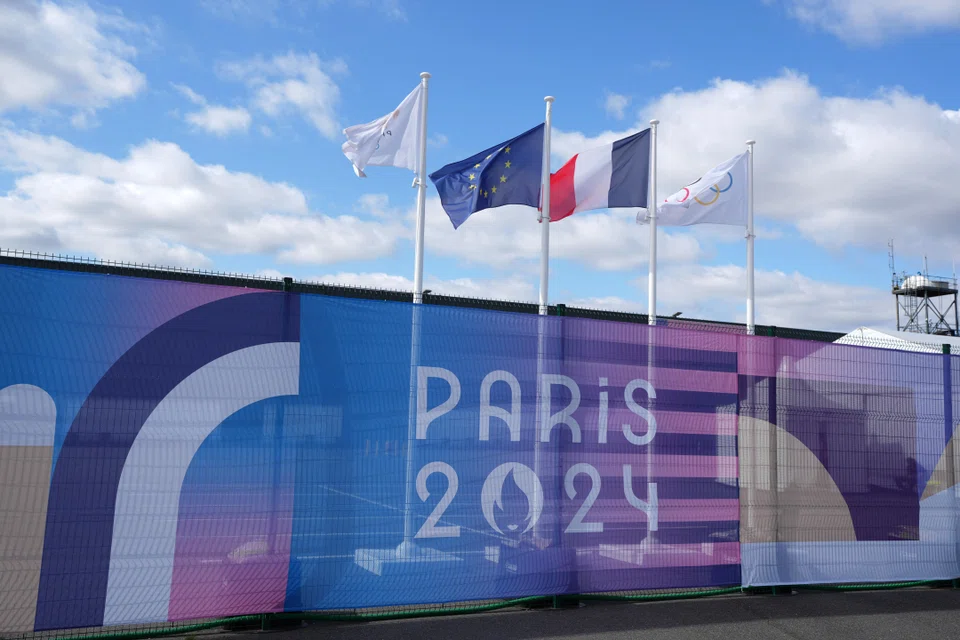
MANY governments still perceive that hosting major sporting contests commands significant prestige. Yet that assessment may be sorely tested in July and August with the huge challenges facing the upcoming Olympics in Paris.
The event is facing a wide array of risks, including major security concerns. So much so that significant changes have been made already, including scaling back the original opening ceremony arrangements scheduled to take place along the Seine on Friday (Jul 26).
The initial plan of up to 600,000 people occupying first-come-first-served viewing locations for an event has been axed. There will now be an invite-only occasion for around 300,000, although further scaling back is possible.
Moreover, the Games have also hit significant controversy for religious reasons. One example is that the Paris Olympics will enforce a ban on Muslim athletes wearing sports hijabs or any form of religious headgear in sports such as volleyball, football, and basketball.
The decision has been slammed by bodies such as NGO Amnesty International for undermining inclusivity and discriminating against Muslim athletes. Amnesty asserts that “French authorities made it emphatically and unashamedly clear... that their proclaimed efforts at improving gender equality and inclusivity in sports do not apply to one group of women and girls, those Muslim women and girls who wear religious head coverings”.
To cap all this off, France also still has a caretaker government after the recent elections which saw no majority for any single bloc. Amid continuing infighting, French President Emmanuel Macron has called for a “political truce” during the Olympics, potentially delaying the appointment of a prime minister and the formation of a new government till late summer or autumn.
Paris is only the latest big city to be plagued by political plus wider risks and controversies underlining the potentially massive challenges associated with such mega sports festivals nowadays. Little wonder that the operating costs of running the Games, including maintaining security, are so huge.
This experience was most recently faced by China. While taking much pride in the fact that Beijing became the first city to have hosted both the Summer and Winter Olympics, China’s 2022 winter event was threatened by coronavirus outbreaks across the nation just days before the Chinese New Year, the country’s annual travel holiday.
Beyond the pandemic, however, the Winter Olympics also faced a diplomatic boycott by multiple Western countries, including the United States, the United Kingdom, and Australia over concerns about human rights in Xinjiang. This heated topic is also one which many non-governmental organisations focused on, targeting brands that endorsed or sponsored the Olympics.
While the challenges facing the 2022 Beijing Winter Games may have been the largest of any sporting event of modern times, they were prevalent too at the Olympics in Japan held in 2021. This event was postponed for a full year from the original date in 2020 due to Covid-19, after which a state of pandemic emergency in Tokyo and nine other regions in the weeks before the event meant that overseas fans were barred from attending.
Key members of the Tokyo organising committee were caught in a scandal, while polls at the time showed that a solid majority of Japanese were still opposed to the event going ahead. One of the biggest sponsors, Toyota, pulled its TV ads, and there was also a host of athletes testing positive for coronavirus.
If one looks back to almost a decade ago, the Brazil 2016 Summer Olympics offers another stark example of the pitfalls of hosting major sporting events. When Rio won in 2009 the right to host the Games, the national economy was booming and the country was enjoying significantly enhanced international prestige as a leading emerging market within the Brics (named after members Brazil, Russia, India, China and South Africa) group of nations.
By 2016, however, Brazil was mired in a political crisis surrounding the impeachment of then president Dilma Rousseff, and the worst recession in decades that forced significant spending cuts to the Olympic budget. Further, more than 100 prominent doctors and professors wrote an open letter to the World Health Organization asking for the Games to be postponed or moved from Brazil “in the name of public health” in light of the then widening Zika outbreak which, prior to the Covid pandemic, was the worst health crisis facing Brazil since at least 1918, impacting many thousands of people.
The problems afflicting the 2016 Games underline the massive challenge and expense of hosting such mega tournaments. For instance, Brazil spent at least US$10 billion on the event, reported to be in excess of any revenue it could generate, especially as many tourists were put off from travelling to the country because of the Zika virus.
Moreover, it is not just the Olympics facing these challenges. Take the example of the Euro 2016 football championships, awarded to France to great fanfare in 2010 by Uefa, but which took place in a country operating under an official state of emergency following the 2015 terrorist attacks in Paris.
With the US State Department then issuing a warning that the event could be a target for further terrorist atrocities – only the third time in some 20 years that such cautionary advice had been issued by the US government for European travel – French authorities deployed some 90,000 police, soldiers and security guards, comparable to the levels of security at the forthcoming Olympics.
So despite the fact that hosting major sporting events continues to be seen as a source of national pride, growing evidence indicates that they do not generally provide a substantial boost to national economies from stimuli such as capital investment and tourism. For instance, many of the visitors tend to come from the host country whose spending often simply displaces that on other domestic leisure services. Moreover, the legacy value can be limited too, with many facilities built at high cost simply becoming “white elephant” projects falling into disuse.
Despite all these pitfalls, however, several cities have expressed interest in hosting the 2036 Summer Olympics, following Paris in 2024, Los Angeles in 2028, and Brisbane in 2032. Meanwhile, a few countries have already expressed firm intent to host the 2030 Winter Olympics, with a vote to approve the bids due to take place on Jul 24, building from Milan and Cortina d’Ampezzo hosting in 2026.
For the foreseeable future at least, what this collectively underlines is that the perception that hosting such sporting events is a major symbol of national prestige will continue to supersede the headaches that can come with staging them.
However, that tide may yet turn in the opposite direction, and the next few weeks in France could potentially be key to that calculus.
The writer is an associate at LSE IDEAS at the London School of Economics
TRENDING NOW
He built the Vingroup empire. Now South-east Asia’s richest man is handing some key roles to his sons
Fed hike throws Singapore banks a margin lifeline; UOB likely to benefit more
Luxury properties seized in S$3 billion money laundering case fail to sell at auction
US stocks: Tech leads Wall Street to higher close as oil eases, Treasury yields dip