

Only Harris will deliver shared prosperity
Donald Trump’s discredited protectionism would benefit the few at the expense of the many
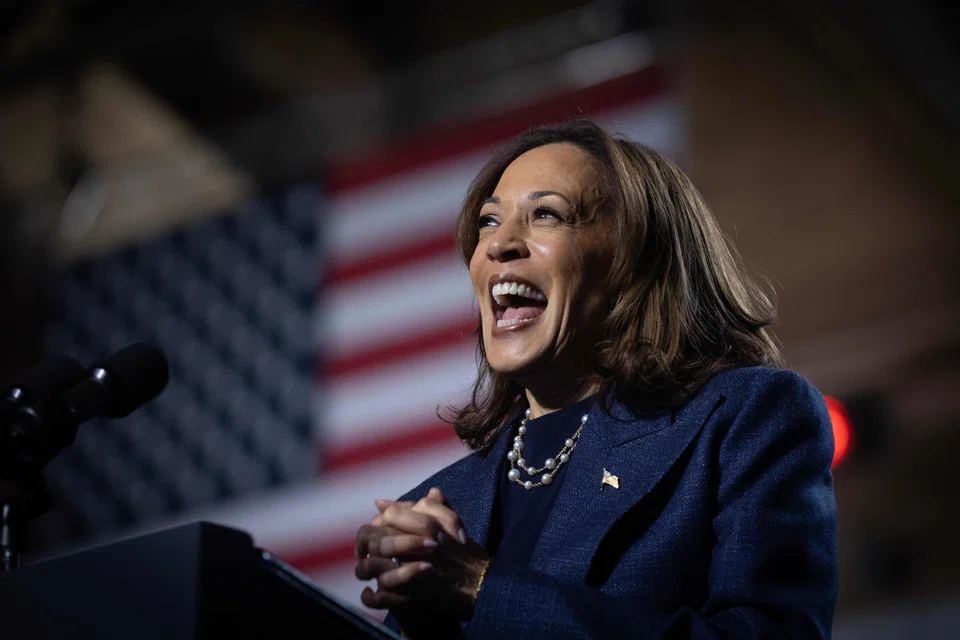
WHICH US presidential candidate – Kamala Harris or Donald Trump – is proposing economic policies that are more likely to generate shared prosperity and strengthen America’s national security? I recently joined 22 other Nobel laureate economists in signing an open letter with a simple answer: Vice-President Harris. Only Harris has a coherent programme of encouraging science, making it easier to commercialise innovations, and funding new business in all parts of the country.
In contrast, while Trump claims to speak for people who feel that they have been left behind by globalisation, his signature policy – much higher tariffs – would hamper innovation and impede the creation of good new jobs. Extreme protectionism has been tried many times in the modern world, and it always proves disappointing and incites debilitating responses from other countries.
If Trump follows through on higher tariffs, the prices for goods consumed by lower-income people – including his supporters – would rise dramatically. In the best case, his words are empty and worthless. But any president has the power to start a global trade war with America’s European and other trusted trading partners, which would be disastrous for domestic prosperity and national security.
In A New Way Forward for the Middle Class, the Harris-Walz campaign lays out their vision for technology-driven job creation in chapter nine, “Invest in American Innovation and Industrial Strength Powered by American Workers”.
The key idea is to encourage investment in a wide range of cutting-edge technologies such as “biomanufacturing, artificial intelligence (AI), aerospace, data centres and clean energy”, while encouraging the modernisation of traditional sectors, such as iron and steel.
If the US does not lead the way on these technologies, other countries will. Given that America’s most likely rival for global technology leadership for the foreseeable future is China – with a regime not consistently friendly to the US – nothing is more important to US national interests than owning the frontier of invention.
The Harris-Walz plan also puts admirable emphasis on supporting productive investments in all parts of the country, including in “longstanding manufacturing, farming and energy communities.” This is an entirely realistic vision.
As Jonathan Gruber and I argued in our 2019 book, Jump-Starting America, there are deep pockets of technical talent in all parts of the country – and many places that would welcome more good jobs. The best way to create such jobs is to turn new ideas into new companies, and then scale up those activities, while retaining as much employment as possible in the places where the innovation actually takes place.
With regard to AI, the Harris-Walz campaign also has the right approach: scale up the National Artificial Intelligence Research Resource, with the goal of providing broader access to AI tools. Whereas the current market favours applications that enhance the productivity of highly educated people, there is a real possibility to develop pro-worker AI, boosting the productivity and pay of all Americans, including those without a college degree.
But such an approach requires vision, resources and investment – and a catalyst. With the Chips and Science Act, along with the tax credits in the Inflation Reduction Act, the Biden-Harris administration showed that it knows how to encourage investment in innovation and manufacturing.
In contrast, Trump’s tariff proposals resemble the failed import-substitution policies that many Latin American countries have adopted over the past 50 years. The logic is always the same: imposing punitive taxes on imports will “protect” domestic industry, thereby boosting employment, raising wages or both.
But the reason countries such as Mexico, Argentina, and Brazil abandoned these policies is also essentially the same. Instead of encouraging investment and expansion, tariffs allow incumbent firms to rest on their laurels. Without competitive pressure, there is no push to expand and no increase in employment.
Moreover, this kind of protectionism often is accompanied by other measures that freeze industrial structures in place. A few billionaires may become richer, but most people do not do well under such an arrangement.
The biggest danger posed by Trump is to democracy. He showed this when he refused to accept his defeat in a free and fair election in 2020, and incited his supporters to attack Congress. Undermining democratic institutions is not only a dangerous abuse of power, it also amounts to directly undermining the basis of Americans’ economic well-being.
All democracies need to deliver on shared prosperity, or risk popular frustration, backlash and increasing political polarisation. And recent decades have undoubtedly undermined the middle class, as Daron Acemoglu and I argued in our recent book, Power and Progress. But the answer is not to attempt to freeze today’s industries and jobs in place. This will prove futile at best.
What America should do is what America has long been good at: invent the future, create the well-paying jobs (for people with all levels of education) those inventions make possible, and sell the resulting goods and services to the world.
To do this, America needs a strong democracy, redoubled support for invention, and government policies that support the creation of new jobs throughout the country.
Harris’ plan would deliver on exactly this. Trump’s discredited protectionism, on the other hand, would deliver prosperity for the few, sustained by silencing the many. PROJECT SYNDICATE
The writer, a 2024 Nobel laureate in economics and a former chief economist at the International Monetary Fund, is a professor at the MIT Sloan School of Management and a co-author (with Daron Acemoglu) of Power and Progress: Our Thousand-Year Struggle Over Technology and Prosperity (PublicAffairs, 2023)
TRENDING NOW

ComfortDelGro appoints two new independent directors

Once staunchly pro-China, Malaysian Chinese businesses are now distancing themselves from Beijing

NoonTalk needs continued financial support from CEO Dasmond Koh, auditors warn

DP Architects sets the benchmark for sustainability disclosure and design

