Our mysterious sense of smell and how AI can sniff out its secrets
It’s right under our noses, but olfaction may be the most underrated of our senses

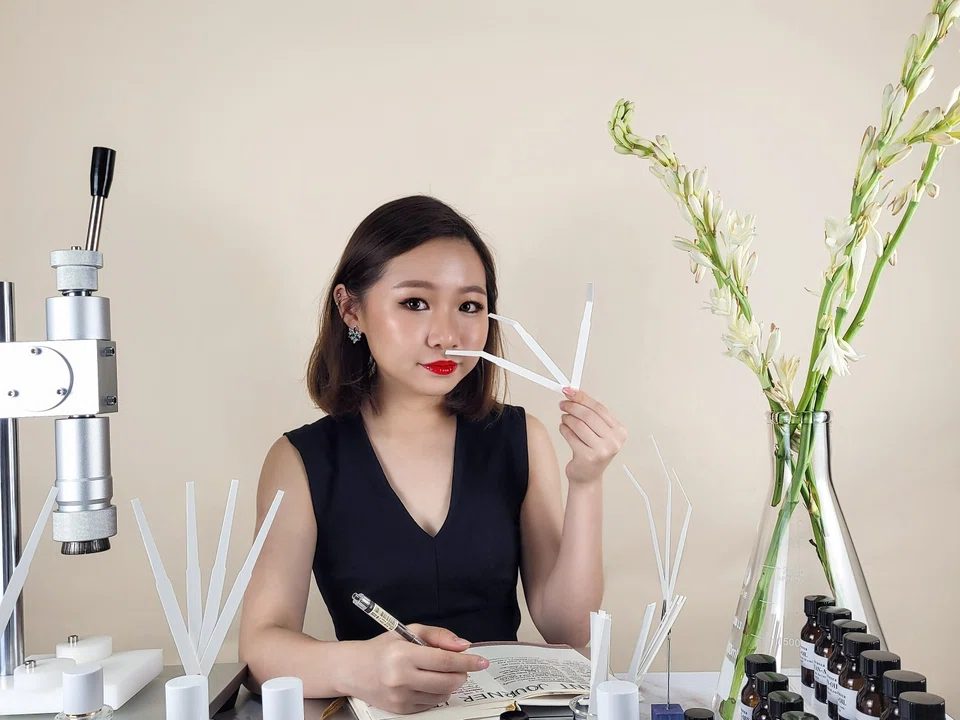
IMAGINE the mild scent of pandan leaves and light notes of jasmine. What comes to mind?
A whiff of this instantly reminds me of Bangkok. To many others, it smells like a holiday in Bali, says Joyce Lian, who created a perfume with this fragrance.
Yet Lian herself – who frequents cafes for scent inspirations – was thinking of dessert when concocting the fragrance.
“It’s inspired by pandan chiffon cake, light and fluffy like clouds,” says Lian, the founder of local fragrance maker Scent Journer. Fittingly, that perfume is named “Clouds in Heaven”.
“Out of all the cakes, pandan chiffon cake is very light and airy, which is something you really want to wear in the hot and humid climate of Singapore,” says Lian. To complement the pandan scent, she weaved in jasmine and tuberose for floral, creamy notes.
Smell may be the most underrated and least understood of our five senses. How a single scent can evoke varied reactions is a fascinating mystery – one that olfactory scientists are still trying to crack.
The human nose can distinguish over one trillion smells. But research suggests that no two people perceive an odour the same way, due to genetic differences in our 400-odd scent receptors.
Trained in perfumery and chemistry, Lian is passionate about how scent and mood are intertwined. This phenomenon could be due to how closely the olfactory bulb – the part of the brain that handles smell – is located to the amygdala and hippocampus, which process emotions and memory, respectively.
“The olfactory bulb is connected to the emotional part of the brain, and it has the shortest and most direct route compared to our other senses,” Lian says.
It is thus believed that the brain stores information on smells, emotions and memories together. Childhood is when you create “the basis for smells you will like and hate for the rest of your life”, according to another scent expert. This could be why our sense of smell is so deeply personal and often linked to nostalgia.
Teaching computers to smell
Researchers have long been curious about olfaction, but studying it is notoriously difficult, as science writer Ed Yong notes in his book on sensory biology, An Immense World.
Vision and hearing are far more objective – colours can be mapped onto an RGB scale, while sounds can be measured in frequency and loudness. “Such predictability simply doesn’t exist in the realm of smells. The variation between possible odorants is so wide that it might as well be infinite,” he writes.
In languages like English, our vocabulary is so limited that we’re often describing smells using other smells – like a colleague of mine who says that chamomile tea smells like socks. Even by examining the chemical structure of a molecule, you can’t predict what smell it will emit.
“We know why an apple looks red, we know why the crash of a cymbal is bright and loud, but why don’t we know why a molecule smells of cut grass, or cinnamon, or nothing at all,” olfaction expert Alex Wiltschko notes in a recent blog post.
Wiltschko is trying to solve this very problem. Using an algorithm called a graph neural network, he and other researchers built a model that can map the chemical structure of a molecule to words describing how it smells, such as “fruity”, “cooling” or “fishy”.
By simply examining the chemical structure of various samples, the model was able to successfully predict how a panel of humans would describe its smell, according to a research paper the team published in the journal Science on Aug 31.
This has real applications in the fragrance business. Wiltschko is chief executive of Osmo, a startup spun out from Google with the esoteric mission of “giving computers a sense of smell”.
It is focused on expanding the map of smells and using this data to create the next generation of aroma molecules. The company hopes to use artificial intelligence (AI) to revolutionise olfaction in the same way that it transformed drug discovery.
“(We) see AI augmenting the role of synthetic chemists and master perfumers, the scent hunters who comb through myriad molecules to create the scents that are an integral part of our lives,” says Wiltschko in his blog post.
Such efforts to digitise smell could change our relationship with this elusive sense, and shed light on its many secrets. Yet it is still worth revelling in how wonderfully mysterious olfaction remains.
For perfumers like Lian, scent is all about experimentation and creativity. She is now working on a fragrance with an audacious choice of ingredient: Sichuan peppercorn, the mouth-numbing spice in mala dishes.
While there is a precise science behind perfumery, Lian muses: “I find that the whole experience really just connects to the artistic side of me.”
The mystery of smell is just one of many weird and wonderful phenomena out there. Every month, this column will go off tangent from the news and sniff out more curiosities in various fields, from finance and economics to science and psychology, or even beyond.