The paradox of democratic backsliding
Authoritarian and populist leaders are eroding civil liberties and weakening checks and balances. But many voters apparently love it. Why?
[LONDON] Suppose someone curtails your freedoms and starts telling you what to do, perhaps even tying your hands behind your back and causing you pain. As awful as it sounds, you love it.
In the private realm, this phenomenon bears the name of Leopold von Sacher-Masoch, a 19th-century Austrian nobleman whose erotic fiction displayed a penchant for pain.
A similar phenomenon occurs in the public realm: authoritarian and populist leaders erode civil liberties, weaken democratic checks and balances, and browbeat the press and the judiciary. Yet, rather than taking to the streets in protest, many voters seem to love it.
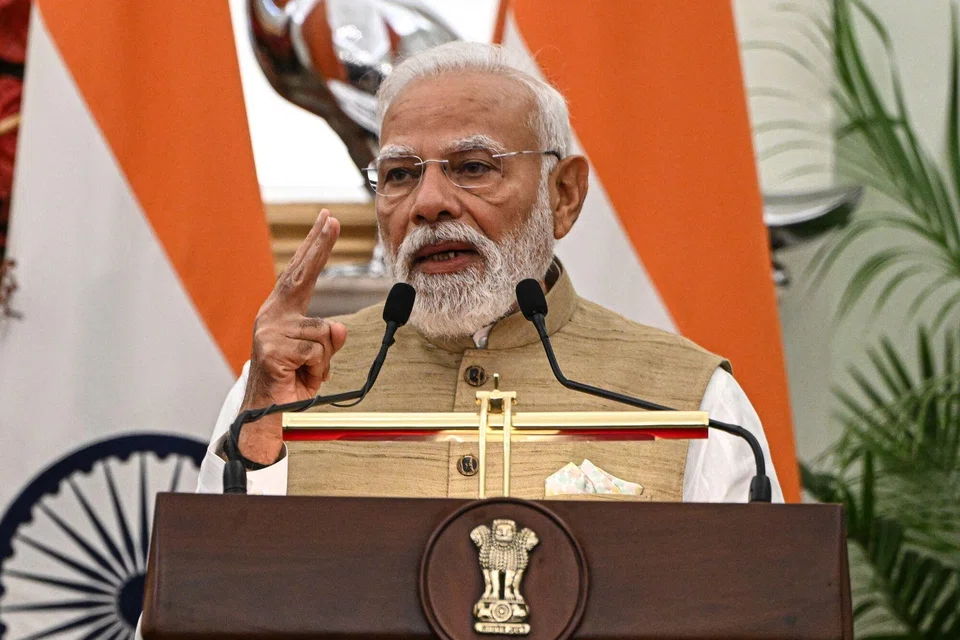
No country exemplifies this masochistic impulse better than India. Under Prime Minister Narendra Modi, Maya Tudor of the University of Oxford writes, “key democratic institutions have remained formally in place while the norms and practices underpinning democracy have substantially deteriorated”.
Back in 2021, the democracy watchdog Freedom House changed its rating of India from “free” to “partly free”, and the Varieties of Democracy (V-Dem) project at the University of Gothenburg labelled it an “electoral autocracy”.
Yet, Modi remains one of the world’s most popular elected leaders, with an approval rating as high as 67 per cent, according to one recent poll.
The will of the majority
Mexico under its previous president, Andres Manuel Lopez Obrador, is another case in point. He harassed the opposition, packed once-independent agencies with cronies, and engineered a reform that killed whatever independence the country’s judiciary had.
According to V-Dem, Mexico suffered an “anti-democratic plunge” under his administration. Nonetheless, Obrador left office with an approval rating of nearly 80 per cent, and his hand-picked successor, Claudia Sheinbaum, was elected with a big majority.
These are far from the only examples. El Salvador, Poland, Hungary, Turkey, Israel, Malaysia, the Philippines and Peru have all had leaders who played fast and loose with the rules of democracy and remained popular.
Brazil’s now-jailed former president, Jair Bolsonaro, sent his thuggish supporters to storm parliament in 2023 after he lost his bid for re-election, but he is still beloved in some quarters – so much so that polls suggest his son Flavio could beat President Luiz Inacio Lula da Silva in this October’s election. It is as if turkeys were cheering the arrival of Christmas.
Why does this happen? With this year’s US midterm elections approaching, this question has become even more urgent.
Many Democrats argue that because President Donald Trump has been so brazenly authoritarian, voters will turn out in droves to vote against him. But recent history suggests that this optimism may be unfounded.
One explanation for the backlash against liberal democracy is that, in many countries, politics have become excessively liberal and insufficiently democratic. That sounds paradoxical, so let me explain.
A simple definition of democracy is majority rule. Liberal democracy adds individual rights and checks and balances to ensure that majority rule does not become tyrannical. Independent courts, autonomous government agencies and specialised regulators can all thwart the will of the majority.
The masses may want cheap money, but an independent central bank can refuse to cut interest rates. A majority may want to curtail worship by a minority that professes a different religion, but a court would probably deem such a law unconstitutional.
When this happens too often, the theory goes, the majority grows angry and willing to cut corners to ensure that its will becomes policy.
This explanation is clever, but it is too abstract. Voters do not get up in the morning thinking they must fight encroachments on majority preferences. But some do get up thinking that senior officials, judges and central bankers are arrogant, easy-to-hate members of the elite.
Add a pinch of populism to the story, and it becomes a lot more plausible. The tension between citizens and pointy-headed bureaucrats is more acute when the latter are also foreigners, as happens in the European Union.
Suffering not from failures, but successes
In the extreme, a paper by four Israeli scholars argues that support for democratic backsliding can come down to personalistic policies and what political scientists call “affective polarisation”: If my beloved leader is doing battle with the obstructionist elites I detest, who cares if he breaks a few rules and ignores a few democratic niceties along the way?
This finding might seem like very bad news; but it is not, because it suggests that what we are experiencing is not a backlash against democracy per se.
Democratic institutions are more than a set of abstract rules. They are run by people, and it is those people whom voters are fuming against.
The good news is that we can change the people in question – making them less arrogant and aloof – while retaining the basic rules of democratic life.
Perhaps democracy is suffering not from its failures (such as a supposed inability to deliver), but from its successes.
When democracy was the cause of insurgents – as in Eastern Europe under communism, in South Africa under apartheid, or in Latin America under the dictatorships of the 1970s and 1980s – it was easy to love.
But when it became the system of the establishment, peopled by bureaucrats in dark suits who speak an incomprehensible jargon, it became easy to hate.
So, the cliche that the cure for the ills of democracy is more democracy gets it partly wrong. Call for a more plebeian democratic politics, and you will have the right battle cry. PROJECT SYNDICATE
The writer, a former finance minister of Chile, is dean of the School of Public Policy at the London School of Economics and Political Science