

A ‘People’s Budget’ that will almost certainly be expansionary
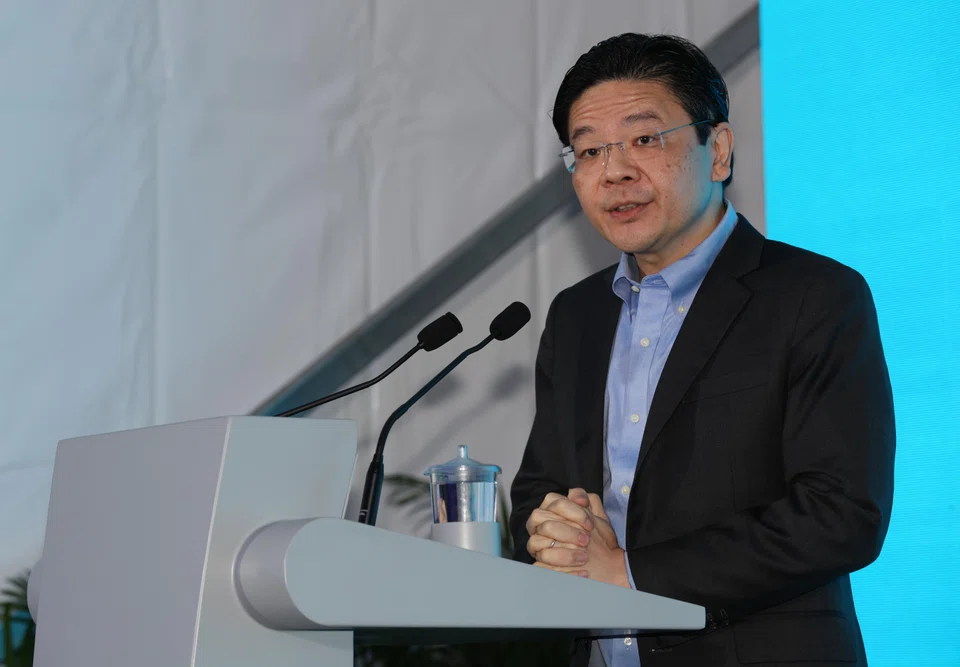
THERE were two developments last week that will shape Deputy Prime Minister and Finance Minister Lawrence Wong’s Budget Statement to be delivered on Tuesday (Feb 14).
First, with Singapore adjusting the Disease Outbreak Response System Condition level from yellow to green from Monday (Feb 13), we can expect pandemic-related fiscal expenditures to be reduced significantly in the upcoming financial year 2023-2024.
With Singapore treating Covid-19 as an endemic disease, we can expect a significant reduction in the budgetary outlay to aid segments of the economy impacted by the pandemic.
From last year’s Budget, the S$500 million Jobs and Business Support Package has provided targeted help for workers and firms adversely impacted by Covid-19 restrictions and so enjoyed slower recovery. The package, which included a small business grant, provided eligible companies with S$1,000 per local worker, up to S$10,000.
The Jobs Growth Incentive scheme was extended for six months, although benefiting companies that hire mature workers, ex-offenders or persons with disabilities. Similarly, targeted assistance for the aviation sector was extended to preserve core capabilities in the sector.
As Singapore transitions to a new post-pandemic normal, new top of the mind concerns have rapidly emerged. This includes cost of living worries impacted by relatively high inflation. Singaporeans will be keen to know whether the support schemes will be on a similar scale to Budget 2022, with its S$560 million Household Support Package to help Singaporeans with their utility bills, children’s education, and daily essentials.
The package included additional GST Voucher, U-Save rebates, top-ups to education-related accounts as well as S$100 in CDC Vouchers to every household.
The second development that will shape Budget 2023 is the Forward Singapore (FSG) national dialogue’s mid-term progress update last Friday. Although the next phase of the consultation exercise will delve into specific issues and to co-create solutions, the imperative to chart Singapore’s next decennial road map will benefit from early moves to tackle urgent concerns.
There were oblique hints that rather than wait for the dialogue to conclude in the second half of 2023, the Government might expedite the provision of some fiscal firepower to strengthen the social compact in Budget 2023. This quest to decisively renew and strengthen the social compact was a key prong in last year’s Budget. This will continue this year.
The Progressive Wage Model was expanded last year to the retail, food services, and waste management sectors. In-house cleaners, security officers, landscape workers, administrators, and drivers across all sectors were included as well. The Workfare Income Supplement scheme also saw the qualifying monthly income cap raised from S$2,300 to S$2,500.
It is likely that feedback and ideas from the FSG exercise will be implemented in the upcoming Budget. Perhaps most prominently will be measures in the Empower pillar, which is concerned with the economy and jobs.
At a conference last month, Wong noted that work was not just a source of income but “about dignity and purpose in life”. He added that work was crucial to Singapore’s social compact and system of meritocracy amid disrupting challenges, such as the nature of work, security of work (impacting retirement security), and reward of work (fairer and more equitable rewards from work).
Budget 2023 can be expected to have significant policy announcements on strengthening the skills and training eco-system to enable the Singaporean workforce to access more training support throughout their careers.
In what will be a major shift in the Government’s thinking, Wong envisioned re-employment support to financially cushion workers while they upgrade their skills.
This could address the conundrum displaced workers have long encountered: They need to switch to new jobs requiring new skill sets and know-how but are unable to go for training when they are unemployed and still have families to support. Their financial circumstance compels them to take the first job available rather than properly reskilling and upgrading themselves.
Wong stressed that such support would not be unemployment benefits as such, which tended to erode the incentive to work. Instead, any financial support must be structured to enable workers to meaningfully upgrade their skills so that they can take on new jobs befitting their abilities and aptitudes.
The government may also provide incentives to nudge employers to step up and invest in the training of their workers, and for training that leads to recognised, verifiable credentials.
The SkillsFuture programme will likely see a revamp as the impetus to entrench the habit and motivation for lifelong learning and training. Employment resilience will be the new buzzword.
Providing incrementally more assurance for retirement security will likely feature in the Budget, especially for the more vulnerable segments who tend to be the elderly, persons with disabilities, and caregivers. Another group is the gig workers.
Having accepted the Advisory Committee recommendations last year, the Government will likely announce the implementation of these recommendations, particularly to help these workers save for their retirement.
There will be anticipation that employer and employee CPF contribution rates for workers aged 55 to 70 will be gradually adjusted upwards. Such a move can help older Singaporeans meet the basic retirement sum even if it is increased by 3.5 per cent per year for the next five cohorts turning 55 between 2023 and 2027.
Right-sizing the tax system
The quest for a fairer system of taxes will continue for some time to come. This is particularly so in light of the fiscal implications of Singapore’s medium-term challenges study by the Finance Ministry (MOF) published last week. It projected government spending to increase to a fifth of GDP in the FY2026–2030 period, and possibly exceeding 20 per cent of GDP by FY2030.
Higher social expenditures and investments such as the Government’s commitments to healthcare expenditure, uplifting lower-wage workers and improving early childhood education will add to the demands on the public coffers. MOF observed that the expenditure projections do not take into account future additional spending to strengthen the social compact and economic competitiveness.
Such further spending would require additional revenues to balance the Budget in the medium term. However, the total revenue, comprising operating revenue and Net Investment Returns Contribution, comes in at about 18.5 per cent of GDP and will be insufficient to cover the projected increase in government spending in the coming years.
The bottom line is that existing revenue streams will have to increase their contributions and new taxes will have to be introduced. Wealth taxes, despite their challenges, cannot be ruled out in the years ahead.
In Budget 2022, the top marginal personal income tax was increased, with effect from the Year of Assessment 2024. The portion of chargeable income in excess of S$500,000 up to S$1 million is taxed at 23 per cent, while that in excess of S$1 million is taxed at 24 per cent – both up from 22 per cent previously. Property taxes, especially for non-owner-occupied residential properties, increased from 10-20 per cent to 12-36 per cent. Luxury cars are now taxed at a higher rate.
More likely in Budget 2023 will be an increase in corporate income tax, which currently is a flat rate of 17 per cent of a company’s chargeable income.
With global tax developments on the Base Erosion and Profit Shifting initiative, the government indicated last year that it would adjust the corporate income tax system. Might a top-up tax be introduced this year which could result in the effective tax rate in Singapore pinned at 15 per cent?
In August 2020, then-Finance Minister Heng Swee Keat noted that the Covid-19 support packages necessitated Singapore drawing on its reserves a sum equivalent to more than 20 years of Budget surpluses. He said that having used a generation’s worth of savings to combat a crisis of a generation, fiscal balance must be put back on a stable path when the economy recovers.
This commitment to fiscal prudence and discipline must also underscore inter-generational equity – that the current generation’s use of Singapore resources does not compromise future generations’ enjoyment of those resources.
Remaking success
Singapore’s fiscal strength and stability is critical for the country’s well-being in a more volatile and uncertain world. Budget 2023 will almost certainly be expansionary, in tandem with post-pandemic recovery and notwithstanding the significant geopolitical uncertainties. Wong had given the assurance that “as long as you work and contribute consistently to your CPF, you will be able to meet your basic retirement needs”.
Moreover, the Government will find ways to care for those who do not have the ability to work or, because of age, to work and save through CPF.
Moulding success was the preoccupation of the pioneer generation of leaders and Singaporeans. The last 30 years were about managing well the hard-earned success. The next 20 years will be the endeavour to remake success for Singapore.
To this end, Wong’s first Budget as Singapore’s presumptive leader in the coming decade will be closely watched for insights as to how the fourth generation leaders will rally the people and the corporate sector towards new definitions of success.
The writer is associate professor of law at the Singapore Management University and a former Nominated Member of Parliament.
TRENDING NOW

Singapore identifies 7 firms responsible for haze fires, notices issued urging action: Grace Fu

Could stablecoins be the future of money?

Singapore should prepare for prolonged haze until November, says Grace Fu
High Court rules against Julius Baer’s Singapore trust arm in US$50 million family trust dispute

