

Pick listed property equities over an investment home
People who are bullish on private homes might wish to consider buying shares of listed property development and investment groups instead of physical homes

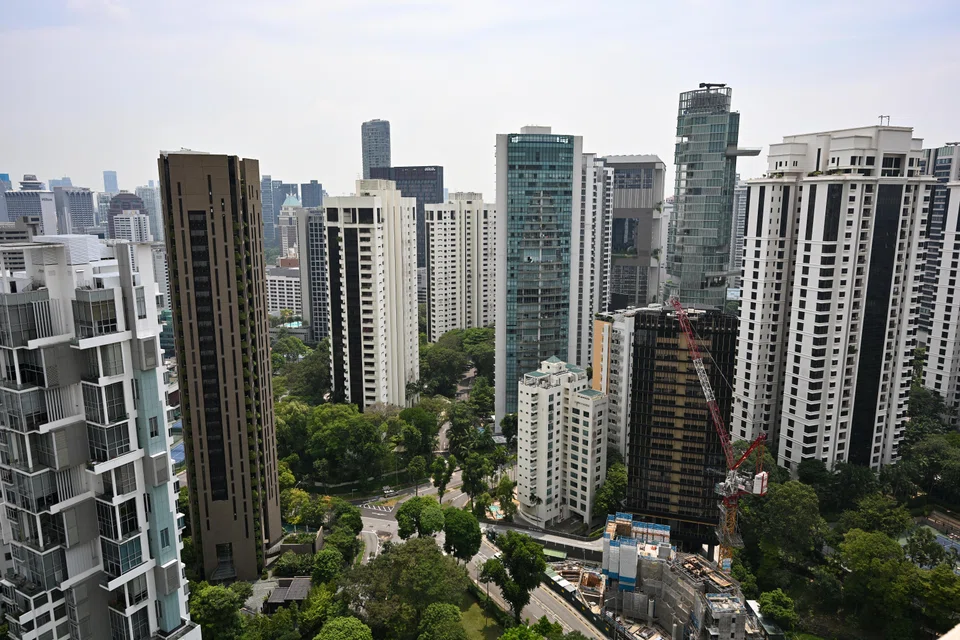
RECENT new condo launches, led by Emerald of Katong and Chuan Park, have fared well.
As interest rates fall and buying sentiment in the private-home market improves, is buying an investment home a no-brainer provided one need not pay a hefty Additional Buyer’s Stamp Duty (ABSD), has funds for the down payment and can access debt funding if needed?
A couple comprising two Singapore citizens can own one home for owner-occupation and another for investment without incurring ABSD, provided the homes are bought under separate names as each partner’s first property.
By owning an investment home, the couple can earn recurring rental income plus realise potential capital gains from selling the said home in future.
However, people who are bullish on private homes might wish to consider buying shares of listed property development and investment groups instead of physical homes. Strong sales of new condo projects can drive higher revenue, profit and return on equity for developers, as well as significantly reduce risks for developers.
Besides listed equities generally being more liquid than physical property, several key reasons support choosing shares in Singapore-listed property groups over physical homes.
Book value discount
One, a buyer would struggle to buy a private home at a discounted price. While one might get a small discount from a developer or a secondary market vendor, one is unlikely to snare a home at sharply discounted price as there are few severely distressed sellers.
On the other hand, one can buy shares in listed property-linked groups at huge discounts to book values. For instance, City Developments Limited , which is a member of the benchmark Straits Times Index and has an extensive track record in property development, traded at a discount of 48 per cent to its end-June net asset value (NAV) per share based on share price as at Dec 2.
The discount to revalued NAV would be 70 per cent if fair-value gains on investment properties had been factored in; and 73 per cent if fair-value gains on investment properties and revaluation surpluses of the hotel portfolio are included.
Moreover, the above revalued NAV figures exclude potential profit from housing development projects
Yield
Two, the net annual yields on mark-to-market values of private homes could be skinny, possibly at around 2 per cent.
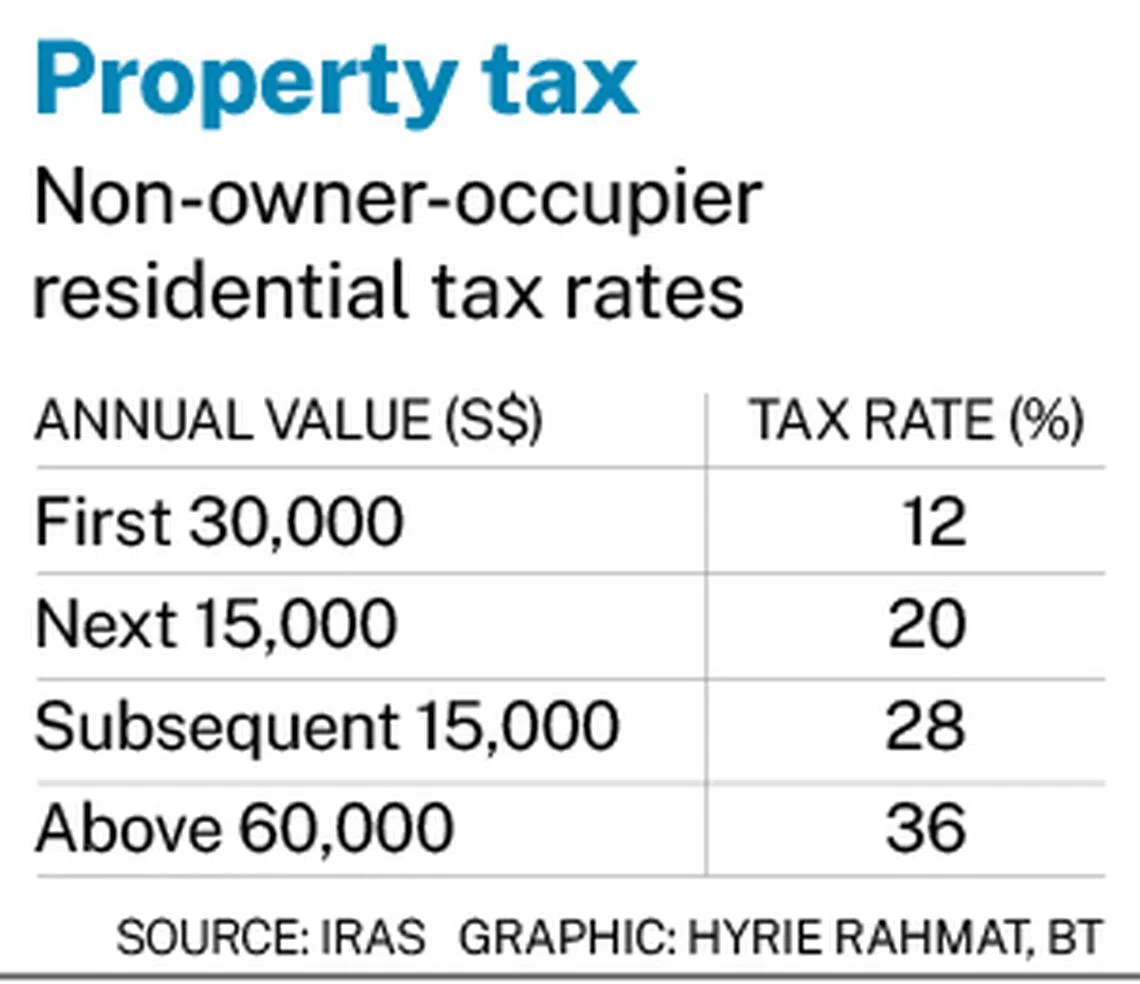
Property tax – particularly on pricier non-owner-occupied homes – has risen, and condo management fees have also been generally increasing amid higher inflation.
The non-owner occupier residential property tax rate is 36 per cent on Annual Value (AV) above S$60,000. The annual property tax on a non-owner occupied home with AV of S$100,000 works out to S$25,200.
The AV of buildings is the estimated gross annual rent of the property if it were to be rented out, excluding furniture, furnishings and maintenance fees.
Numerous listed property groups pay steady dividends. Based on share prices as at Dec 2 and annual dividends paid for the last financial year, the dividend yields of Bukit Sembawang Estates , GuocoLand and UOL Group are 4.5 per cent, 4.1 per cent, and 3.8 per cent, respectively.
Leverage
Three, the benefits from using leverage to enhance return on equity from buying a home may not be substantial.
One can enjoy 75 per cent loan-to-value when buying a private home if one has no outstanding housing loan, the loan tenure does not exceed 30 years and the loan period does not extend beyond the borrower’s age of 65 years.
The three-month compounded Singapore overnight rate average (Sora) was 3.2 per cent as at Nov 29, albeit this might head towards around 2 per cent by the later part of 2025.
Paying three-month Sora plus a margin on a housing loan can translate to a borrowing rate that exceeds an investment home’s net yield. With a fixed-rate home loan, one may pay an initial annual interest rate of around 2.6 per cent, which could exceed a private residential unit’s net yield.
In addition, there is opportunity cost to using CPF funds from the Ordinary Account (OA) to help pay for an investment home offering a low net yield. The current CPF OA annual interest rate is 2.5 per cent.
Catalysts
Four, one might benefit from a listed group’s property portfolio diversification and professional management.
This comes even as homeowners may exercise better control over an investment home, versus a small shareholder in a property group who largely leaves decision-making to a group’s major shareholder, board and management.
Moreover, getting super-sized gains on condo homes via a successful collective sale could be harder nowadays, as many strata owners may resist selling as they incur high ABSD when buying replacement homes.
In contrast, there are major positive catalysts should deeply undervalued listed property groups undertake strategic reviews that lead to value unlocking exercises.
The actions of the then-listed CapitaLand Limited to restructure and Hongkong Land Holdings to unveil new strategic plans may encourage other property groups to embark on meaningful moves to boost shareholder value.
Hongkong Land’s share price rose sharply after it unveiled its new plans.
Also, as many listed property groups trade far below book value, controlling shareholders have substantial room to make privatisation offers at big premiums to the market-traded prices of said entities.
There are a number of precedents of successful privatisations of formerly-listed, asset-heavy property groups.
Developers and property agents are motivated to drum up interest in new condo projects. Intensive efforts to educate people on the merits of buying physical homes in stable Singapore, where huge investments are being made to upgrade the infrastructure as well as well-appointed show flats, can be highly persuasive.
And the positive momentum from successful recent new condo launches may carry on into next year.
Still, investors who want to participate in the Singapore private housing market may wish to consider acquiring shares in listed property groups. Perhaps, hold back from buying that lovely new condo unit, and invest in the groups building new homes instead.
The writer owns shares in the property groups mentioned






