COMMENTARY

Pledge to treble renewable energy in Asean sounds good, but may not be right for all
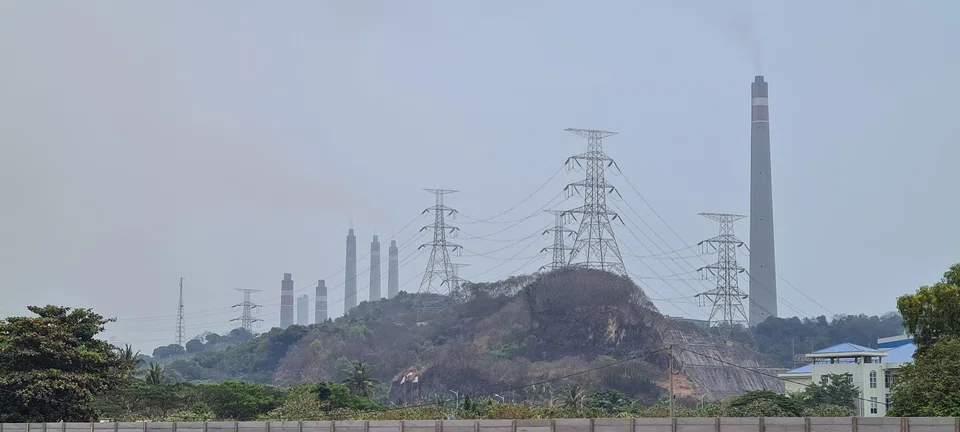
    • Indonesia struggles to reduce energy from coal-fired power plants because of "take-or-pay" offtake obligations.
    • Indonesia struggles to reduce energy from coal-fired power plants because of "take-or-pay" offtake obligations. PHOTO: LINDA YULISMAN, BT
    Published Mon, Feb 26, 2024 · 05:00 AM

    TWO months have passed since the landmark COP28 agreement, in which nations committed collectively to trebling renewable energy production by 2030.

    Attention now turns to the practicalities and consequences of achieving this ambitious goal in Singapore and the Asean region.

    Undoubtedly, renewable energy holds the key to addressing the energy crisis, limiting global warming and meeting net-zero targets.


    We must, however, question whether trebling renewable energy production is suitable for each country, and consider what is involved in transitioning away from fossil fuels.

    We must also anticipate the changes in demand for renewable energy, and create solutions to finance the cost of trebling renewables.

    Treble or not

    A central commitment of COP28 is the transition away from fossil fuels. Here, existing power purchase agreements (PPAs) tied to fossil fuel energy and government subsidies – some with long-term commitments – may pose obstacles.

    Indonesia’s struggles with take-or-pay commitments highlight the need for adaptability: Injecting renewables into the country’s grid leads to additional costs.

    Governments and PPA parties need to mutually agree to amend or renegotiate their commitments to meet critical energy goals.

    Infrastructure constraints such as grid bottlenecks and regulatory challenges could also impede renewable energy growth.

    While a goal of trebling renewable energy capacity is commendable, fulfilling it does not necessarily imply an immediate phase-out of fossil fuels – particularly if overall electricity demand surpasses the growth in renewable energy.

    China quadrupled its fossil fuel facilities in 2022 despite being a leader in renewable production, challenging assumptions that swift replacement of traditional energy sources will automatically occur.

    The Asean region faces different hurdles, and a gradual transition from fossil fuels may be desirable.

    This may seem counterintuitive; but once renewable energy penetration crosses a critical threshold, issues such as intermittency and energy distribution need resolution.

    Supply and demand

    Trebling renewable energy will introduce a surge in supply that must match a corresponding rise in energy consumption unless fossil fuel sources are retired.

    If renewable production outpaces demand, significant investments in storage and transmission infrastructure may be necessary. This escalates costs and potentially undermines the economic viability of renewable energy projects.

    Much of Asean is experiencing growth, increasing the demand for electricity and highlighting the need for a shared Asean grid.

    Such a grid would balance renewable energy production and intermittency – enabling energy supply to be shared across the region, and matching it with demand.

    Instead of focusing solely on adding storage, distributing electricity across the region and incorporating hydropower as a buffer could be effective.

    Consequently, fossil fuel and coal plants may not require urgent phase-outs. Renewables would serve as a crucial supplement, especially in growing economies.

    Bilateral agreements, such as those between Singapore and Indonesia, and Singapore and Malaysia, could pave the way for a fully regional Asean grid.

    Trebling renewable energy generation by 2030 requires a compounded annual growth rate of 17 per cent.

    In Singapore, renewables currently contribute 2.3 per cent to the overall electricity supply. Trebling that is feasible.

    Industry experts at a panel discussion hosted by the Sustainable Energy Association of Singapore (Seas) at the Singapore Pavilion during COP28 expressed confidence that quadrupling or even generating six times the current renewable production is achievable.

    For some other countries, however, achieving this goal may be more challenging.

    In Vietnam, renewables comprise 17 per cent of the electricity supply. Trebling that to 51 per cent requires significant storage infrastructure, which would substantially increase costs.

    Not all countries can afford – nor should they aim to – treble renewable generation. Doing so would require substantial investments in supply infrastructure, reskilling, and upskilling, among other costs. This ambition must align with country-specific needs, resources, and developmental stages.

    Securing funding

    Attracting investments for renewable projects remains challenging due to perceived lower returns than traditional energy ventures.

    To treble renewable energy production, substantial green finance pipelines are crucial to establish large manufacturing capacities across the entire value chain.

    A survey conducted by Seas in mid-2023 on the energy transition with regional clean energy players indicated that more than half believe that current green finance schemes do not enable project owners to succeed.

    Financial backers are risk-averse, and project owners struggle to secure funds due to their lack of track record.

    Both the public and private sectors must, therefore, prioritise clean energy finance. Blended finance could unlock capital from fossil fuel companies, while well-designed Renewable Energy Certificate markets could encourage investments in renewables.

    Singapore, as a finance and technology hub, could significantly contribute to enabling the renewable industries. Investing in renewable infrastructure in the region is essential, but other strategic moves can reduce reliance on traditional energy sources.

    Singapore lacks vested interests in coal mines or oil wells, so the country is less obligated to indigenous fuels.

    By partially replacing ships and pipelines with cables, Singapore could import electrons instead of fossil fuel energy – thus accelerating the transition to clean energy.

    The commitment to trebling renewable energy production by 2030 demands careful consideration of regional dynamics, financial intricacies and strategic advantages.

    As Singapore and the Asean region embark on this transformative journey, flexibility, adaptation and collaborative efforts will be crucial to overcome challenges and manifest the shared vision of a sustainable, renewable energy future.

    Kavita Gandhi is executive director at the Sustainable Energy Association of Singapore, and Christophe Inglin is vice-chairman