THE POLITICS THAT MATTERS TO BUSINESS

Politics, bullets and stability
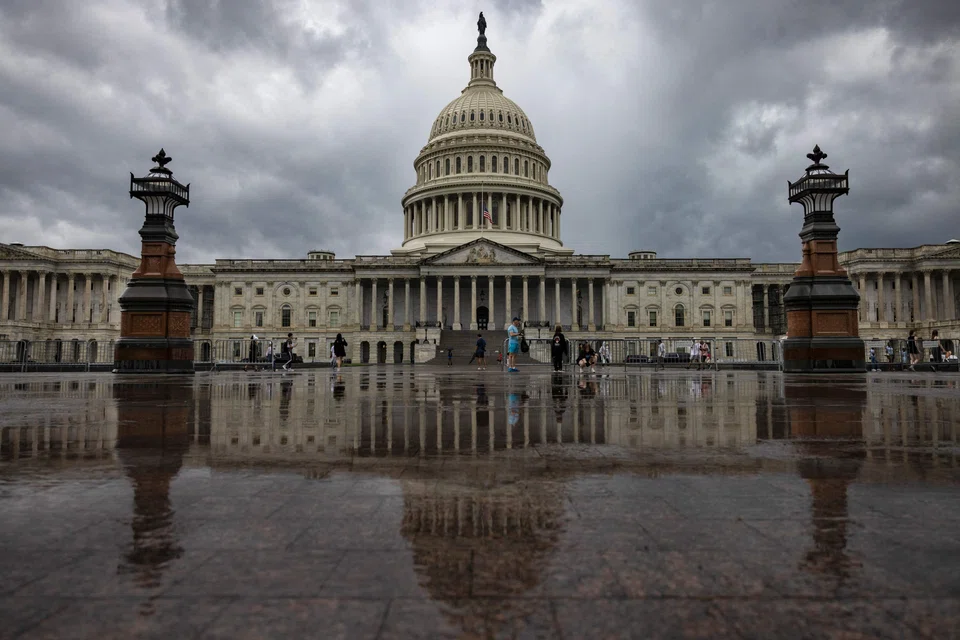
    • The Capitol building in Washington, DC. If the trust, respect and deference that some give to America is eroded, it would be worse for the US than perhaps any policy change.
    • The Capitol building in Washington, DC. If the trust, respect and deference that some give to America is eroded, it would be worse for the US than perhaps any policy change. PHOTO: AFP
    Published Wed, Jul 24, 2024 · 05:00 AM

    POLITICS in the United States is roiling markets. Less than one month after a disastrous TV debate, American President Joe Biden has decided not to run for re-election and has ceded support to his vice-president, Kamala Harris. Just on Jul 13, a bullet grazed former president Donald Trump and chances have increased that he might again be back in the White House.

    Some immediate reactions seem to treat such an outcome not merely as “what if”, but a question of “when”. Following Trump’s statements about Taiwan, for example, stocks of Nvidia, Taiwan Semiconductor Manufacturing Company and other chipmakers slid downwards. The Philadelphia semiconductor index, a Wall Street composite indicator, shed some US$480 billion in one day. On the flip side, cryptocurrencies picked up.

    Then, as support rallied around Harris, the broader US market inched upwards. Still, she has yet to officially secure the Democratic Party nomination and, while polls suggest Harris has better prospects than Biden in the November election, questions remain whether a female and minority-race candidate can win.

    Markets will be skittish and those outside the country will look on anxiously. It bears remembering the standard wisdom that one week is a long time in politics, and there are four months more to the election.

    ‘What if’ or ‘when’

    Looking at the post-pandemic world, the US is doing well, relative to other major economies, and many hope this can continue. But much depends on who wins the election, not only in terms of personality but also in key policies. Indications are that Trump plans to upend many of what the current administration has put in place, both in geopolitics and for the US economy.

    Overseas, the Biden administration has emphasised building up coalitions against China and Russia. But what the current administration promised to be “ironclad” commitments may not last. The once and perhaps future President Trump is known to call out even friendly governments and pressure them to pay for defence costs – be they the European Union, South Korea or Taiwan.

    Commitments to Ukraine and Nato may shift, with Trump being more open towards Russia and President Vladimir Putin. Pushing back on China is expected to continue, whoever occupies the White House. But whereas the Democrats under Biden emphasise “guard rails” and restarting dialogue for a measure of stability, many believe Trump will be unpredictable.

    Within the US, even after leaving aside the culture wars around abortion and minorities, most expect considerable change in domestic economic policy. Trump slams the current administration’s handling of the economy and inflation “nightmare” and talks up an agenda to push for tariffs, tax cuts, and curbs against immigrant workers. The Heritage Foundation think tank, seen to be close to Trump circles, has put out Project 2025 that contains significant shifts in policy.

    While proponents hope such changes will spur economic growth, other economists fear that the proposals could hurt the economy and, especially, increase public debt. Financial markets, especially for bonds, have already started to take notice of that risk.

    If Trump is elected, there is reason to believe he will go all out to push for the “Make America Great Again” agenda. Compared with 2016, the Republican Party is now dominated by his base, and his vice-presidential candidate JD Vance is fully aligned. Trump and his supporters believe that the last election was stolen from them and, if they win now, there will be a sense of vindication, with just four years to push through their reforms.

    Lose-lose outcomes

    There are counter scenarios in which Trump might be stymied, either losing the presidential election or by Democrats in the Senate and Congress winning lawmaking powers. Yet, even that result may be problematic.

    The immense divide in American politics is acknowledged in the near impossibility of obtaining bipartisan agreement in Washington, DC, and the near-annual shutdown of government because of bickering over the federal Budget. But, thus far, it has been largely confined to votes and politicking.

    But those divides can fester to extremism. The Jul 13 attempt on Trump’s life now points to an increasing risk of violence. Remember the Jan 6, 2021, events on Capitol Hill after the last election result – a considerable number of people still believe that the 2020 election was stolen.

    Violence could erupt both during the campaigning in the months ahead, and after the election results. This is especially given the stark polarities of race and gender if Vice-President Harris runs against Trump.

    The US has suffered previous periods of social turbulence and political violence. Consider 1968, marked by the shootings of Martin Luther King Jr and Robert F Kennedy, and followed by waves of violent urban riots. That was also the year that then incumbent president Lyndon B Johnson decided not to stand for re-election.

    History may not repeat itself, but it can rhyme. If protests could increasingly boil over, and there are acts of political violence, instability could lead to lose-lose outcomes. This would have an impact on not only politics, but also the wider society and economy, and ripple outwards.

    Other parts of the world are no strangers to political assassinations and periods of widespread societal violence. It is true that the US does not need to be perfect to be important. Yet the trust, respect and deference that some still give to the US can be eroded, perhaps irreparably. That could be worse for the US than perhaps any policy change.

    In a year of many elections worldwide, the vote for the American presidency was always going to be the most consequential. Now it looks likely to be also the most controversial, with a contest marked by conflict and, potentially, more violence.

    Much has changed in just recent weeks. But with elections in only November, the same logic must warn us to expect more twists and turns. An optimist may also hope that things can turn for the better.

    In the immediate aftermath of Trump’s shooting, President Biden wished for moderation of rhetoric and unity. Instead of remembering only his flubs during the debate, more people should listen to his call to “lower the temperature in our politics” and to reject political violence. It would be a better wish not only for Americans but for anyone hoping for stability and growth in an already turbulent world.

    The writer is chairman of the Singapore Institute of International Affairs