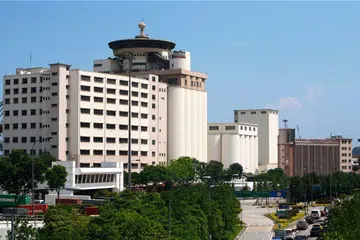
Powering up land use
Will SP Group’s pilot integrated development above an underground electrical substation in Pasir Panjang spark a new wave of land optimisation?

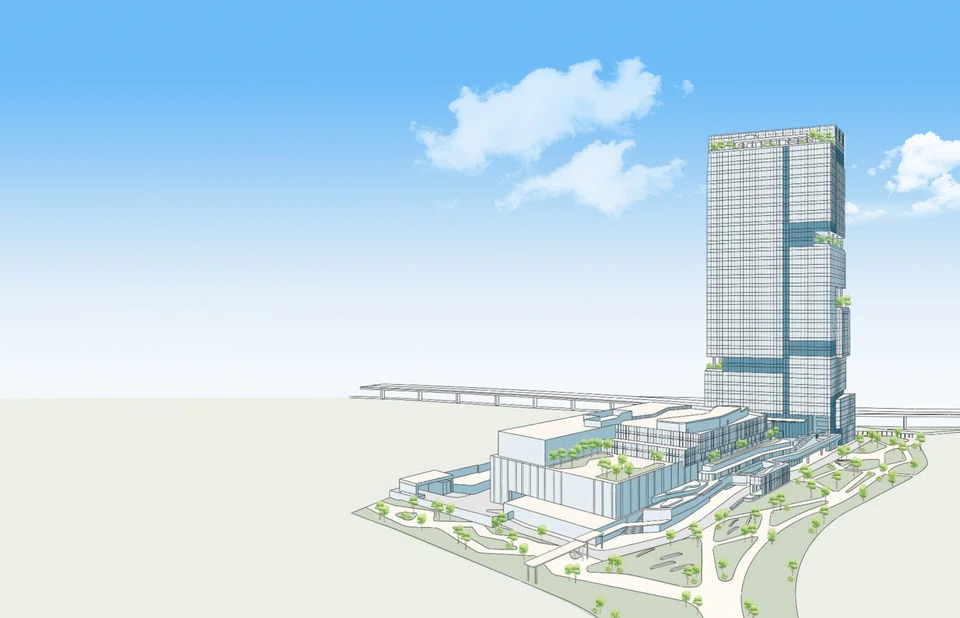
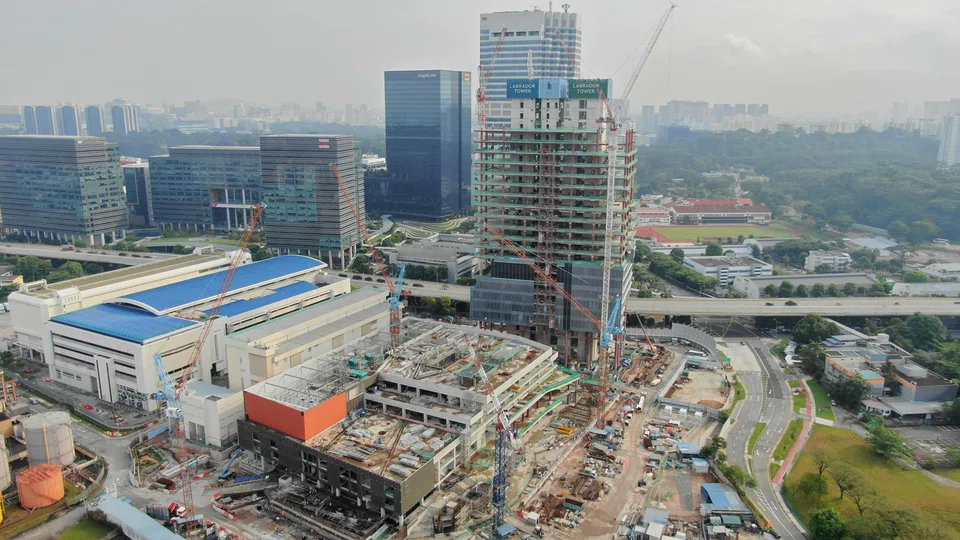

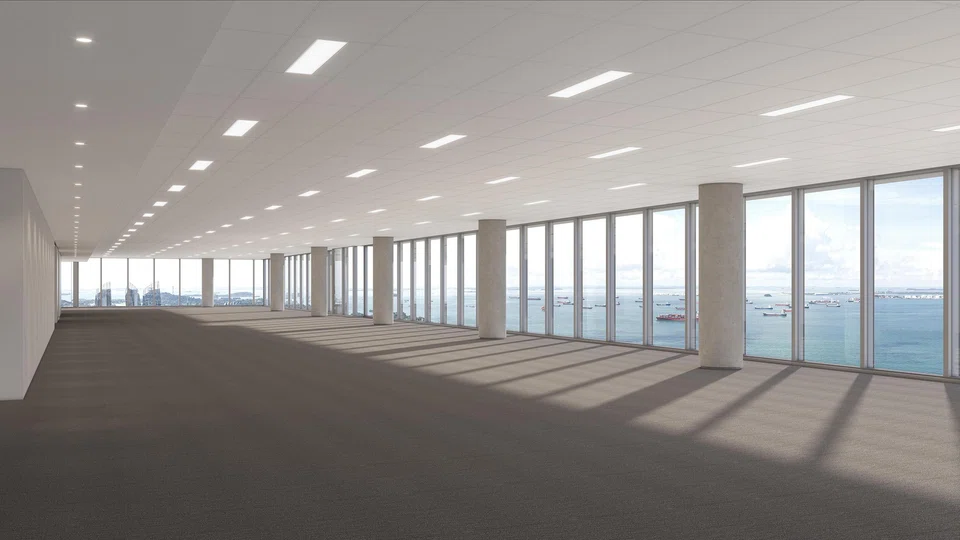
SP GROUP’S Labrador Tower office and retail project coming up in Pasir Panjang Road will boast an impressive suite of green features to improve energy efficiency – including underground thermal energy storage, a microclimate control system powered by artificial intelligence, and hybrid active chilled beams.
While these will boost the project’s credentials, what will make this development a potential game changer on Singapore’s infrastructure and urban planning scene is that it will be integrated with a 230 kilovolt (kV) electrical underground substation (UGSS).
This will not be the first UGSS in Singapore; there is one in Changi Business Park, which became operational in December 2015. However, that is a standalone facility, without an integrated project above it.
Overseas examples of underground substations with integrated real estate projects above may be found in cities such as Tokyo and Sydney.

Typically, it costs more to build a substation underground than above ground. Detailed engineering studies have to be done, and suitable construction methods used to control the impact to the surrounding buildings and infrastructure. The equipment in the substation must be of low fire risk, with cooling systems installed to prevent the build-up of heat in the equipment.
What spurred SP Group to build an underground substation in Pasir Panjang is the advantage of freeing up space above it, for the 34-storey Labrador Tower commercial development as well as an operations support centre for SP Group.
Says the company’s group CEO, Stanley Huang: “The underground substation and Labrador Tower mixed-use development are aimed at strengthening the electricity network and achieving Singapore’s urban growth goal of more efficient utilisation of surface-level and underground spaces.”
Placing a 230 kV substation underground frees up about three hectares of land for other uses.
“If a new substation is required in a prime location, it would make sense to go underground since there is better use for the land.”
CEO of a property group
SP Group’s underground substation project, near Labrador Park MRT station, has been held up by the Urban Redevelopment Authority (URA) as an example of a way to optimise space to meet growing needs in land-scarce Singapore.
When completed, the UGSS will progressively replace an existing above-ground 230 kV substation in the vicinity that was commissioned in the mid-1980s. Another transmission substation in the vicinity will still be kept as the assets are not due for renewal or replacement in the near future, SP Group tells The Business Times. The company declines to comment on future plans on underground substations.
To what extent can SP Group replicate its pilot project of building a UGSS integrated with a property development above?
“It may be more fruitful to identify underutilised spaces and build above-ground substations on them, instead of going underground.”
A developer
About substations
As the national grid operator, SP Group transmits and distributes electricity produced by power generation companies (or gencos) to various end-users via its network of more than 12,000 substations across Singapore.
Substations are equipped with transformers to step down voltage from the higher transmission ranges (such as 400 kV and 230 kV) from the gencos to lower distribution voltages that are suitable for various end-consumers. For example, 66 kV is required for Changi Airport or industrial plants, 22 kV and 6.6 kV for townships, shopping malls or a cluster of HDB blocks, and 400 volts and 230 volts for landed homes.
The substations operated by SP Group range from 6.6 kV to 400 kV. Close to 30 of these substations are in the bigger transmission category of 230 kV and 400 kV. Another 100-plus substations are 66 kV.
Observers say there is scope to extend SP’s pilot project, though it would be more meaningful to do so for the bigger substations. There could be other considerations as well. Says the CEO of a property group: “You have to build the underground substation before you can decommission an older substation above ground. In some cases, there may not be a suitable site nearby to build a UGSS to replace an ageing substation.”
Location matters, too. If a new substation is required in a prime location, it would make sense to go underground since there is better use for the land, he adds.

Trade-offs and opportunity costs
“The trade-off in building a UGSS is clearer in prime locations. In the outskirts, the value of property that could potentially be built above the UGSS may not be sufficiently high to justify the higher costs of building and maintaining an underground substation,” says the property group CEO.
For new estates such as Tengah or Dover, land can be allocated at the outset in less-choice areas for an above-ground substation, which would make more economic sense, he suggests.
Agreeing, another developer opines that even for older estates, it may be more fruitful to identify underutilised spaces and build above-ground substations on them, instead of going underground.
Where the benefits of building an underground substation outweigh the costs, what mix of property uses above would be most suitable?
Gabriel Chen, design director at RSP Architects Planners & Engineers, notes “contemporary substations are by and large well integrated within the envelope of residential, commercial and industrial developments. They are above ground, visible and accessible”.
“These will be gradually replaced with the concept of substations to be below ground, invisible and yet accessible, alongside vertical stacking of multiple and mixed-use developments. Each zone of the building will have more exclusiveness in usage and ownership. A residential development may well stack vertically with recreational facilities; or an industrial space with a data centre,” Chen adds.
A spokesperson for the URA says the statutory board will continue to plan for and facilitate the greater use of underground space.
The key components of SP Group’s project, which is near Labrador Park MRT station and slated for completion in mid-2024, are:
- The four-basement (20 metres deep) UGSS;
- A five-storey podium above the UGSS. The podium will include retail space on levels 1 and 2 next to an L-shaped public park. Behind the retail space, and still part of the podium, will be an integrated two-level operations support centre and three levels of vehicle parking space for SP Group’s operations vehicles;
- A 34-storey tower fronting Pasir Panjang Road, with 29 levels of office space, and four basement levels with about 250 car parking spaces. On the roof of the tower will be a garden and all-day restaurant.
Just a tad above 50 per cent of Labrador Tower’s office net lettable area (NLA) of about 700,000 sq ft is pre-leased and in advanced negotiations. SP Group declines to identify the tenants, but says they are in non-bank financial services, transportation and the public sector. Leasing for the 30,000 sq ft of retail (including food and beverage) space is ongoing.
Labrador Tower is a Green Mark Platinum Super Low Energy-certified project that will provide cost savings and contribute to the sustainability goals of tenants in the development. Adding to the project’s appeal are the location near an MRT station and nature reserve, as well as sea views for office tenants.
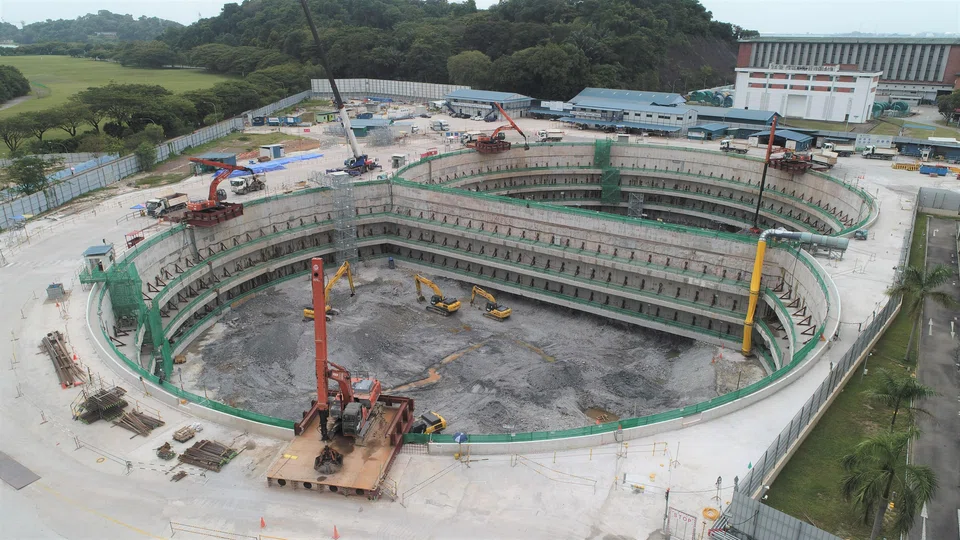
Advance works at the site kicked off in early 2019 and this was for the substructure and excavation for the UGSS. This phase entailed a construction technique that utilised what is known as a double-cell cofferdam as the earth-retaining system (to provide stability) for the excavation of the underground substation. The overlapping cells, with a diameter of 95 metres each, were designed with a middle wall to form a peanut shape to support the 23-metre deep excavation.
“This innovative strut-free excavation scheme speeded up the construction of the underground substation structure vis-a-vis a conventional method such as strutted excavation,” explains Ryan Wong, the project director of the entire integrated development.
This initial phase of works was completed in late 2020 and followed by the start of building works for the UGSS in April 2021. In early 2022, construction began on the office tower and the podium. All works are slated for completion in mid-2024.
Challenges encountered
The project’s construction was impacted by the Covid-19 outbreak and “circuit breaker” period, which was followed by a manpower crunch due to border and travel restrictions, recalls Wong, who is also the general manager for special projects at SP PowerGrid, a unit of SP Group.
The process of moving the electricity transmission and other equipment into the underground substation has already begun. “The challenge is that the equipment is huge and heavy, and moving it underground involves a very precise design engineering exercise,” says Tan Hung Khing, the general manager of transmission and regional projects at SP PowerGrid.
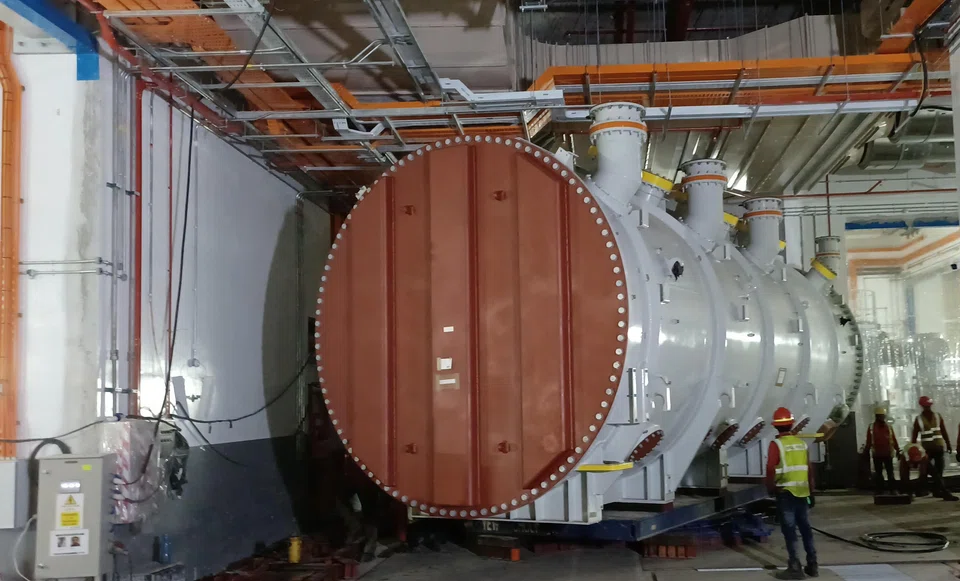
For the larger-capacity transformers, which step down voltage from 230 kV to 66 kV, the main tank weighs about 180 tonnes each. This is equivalent to the weight of around 90 cars.
“Moving the transformer along the long corridor at basement three of the substation required precise planning and patience,” Tan says.
Each 230 kV transformer has a circular design and is four metres wide and 10 metres long (see photo). A hydraulically powered “railway track” system was used. Each three-metre railway track had to be realigned and set up repeatedly along the corridor, after each movement step until the transformer reached its destination. “The tight 90-degree turning corners required the transformer to be positioned precisely on a turntable to achieve the correct turning effect,” says Tan.
Tan highlights another challenge: “The construction of the UGSS, as well as installation of cables and equipment, entailed immense coordination and scheduling of works. There is also a huge number of workers involved – from the building contractors, consultants and original equipment manufacturers. There is a space constraint underground.”
The UGSS in the Labrador area is part of SP Group’s “robust plans” to renew Singapore’s power grid and upgrade its electricity network to ensure sufficient power supply to meet future demand, says Huang. “In empowering a resilient energy future for Singapore, we focus on the long-term reliability, efficiency and security of our electricity network,” he adds.