Preparing Asean for crisis and growth
“SO FAR not bad” might sum up the first half of 2024 for major economies in Asean. Growth has not been strong and effects from the pandemic linger, but the region outperforms global norms. Some sectors even benefit as investors seek alternatives to China; and Asean enjoys a silver lining in the global storm while Europe and the Middle East suffer wars.
Indonesia and Vietnam in particular generate foreign investor interest and there is new buzz about the Philippines. Numbers are weaker in Malaysia and Thailand but they can gain from links to global supply chains.
However, emerging factors portend negative impacts that could lie ahead. Some are global-level challenges that Asean governments cannot directly manage and must leave to the major powers. Others, however, are regional and national-level issues and Asean would be well-advised to prepare against crisis.
Regional conflict
Risk signals from security and military concerns are increasing, with no less than five sites for potential violence in our region.
On the Korean peninsula, there have been North Korean provocations; also a growing relationship with Russia could boost Pyongyang’s nuclear capabilities. In cross-strait relations, tensions have increased with Taiwan’s new president, Lai Ching-te, coming into office. Beijing regards him as a separatist and his inauguration speech provoked large-scale military exercises as “punishment”.
Perhaps the loudest alarm bells concern the South China Sea and the long stand-off between the Philippines and China. This has escalated, first with “grey zone” actions and now coast-guard boats colliding.
Philippine President Ferdinand Marcos Jr recently drew something of a red line, and will consider even one fatality “very close to war”. At the same time, a number of American officials reiterate their treaty obligation to stand by Manila, and this raises the spectre of a direct confrontation between China and the United States.
Two other risks receive less attention but have had precedents. One is the skirmishes between Chinese and Indian troops in the high mountain areas that link their countries, where this is no clear and agreed border. Another risk is that, with the continued pounding of Gaza, growing anger could spur a terrorist reprisal in South-east Asia.
These scenarios are not fated to boil over, if the great powers are calm and rational. But if they do deteriorate, trade, investment and capital flows could shift, affecting the already fragile economic conditions our region faces.
Asean should do what it can, even if solutions are not within its control. Broadly, its Asean Outlook on the Indo-Pacific should move forward as a more inclusive process in contrast to US-centred alliances that exclude China and Russia. Also, quiet diplomacy should be considered to reach out to the different parties, especially Manila and Taipei, to assist understanding and develop regional “guard rails”.
Closer and more complete integration
Another key step is to step up economic integration. This not only makes Asean more attractive, but will also give the group more resilience if there are global shocks and splits.
The integration needed goes beyond reducing tariffs and cutting red tape. Digital policies including data issues must be aligned. Supply chains should be anchored in two or more Asean countries, with governments cooperating to woo foreign investors.
Physical connectivity and infrastructure should be developed not only within a country, but also boost links across borders. Undergirding this effort should be steps towards an Asean power grid. This must not only be ample and resilient to support growing demand by citizens and corporations, but also green, to ensure energy security in a carbon-constrained world.
The aim must be for closer and a more complete integration, and this needs bold steps.
From this, given the Sino-American competition, Asean must aim to “plug and play” separately with both the US and China. Other partners can come from Europe, Japan, South Korea, Taiwan, and the Middle East. Vietnam is even maintaining close ties with Russia, which has also linked up with Myanmar. Thailand and Malaysia have stated interest in joining the Brics group (named after members Brazil, Russia, India, China and South Africa) as it expands.
Such a diversity of ties will serve Asean well as the geopolitics and geo-economics evolve, and can boost resilience in the event of a crisis.
Politicking and potential distractions
While imperfect, virtually all group members see a value in Asean coming together on common concerns. The bigger question is about the politics within each country. National-level infighting can misdirect policies and erode political will. Across a number of countries politicking has been heating up.
In Thailand, for instance, high-profile court cases are proceeding that involve almost all the different sides: the opposition Move Forward Party, incumbent Premier Srettha Thavisin, and Thaksin Shinawatra, the controversial and still-powerful patriarch of the Pheu Thai Party.
Vietnam, while favoured by many foreign investors, is witnessing an unusual spell of turbulence. Two presidents and more senior officials have been removed in rapid succession, even as processes for government approvals have slowed.
For the Philippines, just as the country started to attract investment interest, the resignation of Vice-President Sara Duterte from the Cabinet on Jun 19 may be reason for pause. President Marcos remains in charge but this represents a significant change from the effort to bring together traditional elites with the populist politics associated with former president Rodrigo Duterte.
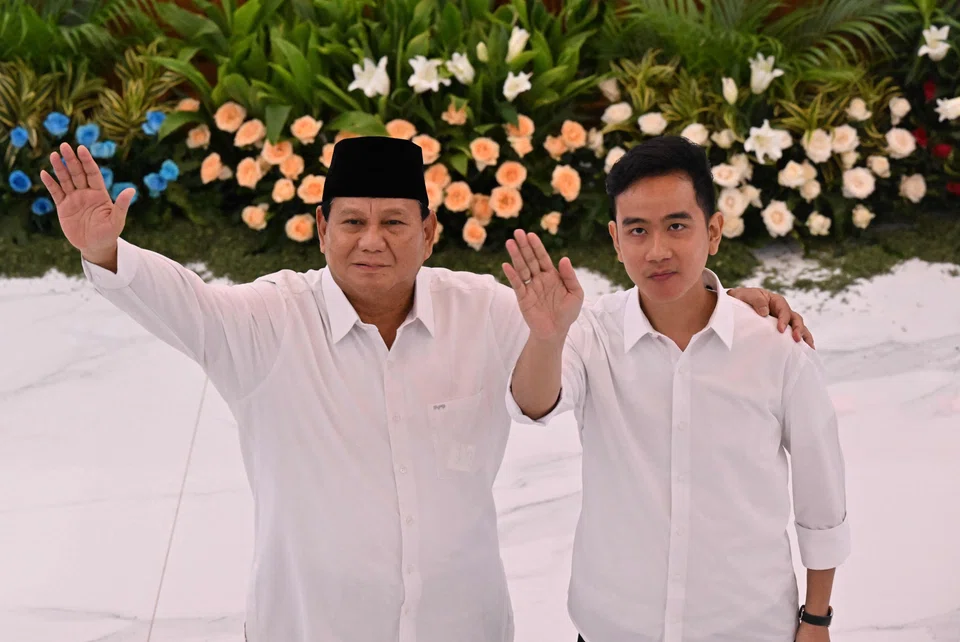
A similar alliance in Indonesia remains in place, with incoming President Prabowo Subianto scheduled to be inaugurated on Oct 20, with the son of his predecessor, Joko Widodo, to serve as vice-president. All sides promise continuity and hope to keep Indonesia on an upward trajectory.
Yet rounds of intricate and difficult bargaining are under way to try to find compromises between the two sides of the winning combination. This is even trickier with the aim to secure enough support in parliament by bringing in other parties to form a grand coalition – including Golkar and the National Mandate Party. At the same time, other parties are gearing up to be a combative opposition, and the upcoming elections for governor of Jakarta will be a focal point for more politicking.
Economic and financial priorities also enter the frame, given big-ticket promises. For the outgoing Jokowi administration, its iconic legacy item is the new capital in Kalimantan. Yet, there are other promises such as building infrastructure and providing free school lunches for every child. Expenses are projected to escalate whereas available revenues are limited, and many are watching Prabowo’s pledge to bring the tax power directly under him as president.
Political priorities can run counter to financial discipline, and the risk is that investors will bolt – as happened to the United Kingdom under then prime minister Liz Truss.
In Thailand, for instance, PM Srettha is pushing for an interest rate cut, which the independent Bank of Thailand does not think is justified. Even more controversial is a campaign pledge to disburse money to all citizens via a digital wallet. Questions brew around not only how this will be funded but also about its efficacy to spur growth while avoiding waste.
This points to a more general tension facing each government. There are strategies that could try to increase resilience against a potential crisis. There are also strategies that could aim for stronger headline growth, and achieve it more quickly. Boosting growth and launching mega-projects will tend to emphasise expansionary policies and state-led spending.
In contrast, preparing for a possible crisis will emphasise finding new paths to growth – such as innovation and reforms to increase efficiencies. Lessons of prudence – not only from the 2008 global financial crisis but dating from the Asian crisis of 1997 – will also echo.
These two types of policies are not the same, and the levels of risk differ. Ideally, there can perhaps be points of convergence to increase resilience while growing robustly. But how the governments of our region strategise is very much subject to politics that is hotly contested. With power and different interests at stake, balance and compromise may not be the aim.
The writer is chairman of the Singapore Institute of International Affairs