Preparing Singapore against turmoil
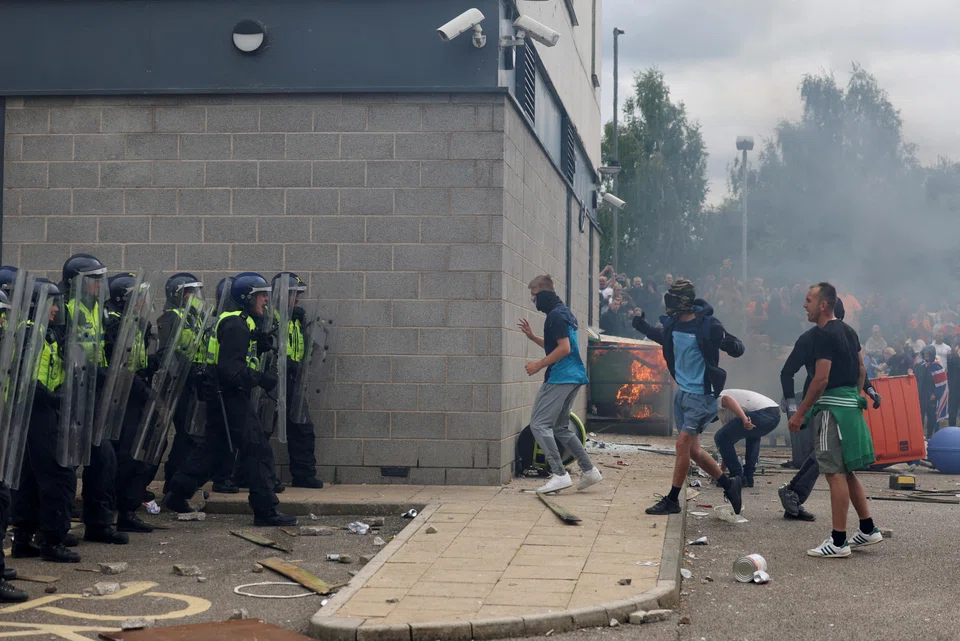
CONFLICTS in Europe and the Middle East show no sign of relenting. Escalation is, instead, an increasing risk, especially in the Middle East with Israel assassinating key Hamas and Hizbollah leaders, and both sides rejecting calls for a ceasefire. Elsewhere, in countries including Britain, violent protests erupted along racial and religious lines.
Turmoil and a sense of restlessness are loose in the world. Conflicts seem faraway and yet can spread. Governments and security agencies must have a primary responsibility, but citizens and businesses should also be concerned.
Global transmission
The Palestinian cause has long been a foundational angst for ordinary Arabs and Muslims worldwide. Across social media and other forums, there is not only sorrow and moral outrage but also incendiary calls for retaliation and revenge. Such “street” sentiment can flare up to take the battle beyond military and paramilitary forces.
At least one suicide bombing was recently reported, carried out in Tel Aviv by an individual. This was contained but it evokes the wave of attacks from some two decades ago. At their peak, in 2002, this included the Passover massacre in Israel with some 30 deaths and more than 140 injured.
Attention continues to be given to known groups such as the Al-Qaeda, but there are many newer networks. It bears remembering that the 1970s witnessed airplane hijackings and bombings carried out by groups not only in the Middle East but also in Europe and Japan.
Our region is not exempt from the transmission of such sentiments and actions. Bombs exploded in Singapore in 1974, during an attack on the Pulau Bukom oil refinery. Dubbed the Laju incident, a prolonged stand-off followed when the armed attackers held Singaporeans hostage on board a ferry off our shores.
Singapore was not targeted for something the then young country had done. Rather, the Bukom refinery, owned then by the multinational Shell, was seen as a strategic target during the oil crisis. That attack was, moreover, carried out explicitly in support of the Palestinian cause by members of the Japanese Red Army and the Popular Front for the Liberation of Palestine.
In the following year, the AIA building in Kuala Lumpur was seized and 50 were taken hostage, including senior American and Swedish diplomats.
Tolerance and understanding
While no violent attacks have hit our region of late, there is reason for heightened awareness. In Indonesia and Malaysia, many ordinary citizens already show solidarity with the Palestinians by consciously avoiding American franchises such as McDonald’s and Starbucks. Such boycotts are, of course, a consumer’s choice.
But should the situation escalate, sentiments can be stoked and some people may attempt illegal and dangerous actions. Security agencies recognise the risks and, in its recent 2024 assessment, Singapore’s Internal Security Department singled out the danger of self-radicalisation, when individuals expose themselves to extremist messages.
A small number of individuals based in Singapore were detained soon after. The government is also investigating a Bangladeshi preacher who delivered a sermon with “extremist and segregationist” teachings to influence foreign workers.
The key is not only to prevent incitement, but also to ensure that should there be any bombing or other such incident, it will not trigger wider turmoil.
On this point, the violent riots in different countries, including Britain, are red flags. They are evidence of a rise in racial and religious tensions, even outside of events in the Middle East. Policing is fundamental. But more can be done to prevent social tensions boiling over, and much has to do with engendering better understanding and avenues for dialogue.
Singapore has established councils for inter-faith dialogues. There are also “harmony circles” reaching out to citizens. Other groups in society can augment such efforts in different ways.
The arts can also play a role, and a play staged by the Singapore Repertory Theatre (SRT), entitled Disgraced, provides a timely example. Set in New York after 9/11, the drama unfolds among American friends, who are of different races and religious backgrounds, meeting over a homecooked meal. Without overt moralising, the award-winning script shows how their conversation descends from clever and even witty repartee to insults, anger and then violence.
While the play’s American setting is far away and more than a decade ago, the themes resonate in the here and now. The SRT also hosts a dialogue with the audience after each show, and I was glad to contribute to this as a guest on stage. The broad mass of people might not attend art performances, but such efforts reach diverse niche groups.
Investing in society
The efforts to ease tensions in society must be broad and preventive. While race and religion are the hottest issues, other concerns, too, stir contention. Another cleavage is based on inequality and poverty, especially following the pandemic, and the resentment against the wealthy “one-percenters”.
Many governments are broadening their tax base to pay for assistance schemes and social transfers. Some seem willing to take on populist measures to target and “bleed the rich” . For Singapore, there remains caution against such policies and about old-style socialism.
But efforts are needed to help all segments of society cope and find opportunities. This set a broad context for the first National Day Rally by our new prime minister, Lawrence Wong, when he unveiled a suite of measures to reassure citizens about help regarding re-employment, education, building a family and buying homes.
Companies can make a difference in how they respond, by adjusting workplace practices, salary scales and benefits. The one-per cent rich, too, must be encouraged to do their part and increase their donations and contributions to causes that can assist the community.
Major conflicts roil the world, and even American efforts to broker a ceasefire are rebuffed by Israel. The dividing lines in the riots in the United Kingdom are not unique. No one can completely shut out global influence and the transmission of ideas.
Preventing tensions and conflicts from spreading will take more than the police and security agencies.
Each society should consider something deeper for people to have stability and hope, and this will require leadership from the government and help from corporations and the wealthy.
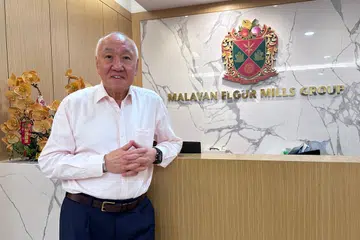
The writer is chairman of the Singapore Institute of International Affairs and associate professor at the faculty of law of the National University of Singapore