

Preschools no child’s play as more investors join the fray
Investors, including foreigners, are keen on Singapore’s preschools post-Covid, even as sector faces consolidation


WORKING with young children has always been something that Claire Rui enjoyed.
The mother of a preschooler used to teach dance to kindergarteners in China, and finding similar work in Singapore was on her mind.
After working for three years as a consultant at a tech company, she decided to return to teaching performing arts to children. Later, she took a further step by investing in a Maple Bear preschool with a partner.
“My own experience showed me the huge potential in the education industry, and some room for improvement,” she tells The Business Times (BT) in Chinese.
Rui is not alone in her interest in investing in Singapore’s preschool sector.
Industry participants told BT that they have seen more interest from both investors and potential franchisees in the wake of the Covid-19 pandemic.
The enthusiasm comes amid strong growth in the number of preschools in the Republic, but operators also note that the sector has been rapidly evolving, with competition from low-cost options among the factors driving its consolidation.
Industry size
The number of child and infant care centres has grown despite a rapidly declining birth rate.
From 2018 to 2023, the number of infant care centres – which cater to children aged between two and 18 months – in Singapore climbed nearly 40 per cent to 805, data from the Early Childhood Development Agency (ECDA) showed. The total number of places in these centres grew from fewer than 9,000 to about 14,580 over the same period.
Similarly, the number of childcare centres – which are for children below seven years old – has also risen from 1,479 to 1,665 over the same period, with nearly 200,000 places now available.
This is despite birth rates in Singapore trending lower, with the number of children being born to residents slipping from 37,967 in 2014 to just 30,510 in 2023.
But the preschool growth trend does not come as a surprise to industry participants.
“What is actually happening is that the supply is... mirroring the demand,” says Peh Yi Han, chief operating officer of Global EduHub, which runs preschool brands such as Mulberry Learning and Little Green House.
There have been cases of insufficient supply in certain precincts, he notes, as well as efforts over the years to raise supply in growing districts.
Changing work patterns have also driven demand, with more households being dual income. Grandparents, meanwhile, may also be less willing to be full-time caregivers.
“The reason for this ramping-up is because, in the past, people didn’t utilise childcare services or infant care services as much,” says Associate Professor Sirene Lim, vice-dean of the S R Nathan School of Human Development at the Singapore University of Social Sciences (SUSS).
Rachel Goh, managing director of Red SchoolHouse, which operates three preschools, notes that birth rates in Singapore may be falling, but there is still demand for preschool services from expats.
Meanwhile, David Chiem, founder and chief executive of mainboard-listed MindChamps, says the surge in the number of centres across the island reflects a “profound shift” in parental priorities. More parents are placing importance on education – even for young children.
Amid the changing landscape, some observers point out that they are seeing keen investor interest in the wake of Covid-19.
Post-pandemic investor interest
Property agent Henry Ramas, who specialises in handling preschool transactions, says there has been an obvious increase in buying inquiries after Covid-19.
In particular, there are more Chinese buyers who want to purchase existing childcare businesses, he says, adding that such buyers form the bulk of his customers.
Some of these clients are investing with an eye on expansion opportunities back home after setting up their operations here.
Locals with adequate funds and knowledge of the sector may prefer to start their own preschools, instead of paying takeover fees for existing businesses.
Preschool operators have made similar observations.
“We have been seeing some of this interest not just locally, but also in neighbouring countries. Really, the pandemic has changed everything,” Global EduHub’s Peh says, noting that the company has seen 20 to 25 per cent more inquiries.
This interest comes as investors become more wary of risks and seek essential services that can remain stable – even during a global pandemic. Investors that assess risks against rewards would find that the early childhood education sector provides stability with “pretty good financial rewards” if the preschool can be set up with quality operations that the market wants, Peh says.
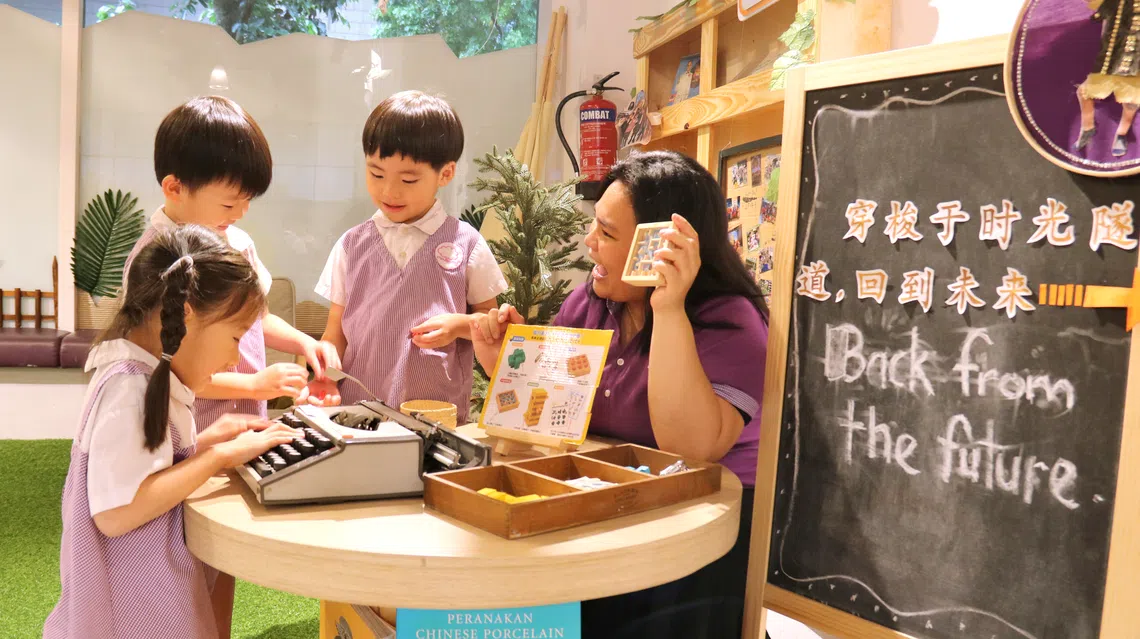
Goh of Red SchoolHouse says she has received interest from potential franchisees. One of the company’s centres was taken over by a franchisee last year, and it is also exploring options to open more schools with other investors.
Most interested parties are foreigners, Goh adds, and some of them have invested in other businesses. They decided it was time to diversify their portfolios, she says, noting that some older investors see investing in education as a “noble thing to do”.
Chiem of MindChamps says that around 90 per cent of the group’s centres in Singapore operate under the franchise model.
The group’s shift from company-owned centres to the franchise model has resulted in accelerated revenue growth in FY2023, he says. Bourse filings show that MindChamps’ revenue climbed 13 per cent on year to S$69.6 million in 2023, mainly due to an increase in franchise income. The preschool operator has also expanded overseas, including selling master franchises to the US.
Around two-thirds of its franchisees are parents whose children attended its preschool centres.
“Many have even gone on to establish multiple centres with us,” Chiem says. “We also attract corporate professionals seeking to venture into entrepreneurship, driven by a desire to be their own bosses and pursue a business aligned with their passions and values, while contributing to their communities.”
Dollars and cents
For those interested in investing in a preschool, the options available include acquiring an existing business, investing through a franchise, or starting a new brand from scratch.
Being a regulated business, obtaining the appropriate licence from the ECDA, as well as complying with other statutory requirements are prerequisites.

Rui, who invested in a Maple Bear preschool, says she had considered various options.
“(My business partner and I) have invested in other things, but this is our first time investing in a kindergarten, so there were many unknowns,” she says, adding that they had thought about creating their own brand.
After considering the challenges and opportunities, they opted to buy over an existing business along Wilkie Road for nearly S$700,000 around a year and a half ago.
“It saves some difficulties in the early stage of starting a business,” she says. The existing facilities and resources allowed them to gain a foothold into the industry more quickly.
Nevertheless, there were still improvements to be made such as enhancing the property and increasing enrolment.
“When we first took over the preschool, the enrolment was quite low with around 30 children, below the capacity of 83,” Rui notes. But her team has managed to grow this number to nearly 50.
“We are still in the early stages of business,” she says, adding that the school actively organises tours and open houses to improve enrolment. “My principal and my team are confident that once we reach 80 to 90 per cent capacity, the returns on investment will improve.”
Ramas, the property agent, notes that those looking to buy a preschool consider factors beyond short-term profitability.
“They base it on the number of kids, existing operations, and what the profitable rate given the location is,” he says. Buyers can also be particular about the numbers, hiring accountants and business consultants to assess the potential of the investment.
Goh from Red SchoolHouse notes that an investor could, hypothetically, buy a loss-making preschool with an enrolment that falls short of the maximum capacity of 90. If the investor is able to scale up and bring in more students, the business could swing into the black with over S$20,000 in monthly net profit, she says.
Those who choose not to take over an existing business would have other set-up costs to consider, such as franchise fees, renovation costs, as well as training and marketing expenses. Franchisees also typically have to pay royalties out of their revenue.
Peh notes that for those looking to invest in a premium preschool brand, the estimated investment amount could be around S$750,000 to more than S$1 million, including working capital.
“Most of our investors are self-funded. Rarely would they require business loans for this initial amount,” he says, noting that many choose to enter the business with partners.
After the initial investment, franchisees could clock annual investment returns in the region of 20 to 30 per cent of their invested sum.
But industry operators say that the business does not suit those who want a quick profit.
“We usually don’t encourage investors who are looking to just turn a quick profit, like the buy-and-flip type of investors – those are usually not suited for education,” Peh says.
“What is also important is for franchise investors to actually have a belief or passion in education itself, because education to us is a long-term investment.”
Consolidation and competition
Even as investors eye potential opportunities, the path towards lucrative returns may not be smooth due to rising competition.
Industry players say the sector has faced significant consolidation, with smaller players choosing to exit in favour of larger chains.
“It’s definitely different from some years ago, (when) there were a lot more individual operators and church-based centres,” says Richard Yen, managing director of Ednovation, which runs preschool brands such as Cambridge and Shaws.
“Now there are more and more chains. (The sector is) undergoing a consolidation phase and the government is definitely playing a much bigger role.”
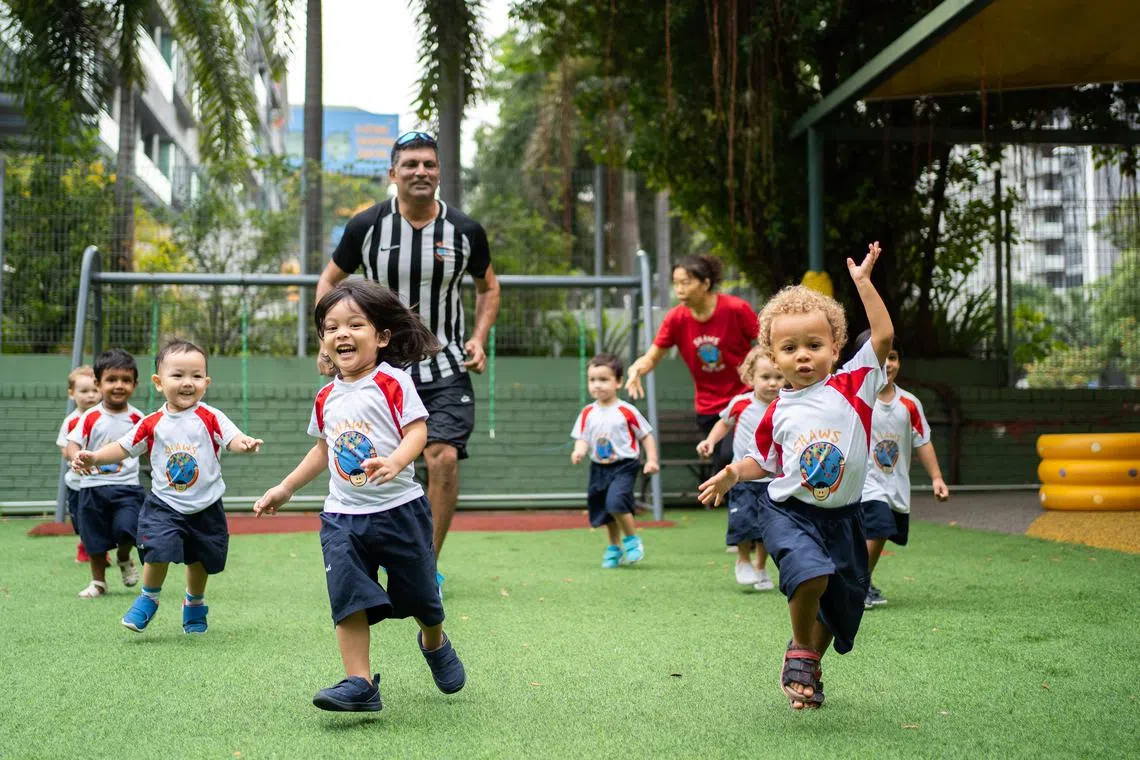
Prof Lim from SUSS notes that, previously, the childcare sector had been largely run by either commercial entities or non-profit groups.
“It’s always been more or less a commercial space, and part of that reason is also because there’s no compulsory education... before primary school,” she says.
But that started to change around a decade ago as more focus was placed on the childcare sector. Government initiatives such as the anchor operator (AOP) scheme was expanded to commercial players.
The scheme supports centre operators in offering quality and affordable preschool programmes, including in new housing areas, and five were selected in 2014 through an open and competitive process. They are PAP Community Foundation’s PCF Sparkletots, NTUC’s My First Skool, Kinderland-backed Skool4Kidz, EtonHouse International’s E-Bridge, as well as My World Preschool under YMCA.
The sector support was also expanded in 2016 with a partner operator (POP) scheme, which supports operators in improving the quality and affordability of childcare.
Both schemes require operators to keep their fees within prescribed caps and to achieve quality criteria while ensuring continuing professional development for their early childhood professionals.
“The POP is a growing group – that is (where) we’re seeing a lot of consolidating and people buying up the small independent centres,” Prof Lim says. She adds that church kindergartens are also coming together to form a POP so that they can benefit from the government grants.
AOPs and POPs have been the main growth drivers in the sector, says Ng Yi-Xian, group chief executive officer of EtonHouse International Education Group. The group runs both the EtonHouse preschool as well as the E-Bridge AOP.
“The AOPs offer a very strong proposition for Singaporean families that is high-quality and, at the same time, affordable. The AOPs will continue to grow, thus meeting the growing demand from families,” he says.
With the growth of affordable options, private operators have to be more prudent in their investment decisions, he adds. “There will be a period of consolidation.”
Peh from Global EduHub has already observed consolidation in the sector.
“If you’re just... a small operator with one (or) two preschools, you’re going to find it increasingly difficult to sustain (the business) and to continue to attract new students because you lack the scale,” he says.
He notes that smaller players do not just face competition from government-supported operators. They also have to contend with larger private groups that have bigger networks.
“We have seen some of these smaller operators eventually decide to exit the sector, but that is offset to some extent by private operators like us. We are still expanding and... on the government side, they’re also expanding,” he says.
Competition in the sector could heat up further in the coming years as affordable options become more prevalent.
This comes as around two-thirds of preschoolers can have a place in a government-supported preschool, according to the Ministry of Social and Family Development. That proportion is set to rise to 80 per cent by around 2025.
Meanwhile, full-day childcare fees for those in AOP and POP centres will also be lowered by S$40 to be capped at S$640 and S$680 per month, respectively, next year.
And these fee caps will be lowered further in 2026, such that dual-income families with a child in full-day childcare at an AOP centre will pay around the equivalent of primary school and student care fees.
Quality education
“Venturing into business inherently carries risks, particularly within Singapore’s competitive preschool market,” Chiem from MindChamps says.
He notes, however, that there will always be parents who are unwilling to compromise on their children’s education.
Ng from EtonHouse also says that operators have opportunities by clearly distinguishing their value propositions and offering innovation in the early childhood space as parents’ expectations evolve.
“There is a strong demand. Speaking on behalf of EtonHouse, we are always looking out for new properties to expand, and have grown in the last few years,” he says.
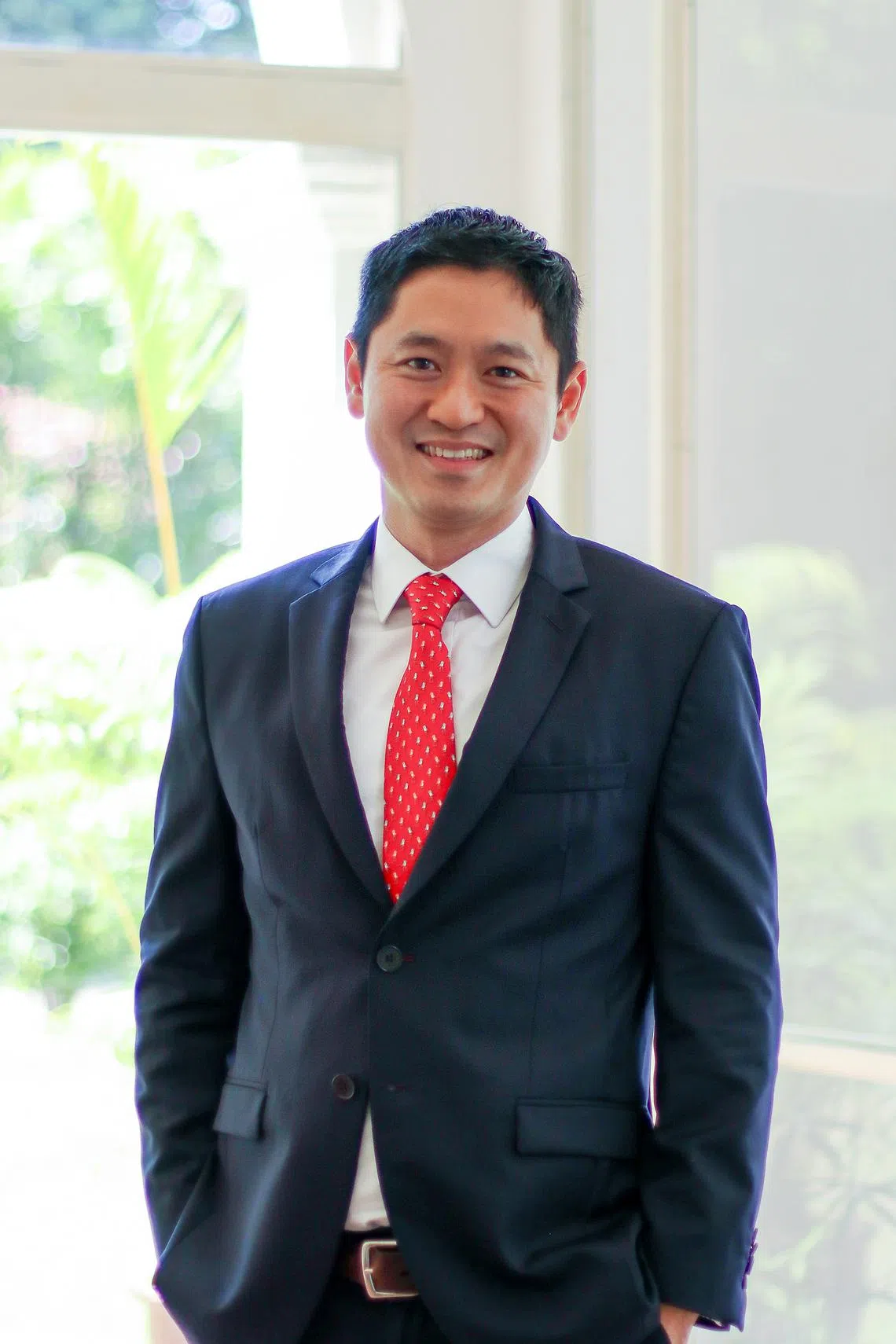
Others echo similar sentiments on parents’ willingness to spend more on quality education for their children.
“In a small school, the teacher-student ratio is lower, so the quality and attention a child gets is higher,” Goh says.
Rising competition is also driving innovation and creativity in the sector.
“It will no longer be just routine care and child-minding,” she says, adding that parents are more knowledgeable about “quality education”.
“The demand for quality preschools will always remain high... The middle-upper (income) parents will pay.”
Yen from Ednovation notes that there may already be some oversupply in the sector, following the period of growth. But he points out that the preschool business is not too different from other businesses.
“There are always winners and losers, so either you are very differentiated, you have a following and people pay – not for the price but the value – or you are a low-cost player and people go for the price,” he says.
“I think these are the two ends of the spectrum that can do well if you know what you are doing.”






