Presidential election offers lessons on independence
Appointment of independent directors should be subject to intense and frequent public deliberation

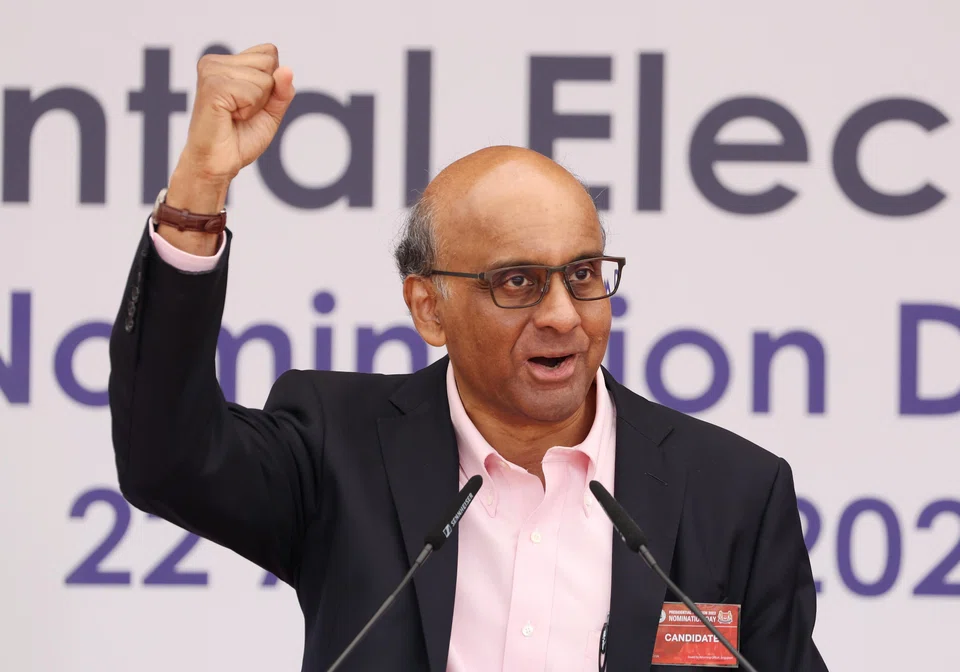
THERE was a lot said about the meaning of “independence” in the run-up to last Friday’s presidential election.
For some, the links each of the three candidates had to the government and the ruling party over the years was a key issue.
This is not surprising given that the president is a check of sorts on the government in relation to the use of past reserves, the appointment of key public officials, and the authorisation of corruption investigations.
Each of the candidates faced scrutiny regarding their potential ability to engage the government in an effective and even-handed manner – for good reason.
Tharman Shanmugaratnam started out in government service before getting into politics, and had only just resigned from the People’s Action Party (PAP) and his various government positions – including the posts of senior minister and coordinating minister for social policies, and chairman of the Monetary Authority of Singapore.
Ng Kok Song spent a lifetime in government service – including a number of years as chief investment officer at GIC before his retirement in 2013. He subsequently teamed up with former GIC colleagues to set up Avanda Investment Management, which reportedly counts GIC and Temasek among its clients.
Then there was Tan Kin Lian. While the former NTUC Income chief was once a member of the PAP, his candidacy was openly supported by a number of opposition politicians – which raised questions about whether he would bring an unwelcome tone of political partisanship to the office of president.
As the three candidates sought to convince voters of their suitability, I found myself reflecting on the parallels between the need for independence in ensuring good governance in the private sector as well as the public sector. And, I wondered if there was room for the appointment of independent directors (IDs) to be subject to similarly intense and frequent public deliberation.
Character versus past links
The Code of Corporate Governance defines an ID as one who is independent in conduct, character and judgment; and one who has no relationship with the company, its related corporations, its substantial shareholders or its officers.
It is usually the second part of this definition that draws the most attention. One reason is that “relationships” can be defined, and the absence of a relationship is a box that can be ticked.
Under Singapore Exchange rules, a director is not considered independent if he has been employed by the company in the current year or any of the past three financial years.
A director is also not considered independent if he has served on a board for more than nine years.
An ID’s character and judgment are harder to discern. Yet, these qualities are probably far more important than whether the ID was recently an employee of the company.
An ID who is not independent-minded may not be any more effective at a company to which he has no links than he would be at a company that recently employed him.
On the other hand, a truly independent-minded ID might be much more effective at a company he is familiar with than he would be at a company where he is a complete stranger.
Tharman – who garnered more than twice the combined votes for the other two candidates – used a similar frame during his campaign to cast his longstanding ties to the PAP government as an advantage rather than a risk.
He insisted that he had always been independent-minded and never politically partisan during his many years in government. But he also flexed the valuable experience he had gained through the positions he once held.
“No one in the bureaucracy or anywhere else can fool me on any matter to do with government finances,” he said during a walkabout.
More frequent elections?
Pushing for more independent-mindedness on corporate boards is easier said than done, of course.
IDs are effectively chosen by controlling shareholders, and they have little personal incentive to find fault with the manner in which their companies are run.
For investors, the lack of independent-mindedness on a board is something that often only becomes apparent when it is too late – for example, after the company’s IDs recommend a value-destructive deal that tanks its share price.
Still, there has arguably never been a stronger need for more independent-mindedness on Singapore’s corporate boards. The prolonged weakness of the Singapore market and chronic undervaluation of many locally listed stocks have resulted in controlling shareholders having less incentive to ensure their companies are run for the benefit of minority investors.
In fact, many companies have been taken private in recent years by their controlling shareholders – often for less than the value of their underlying assets.
So, what can be done to promote more independent-mindedness on corporate boards in Singapore? One lesson from events over the last couple of weeks is that there is nothing like an election to focus the public’s attention on the role and purpose of the office.
This column suggested in November last year that IDs be subjected to a two-tier vote at every annual general meeting, with one resolution voted on by all shareholders, and a separate resolution voted on by all shareholders excluding the company’s directors, CEO and their associates, as well as the company’s controlling shareholder.
This would give minority investors a timely and potent means of expressing their satisfaction or otherwise on the performance of a company’s IDs. More importantly, it might incentivise the IDs to be more proactive in addressing issues of concern to minority shareholders.
Over time, this might result in IDs being judged on the basis of what they say and do, rather than on their past links to the company and its management.