

Productivity is not enough – to tackle costs, Budget 2023 can offer help with sustainability
If productivity improvements hit a limit, savings may need to be sought elsewhere to offset rising labour costs

Sharon See
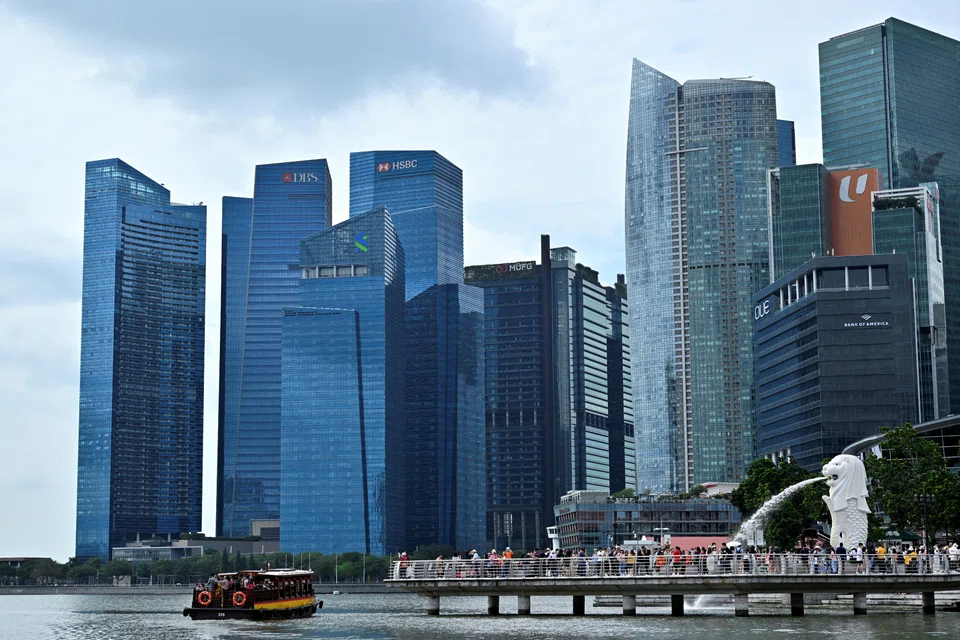
BUSINESSES are looking to Budget 2023 for some relief from rising costs. But the standard solution of transformation may be of limited help this time, as many businesses that have dutifully transformed are still adversely affected by inflation and rising interest rates.
Efforts to control inflation can only go so far. Other central banks may crank up interest rates to cool the economy, in the hope that this helps to ease inflation. But this isn’t a fix available to Singapore, where monetary policy is exchange rate-based.
For the most part, exchange rate policy has been an effective means of keeping a lid on imported inflation. As early as the middle of last year, however, economists started to warn of domestic price pressures instead, arising from Singapore’s post-pandemic recovery.
Chief among these: manpower costs. In September, Deputy Prime Minister Lawrence Wong warned of the risks of a “destabilising wage-price spiral, where higher wages feed directly into higher prices”. Nominal median income last year rose 8.3 per cent to S$5,070, accelerating from 3.2 per cent growth in 2021, according to Ministry of Manpower (MOM) data.
This is driven in part by the very tight labour market – unemployment rates were back to pre-pandemic levels by the first quarter of 2022 – with employers finding it hard to fill jobs in almost every sector. The labour crunch was most acute in services, particularly tourism-related industries, following Singapore’s border reopening.
In the past, companies would have turned to foreign labour as a quick fix to fill roles that were either unpopular with locals or required niche skills that locals lack. But this easy way out is gone, as the Government continues to tighten foreign manpower rules.
A survey by the Singapore Business Federation (SBF) early last month revealed that 96 per cent of companies still face manpower issues – whether they be rising costs, the limited pool of skilled workers or access to foreign labour.
Despite improved sentiment post-pandemic, SBF said, companies are approaching 2023 with greater caution because of cost pressures and manpower challenges.
Businesses might hope Budget 2023 offers an answer to their quandary. But the Government’s suggested solution is likely to be a familiar one: getting businesses and workers to transform.
Wong, who is also Finance Minister, has alluded to this approach: that efforts to encourage skills upgrading and productivity improvements must be redoubled in the face of increased technological disruptions. Wage gains must be accompanied by productivity boosts, if employers are to afford them.
The real question is what’s next for companies that have already made or started on the necessary transformations, particularly during the pandemic.
In 2020 and 2021, when the low-contact Covid economy demanded greater adoption of remote and digital services, there was a surge in the number of companies seeking government support for productivity improvements. But this figure fell by 21.5 per cent last year, suggesting that many businesses have already made the required changes.
If productivity improvements hit a limit, then offsetting the inescapable reality of rising labour costs may require savings to be sought elsewhere.
For many companies, the next step could be improving their sustainability. This would not only be a plus for the environment but also unlock new doors to improving efficiency and saving resources, thus lowering costs.
Meanwhile, this green transition would be incomplete without concurrent measures to help workers gain green skills – which would also help justify wage growth.
Budget 2023 could thus provide more support for sustainability efforts: not just helping companies with costs today, but helping them lower costs tomorrow.
Many companies had previously put digitalisation on the back burner until Covid-19 hit. They may not have the same luxury of time with sustainability improvements amid the escalating climate crisis – arguably a major underlying cause of rising costs, not least for energy.
TRENDING NOW

Grab CEO’s wife Chloe Tong on life with Anthony Tan and finding her purpose

What role can Japan play in Asean’s future?

He built the Vingroup empire. Now South-east Asia’s richest man is handing some key roles to his sons

Asean’s challenge is to become resilient against global geopolitics: former Indonesia trade minister

