Property groups keen to champion going green, but building social inclusiveness? Maybe not

Leslie Yee
WITH many investors considering environmental, social and governance (ESG) factors in their investment decisions, listed groups here are doing more on the ESG front.
Property group City Developments Limited (CDL) kept its position as the world’s most sustainable real estate management and development company and was ranked 28th on the 2023 Global 100 Most Sustainable Corporations in the world, according to international media and investment research firm Corporate Knights. However, CDL recently lost its spot in the Dow Jones Sustainability World Index – breaking an 11-year streak.
The stakes can be high for groups to score well in leading global sustainability indices. Companies with strong ESG performance – validated through ratings and indices – can gain better access to growing pools of ESG investment funds and sustainable finance.
For property groups, pursuing environmental initiatives often makes perfect sense. Such moves contribute to stronger revenue and lower cost.
Biophilic design
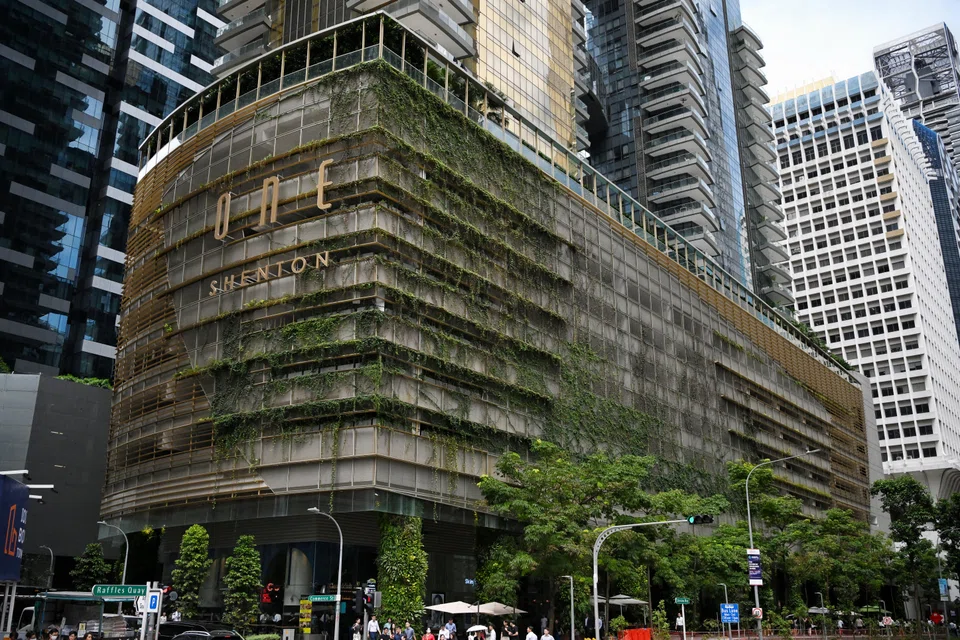
A key theme in the building of homes and commercial buildings is biophilic design. This refers to designing with nature in mind. Examples include using natural elements such as wood and stone, and incorporating vegetation features such as rooftop gardens and green walls.
Using biophilic design can help enhance human well-being via contact with nature, as well as promote biodiversity in urban areas, thereby helping to improve air quality, protect natural ecosystems, and stabilise temperatures.
Nature and sustainability drive the design of what will be Singapore’s tallest skyscraper – 63-storey mixed-use 8 Shenton Way in Tanjong Pagar. The building is targeting the Building Construction Authority of Singapore Green Mark Platinum Certification – equivalent to a 55 per cent energy reduction versus the benchmark.
Reusing the existing foundation and part of the existing infrastructure will help minimise the development’s embodied and operational carbon.
The building’s facade will feature natural materials, while landscaped gardens are located throughout the tower, thus providing light and natural ventilation. The design of the building includes more than 10,000 square metres of elevated, public green space.
Meanwhile, the 120,000 square feet Central Green at the office-led IOI Central Boulevard Towers at Marina Bay showcases developer IOI Properties’ commitment to biophilia.
The development features what is dubbed the largest urban sky park in the Marina Bay district, with a myriad of plant species. There will also be a 200-metre jogging track to cater to the wellness and fitness needs of office workers.
New developments that go green meet the needs of space users. Office occupants may choose sustainable buildings to boost their green credentials. Green work spaces can help businesses improve staff productivity and retain talent.
Homebuyers may pay more for naturally ventilated homes with lush greenery, as such living spaces enhance mental well-being.
Property groups here that excel in developing green and sustainable buildings can likely secure an edge in the local market, which in turn leads to superior profit margins. Leadership in undertaking biophilic developments here can then be leveraged into securing a competitive edge when undertaking property developments overseas.
Cutting resource consumption
Outside of property development, much progress in going green is being made in building operations.
Versus base year 2008, commercial property owner CapitaLand Integrated Commercial Trust has cut the intensity of energy consumption, carbon emissions, and water consumption by 31 per cent, 50 per cent and 35 per cent respectively in 2022.
From 2012 to 2022, CDL has achieved over S$38 million in energy savings from energy-efficient retrofitting and initiatives across all its commercial buildings.
Using resources more efficiently will benefit the community as well as cheer investors, especially as property groups fight to contain operating costs amid inflationary pressures.
Property groups may lead on some social and governance aspects too. On the social aspect, some groups are strong in engaging customers, employees, investors and communities.
On governance, many groups uphold high standards of ethics and code of business. Various groups champion the independence and diversity of the board of directors, as well as gender diversity in the workplace.
Exclusivity over inclusivity
However, while some property groups score in ESG ratings and many groups rightly focus strongly on ESG matters, do not expect property groups to be champions of social inclusivity.
Landscaped gardens and fancy facilities at new condominium developments are typically built for the exclusive use of residents, who have paid princely sums. Such developments may even feature premium units with private lifts.
New condominium units are sold to buyers who can pay, as developers try to generate profit on large capital outlays. Little heed may be paid to whether lower income groups are represented among the residents in a condominium development.
Some new office buildings boast good public realm. Still, landlords generally lease to space users who have strong credit standing and can pay good rental rates. Organisations that cannot afford high rents may be unable to house their staff at inspiring offices in central locations.
Some mall owners may work to provide spaces that are friendly to the elderly and the handicapped. However, many landlords may focus more on providing a differentiated experience. In some cases, this means creating a sense of luxury and exclusivity to capture a strong share of wallet of the wealthy.
Perhaps, legislation can be introduced to make property groups do more to promote social inclusiveness. Maybe some units in new condominium projects should be reserved for sale to lower-income households.
Possibly, some proportion of office space in Grade A buildings can be reserved for leasing to tenants with turnovers below a certain amount or social enterprises.
Still, leaving property groups largely free to maximise profit by serving customers who can pay, may work in Singapore.
Here, the Housing and Development Board (HDB) plays a major role in providing affordable and high-quality housing. HDB estates are generally well managed, and many of them have good transport connectivity, as well as high-quality amenities such as libraries, parks, park connectors, food centres and sports facilities.
Managing climate change and building inclusive societies are critical for the future of Singapore and the wider world.
Expect major property groups to lead on the environmental front as they rise to meet the needs of customers who value naturally cool spaces with lush vegetation.
However, property groups, with their focus on selling spaces in busy cities that are tranquil, exclusive, luxurious, sustainable and aesthetically pleasing, may do little to build social inclusiveness.