

Proposal to internalise Sabana Reit’s manager transfers value from ESR Group to unitholders
While Sabana Reit’s manager is likely to dispute Quarz’s operational performance gripes, arguing against internalisation could be an uphill battle

QUARZ Capital has just declared war on ESR Group – that was the reaction of an old hand in Singapore’s real estate investment trust (Reit) sector to news this past week that the activist investor has requisitioned an extraordinary general meeting (EGM) to internalise the manager of Sabana Industrial Reit.
If the resolutions Quarz wants to put forward at the EGM are passed, the current manager of Sabana Reit – a company called Sabana Real Estate Investment Management, which is ultimately owned by Hong Kong-listed ESR Group – will stop receiving fee income from the Reit.
In its place, the Reit’s trustee will set up a separate company and appoint it to act as the Reit’s new manager.
In effect, Quarz is proposing a significant transfer of value away from ESR Group to unitholders of Sabana Reit.
Quarz, in a letter dated Jun 7 to the board of Sabana Reit’s manager, said it expected cost savings from its internalisation proposal to deliver a roughly 7.2 per cent increase in distributions per unit (DPU).
The internalisation push appears to be partly motivated by Quarz’s dissatisfaction with Sabana Reit’s operational performance. Quarz’s letter noted that occupancy rates across the Reit’s portfolio properties over the last few years have been lower than those of its peers and the national average.
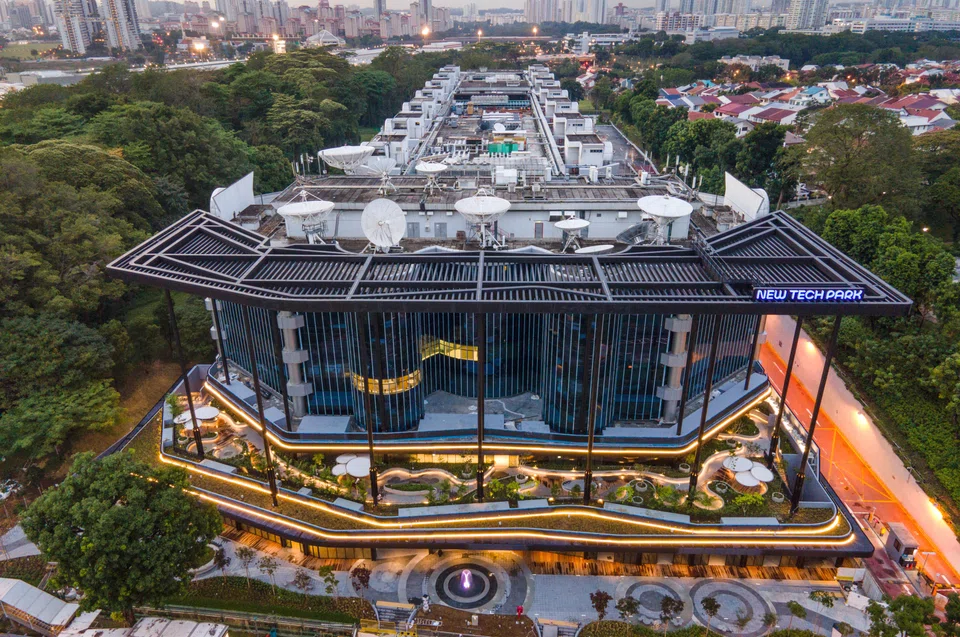
The activist investor also grumbled that occupancy rates at some buildings with higher rental rates – such as New Tech Park, Frontech Centre, 8 Commonwealth Lane, and 10 Changi South Street 2 – had fallen despite favourable conditions in the industrial property sector.
In the letter, it offered a laundry list of improvements the new internal manager could pursue to boost Sabana Reit’s performance. This included improving the occupancy rates and adding space at some properties, and undertaking debt-funded acquisitions.
Quarz said it sees potential for the new internal manager to boost Sabana Reit’s DPU over the medium term by almost 60 per cent.
For 2022, Sabana Reit reported flat DPU of 3.05 Singapore cents. Its net asset value (NAV) as at Dec 31 was S$0.53 per unit.
Sabana Reit closed Friday (Jun 9) at S$0.43. Based on its 2022 financial numbers, the Reit is trading at a yield of nearly 7.1 per cent, and an 18.9 per cent discount to NAV.
Volare, Quarz increased stakes
The manager of Sabana Reit will probably dispute some of Quarz’s assertions about the Reit’s operational performance.
For instance, Quarz said in its letter that Sabana Reit’s portfolio occupancy was 88.2 per cent at end-2022. But the manager of Sabana Reit has reported a portfolio occupancy rate at end-2022 of 91.2 per cent – excluding its property at 1 Tuas Avenue 4, which is currently vacant and going through an asset enhancement initiative.
The market value of Sabana Reit’s units has also held up quite well over the past year, despite rising interest rates and concerns about slowing economic growth. Over the past 12 months, Sabana Reit’s units have delivered a total return of 2.4 per cent. By comparison, Mapletree Logistics Trust returned 3.1 per cent, while Mapletree Industrial Trust returned minus 6.7 per cent. CapitaLand Ascendas Reit returned 0.3 per cent.
Quarz said in its Jun 7 letter, however, that Sabana Reit might have performed more poorly over the last couple of years if its substantial unitholders had not been increasing their stakes.
On Jan 20, Volare Group unveiled a partial offer for 10 per cent of Sabana Reit’s units at S$0.465 apiece. By the close of the offer on Mar 24, valid acceptances had been received for 27.7 per cent of Sabana Reit’s units.
Volare held more than 169.1 million Sabana Reit units following the partial offer, putting its stake in the Reit at more than 15.4 per cent.
On Mar 20, Quarz’s own stake in Sabana Reit breached the 15 per cent level. This came after the purchase of 96,000 units in the market, raising its deemed interest to 164.5 million units.
Still, Sabana Reit’s manager may face an uphill battle arguing against Quarz’s internalisation proposal. In the wake of the pandemic and subsequent steep rise in interest rates, there is more scrutiny of the value that external managers bring to the table.
Moreover, it seems to be widely accepted that internally managed Reits are less susceptible than externally managed ones to issues related to conflicts of interest.
Sabana Reit and ESR-Logos Reit both invest in Singapore industrial properties, and their managers are ultimately owned by ESR Group. Given that ESR-Logos Reit has a market capitalisation more than five times that of Sabana Reit, their sponsor may appear to be incentivised to prioritise the interests of the former over the latter.
Internalising the manager of Sabana Reit would turn ESR Group into just another big unitholder alongside Volare and Quarz, thus mitigating this problem of overlapping mandates.
ESR Group’s fees, distributions
In 2020, Quarz waged a bruising campaign to prevent Sabana Reit from being merged with ESR-Reit on terms that were plainly unfair. Since then, Quarz has repeatedly criticised Sabana Reit’s performance and questioned the appointment of various directors to the board of the Reit’s manager.
Quarz also mobilised unitholders of Sabana Reit to vote against Resolution 4 at its annual general meeting on Apr 25. The resolution, which would have authorised the manager to issue new units, failed to pass, with 42.14 per cent of units voting for it and 57.86 per cent of units voting against it.
Without the mandate to issue new units, the manager of Sabana Reit will have to obtain permission from unitholders whenever it needs to raise equity funding. This has arguably reduced the usefulness of Sabana Reit as a property securitisation platform, and made it less likely for ESR Group to obtain a high valuation for its manager in any potential sale.
Under the circumstances, the relevance of the Sabana Reit platform to ESR Group is probably now financial rather than strategic. While ESR Group would certainly be ill-disposed to surrendering the fee income it collects from Sabana Reit every year, it would stand to benefit somewhat from the Reit’s increased profitability in the event that Quarz’s proposal is implemented.
ESR Group held more than 226.8 million units in Sabana Reit as at Mar 8, representing a nearly 20.7 per cent stake. ESR Group would therefore have received more than S$6.9 million in distributions from Sabana Reit for 2022.
This was almost equivalent to the nearly S$7.3 million in fees Sabana Reit paid to its sponsor group in 2022 – which comprised S$4.4 million in manager’s fees and S$2.8 million in property and lease management fees.
While it remains to be seen how ESR Group reacts to Quarz’s proposal to internalise the manager of Sabana Reit, it already seems clear this episode will mark an interesting milestone in the development of Singapore’s Reit sector.
For more on real estate investment trusts, catch my upcoming seminar, Mark to Market “Live”, on Jul 15. Register now at bt.sg/m2mlive23
TRENDING NOW

Things to know about DBS’ incoming chairman Anthony Lim
DBS eyes prime brokerage business as Q3 profit falls 5% on weaker trading income

Royal Group and Sunset Hospitality abandon plans to open Casa Mett hotel off Orchard Road

George Yeo adds 100,000 Wilmar shares at S$2.97 apiece, taking stake to over 1 million shares

