

Proposed changes to leverage limits for S-Reits make sense given Manulife US Reit’s experience

ON THE final trading day of 2022, the manager of Manulife US Real Estate Investment Trust (MUST) put out an announcement headlined: “Aggregate leverage to remain within regulatory limit based on updated asset valuations”.
The announcement was, in fact, a warning that MUST’s aggregate leverage as at end-2022 had risen to 49 per cent because of a double-digit percentage decline in the valuation of its property portfolio.
Singapore-listed real estate investment trusts (S-Reits) are subject to an aggregate leverage cap of 45 per cent, but they are allowed to raise their aggregate leverage to 50 per cent if they have an interest coverage ratio (ICR) of at least 2.5 times.
As MUST was projected to have an ICR of 3.1 times at end-2022, its aggregate leverage was within the regulatory limit, its manager said in the announcement.
For investors, MUST’s compliance with the regulatory cap on leverage at that point was arguably far less important than the fact that the US commercial property market was likely to continue deteriorating.
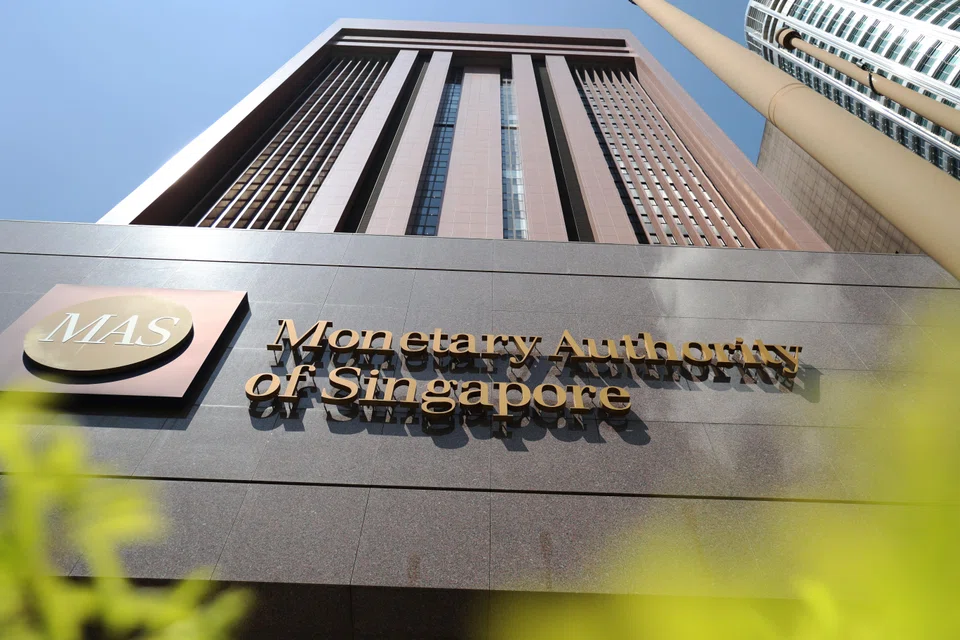
Indeed, the experience of MUST over the past couple of years might be a useful case study in understanding why the proposed amendments to the leverage requirements for S-Reits unveiled by the Monetary Authority of Singapore (MAS) last week make a lot of sense.
MAS wants to simplify the current leverage requirements by subjecting all S-Reits to a minimum ICR of 1.5 times, and an aggregate leverage cap of 50 per cent.
MAS also wants S-Reits to perform and disclose sensitivity analyses on the impact that changes in their Ebitda (earnings before interest, tax, depreciation and amortisation) and interest rates would have on their ICRs.
On the face of it, these proposals are a loosening of the current rules. The S-Reits with the most to gain are those with aggregate leverage ratios currently approaching 45 per cent, and ICRs plumbing towards 1.5 per cent.
Will the proposed rule changes undermine market discipline? Will they promote dangerous risk-taking?
Regulations versus lenders
The rule changes are being proposed at a time when interest rates are more likely to fall than rise, and the whole S-Reit sector seems poised to turn the corner.
The experience of MUST over the past couple of years also suggests that the regulatory limits on aggregate leverage have not been the most potent disciplining force for S-Reits.
As at Jun 30 last year, MUST suffered a further double-digit percentage decline in the valuation of its property portfolio, which pushed its aggregate leverage up to 57 per cent. MUST’s manager said this was not considered a breach of the aggregate leverage limit as it was due to circumstances beyond its control.
The manager was, however, forced to take remedial action because MUST had, at that point, also breached a loan covenant requiring it to maintain a ratio of unencumbered debt to unencumbered assets of not more than 60 per cent.
This resulted in a cross default of MUST’s interest rate swaps, which put it at risk of having to bear higher interest costs. This, in turn, put MUST in danger of eventually breaching another loan covenant that required it to maintain an ICR of more than two times.
At the mercy of its lenders, MUST’s manager hammered out a deal late last year that involved the immediate repayment of US$285 million of debt with the help of its sponsor group, and a commitment to raise at least US$328.7 million through asset sales.
MUST’s bankers extended the maturities of its loans by one year. They also temporarily raised the ceiling for MUST’s unencumbered gearing from 60 per cent to 80 per cent, and lowered the floor for its ICR from two times to 1.5 times.
With the simplified leverage requirements MAS is proposing, investors may begin to focus more closely on the margin of safety that S-Reits have in satisfying their loan covenants. As long as lenders maintain their standards, this could well be a positive development for the S-Reit sector.
Merits of sensitivity analyses
By the time MUST’s manager made its announcement about the double-digit percentage decline in the valuation of its portfolio on Dec 30, 2022, it was clear that the deteriorating commercial property market in the US posed a major problem.
Only a few weeks before, the manager had announced the appointment of Citigroup Global Markets Singapore as its financial adviser in relation to a strategic review.
The manager also subsequently said in its 2023 first-quarter operational update that it had attempted three asset dispositions between April and November 2022, but that the deals were scuppered by rising interest rates and potential buyers being unable to obtain funding.
In such a dynamic market environment, investors would naturally be inclined to speculate on how an S-Reit’s balance sheet and credit profile might be affected. This is where the proposed sensitivity analyses could be useful.
MAS is proposing S-Reits produce sensitivity analyses on the impact of changes in Ebitda and interest rates on their ICRs.
MAS wants S-Reits to disclose these sensitivity analyses in their interim financial statements and annual reports. At least one scenario should assume a 10 per cent decrease in Ebitda and a 100 basis point increase in interest rates.
This could be an effective way for S-Reit managers to provide investors with information in a timely manner.
Given the experience of MUST, MAS should perhaps also require S-Reits to provide sensitivity analyses on the impact of changes in the valuation of their largest properties on their aggregate leverage.
These various sensitivity analyses should perhaps also be required to indicate how bad things would need to get for loan covenants to be breached.
With a better sense of how the capital structure and debt-servicing ability of S-Reits might change through an economic cycle, investors would have a deeper understanding of the risks they face.






