In providing re-employment support, will Singapore’s fourth-generation leadership remain wary of giving too much?
Recent scrutiny of errant doctors and healthcare insurance may signal continued caution

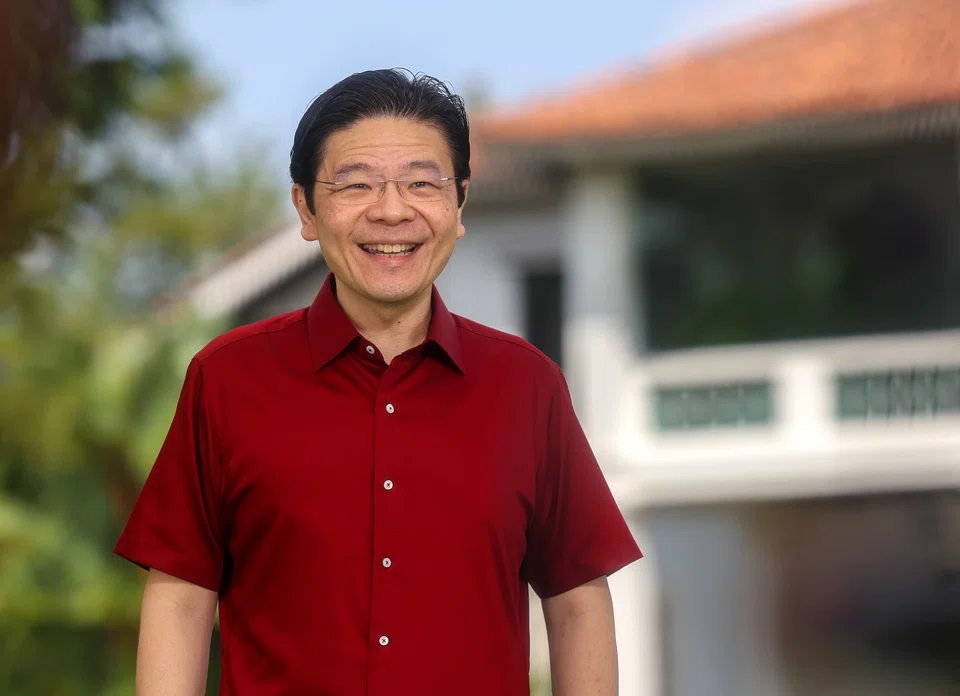
IN HIS debut National Day Rally (NDR) speech on Sunday (Aug 18), Prime Minister Lawrence Wong is expected to announce – among other things – the long-awaited details of upcoming re-employment support for retrenched workers.
Questions that remain to be answered include the eligibility criteria, and the length and quantum of financial support.
For decades, Singapore’s politicians have shunned the idea of unemployment benefits, warning against abuse and arguing that such support could incentivise the wrong sort of behaviour: reducing the motivation to pursue employment and eroding self-reliance.
When the upcoming scheme was hinted at in 2022, it seemed that Wong’s fourth-generation leadership team might overcome this long-held aversion.
But the idea has since been reframed from “unemployment support” to “re-employment support”, and it remains to be seen how stringent and tightly-scoped the policy design will be.
Far from heralding a major change in thinking, the re-employment support scheme could demonstrate a continuity of approach. While unrelated, recent comments about overconsumption of healthcare also imply continued caution about generosity and prudence about costs.
A healthy discipline
Last month, Health Minister Ong Ye Kung delivered a lengthy speech warning against “overly generous insurance policy design” and the “buffet syndrome” that might result.
Speaking at the 25th anniversary celebrations of the Securities Investors Association (Singapore), he noted that patients who are covered by generous insurance policies may happily receive more tests and more expensive treatments than required.
The government is thus strengthening enforcement against “errant doctors who overcharge” for unnecessary tests and treatments, as such overcharging leads to bigger bills and higher insurance premiums for all.
Private insurance companies must also “rein in overly generous and unsustainable terms”, added Ong.
At the launch of the Woodlands Health Campus just the next day, Senior Minister Lee Hsien Loong similarly warned about overconsumption of healthcare.
Healthcare services are “practically at breaking point” in other countries, with some facing “exorbitant medical bills and high insurance premiums”, he said.
Laying out how Singapore must avoid this, he said: “We must… maintain discipline not to overtreat or overprescribe, and be discriminating in adopting new medical treatments, procedures, drugs and technology, in order to keep our overall healthcare costs sustainable for the long term.”
Taken together, one interpretation could be that two senior members of Wong’s Cabinet are emphasising the government’s commitment to keeping healthcare costs in check – not just by reining in errant doctors but also curbing generosity of insurers.
Could the same caution be applied to other areas where fiscal firepower is expected to be deployed?
A narrow scope
Wong, who took office in May, gave a preview of his NDR speech in his Aug 8 National Day Message.
“We will enhance support for our families, and help Singaporeans bounce back stronger from employment setbacks,” he said, adding that he would share “some ideas” in his NDR.
The latter likely refers to the long-awaited re-employment support first raised by Manpower Minister Tan See Leng in November 2022.
But, the hotly anticipated scheme will likely be narrow in scope, with strict, specific criteria – such as proof of finding work, or a minimum length of unemployment – to be met before support is doled out.
Recent manpower policy moves have similarly guarded against misuse of support. Take, for instance, the S$4,000 SkillsFuture Credit mid-career top-up for Singaporeans aged 40 and above, announced by Wong in Budget 2024.
The use of this top-up was narrower in scope, confined to a curated list of some 7,000 programmes. This is in contrast to the base tier of SkillsFuture Credit – S$500 for Singaporeans aged 25 years and above – which can be spent on more than 20,000 courses.
In the same vein, re-employment support will likely be tied to reskilling and upskilling.
This would keep it targeted, continue to emphasise the importance of personal responsibility and self-reliance, and keep funding costs in check.
Cost management
Singapore’s politicians have long stressed the need for prudence and avoiding waste, whether at the overall fiscal level or in the context of specific policies.
Both Wong and his predecessor have spoken on how public spending must be kept in check, even as such needs will continue to rise.
With Wong being seen as having a softer or more personable approach, and with his flagship Forward Singapore agenda including stronger safety nets, one might wonder if this could mean more generosity in government spending and policy design.
But instead, Wong’s term could be characterised by a sustained focus on cost management – not least given his other role in Cabinet.
Having been finance minister since May 2021, Wong has a particularly clear understanding of the cost pressures on the national balance sheet.
He was the one who laid out the need for a two-step goods and services tax hike, in his Budget 2022 speech.
“Our spending needs are rising very sharply, especially because of an ageing population and healthcare spending,” said Wong in a subsequent press conference.
The increased scrutiny of healthcare insurers and doctors aims, ultimately, at not providing the wrong incentives – removing the temptation of “buffet syndrome”.
Even as Wong promises more support across various areas, new policies are likely to be crafted to ensure little room for abuse.
The scope of re-employment support, in this Sunday’s NDR, will be another indication of just how wary the fourth-generation leadership is about over-generosity.