
Public good precedes corporate interests in insuring platform workers
 Add BT as a preferred source
SINGAPORE’S proposal to insure platform workers against work injuries drew disagreement from a major insurance industry body, but this was followed by a robust response from the government.
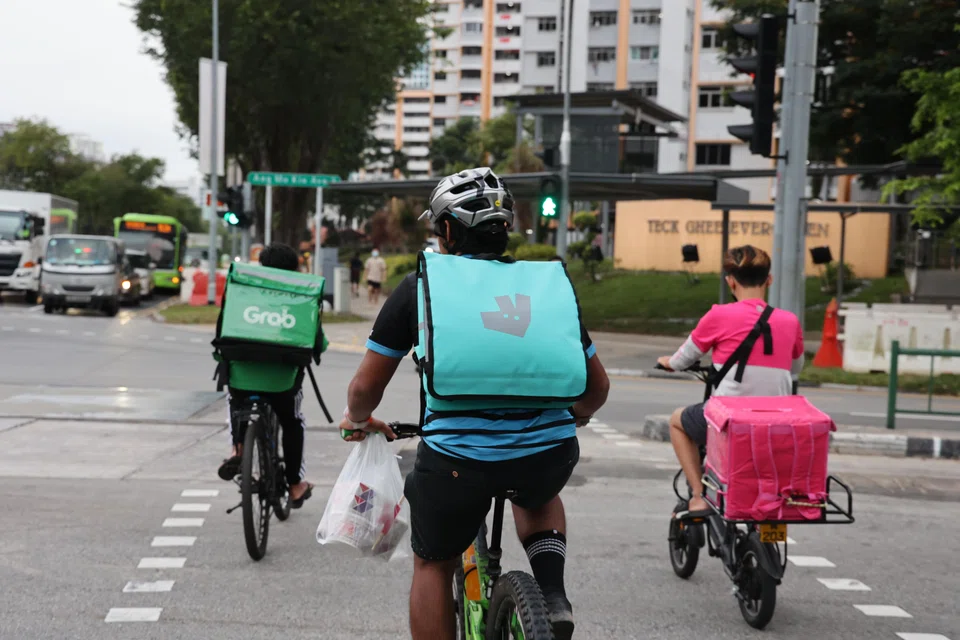
The episode illustrates how public interests will sometimes have to be weighed over corporate ones, especially where the livelihoods of a vulnerable segment are concerned. Last month, Singapore set out that platform workers should enjoy the same levels of coverage that employees do under the Work Injury Compensation Act (Wica). Based on this principle, platforms like Grab and foodpanda will have to offer injury coverage that matches the Wica framework. The coverage thresholds would be the same as what is stipulated for employees under Wica, such as compensation of between S$76,000 and S$225,000 for a worker’s death.
However, coverage for platform workers is hardly straightforward, as many of them “multi-home”, or work for more than one platform. To account for this, the Advisory Committee on Platform Workers has decided that coverage will be based not just on earnings from a single platform, but all the platforms the worker serves in the sector.
The General Insurance Association of Singapore (GIA) has voiced against the use of a Wica-based solution for platform workers. It called instead for some tweaks to existing products to match Wica levels of coverage, including relying on MediShield Life. The reason cited for this was that with a Wica-based solution, a platform worker must quantify and prove his loss of income across many months and multiple platforms.
However, the government has since noted that tweaking existing products will likely result in higher costs for the platform companies. GIA’s call to rely on MediShield Life is in essence asking platform workers to pay for their own coverage. In addition, insurers should not be the final arbiter of any disputes to work-injury claims, Senior Minister of State for Manpower Koh Poh Koon said in Parliament on Nov 29. With the Wica framework, the Ministry of Manpower would oversee any disputes.
It is understandable why the new insurance framework might be a bitter pill for insurers to swallow. Applying Wica to a non-employee group is untested territory, and is made more onerous by the provision for multi-homing. But platforms and insurers can work out data-sharing arrangements to ensure that risk levels can be determined accurately, so that premiums can be set at a fair level.

Navigate Asia in
a new global order
Get the insights delivered to your inbox.
Insuring platform workers, by its nature, is unlikely to be a highly profitable business for insurers. Some may believe that this should be provided by a public agency. However, the trade-off is a lack of market competition that could spur more product innovation and efficiencies. Coming up with comprehensive coverage for platform workers will likely require some experimentation and adjustments along the way, but it is worth the effort. It is in such instances where a delicate balance between public interest and business sustainability will have to be struck.
Decoding Asia newsletter: your guide to navigating Asia in a new global order. Sign up here to get Decoding Asia newsletter. Delivered to your inbox. Free.
Copyright SPH Media. All rights reserved.

