Putin’s productive Asia trip gives boost to business ties with India
Warmth of Modi-Putin relationship worries some of the West’s Asian allies, including those in Asean
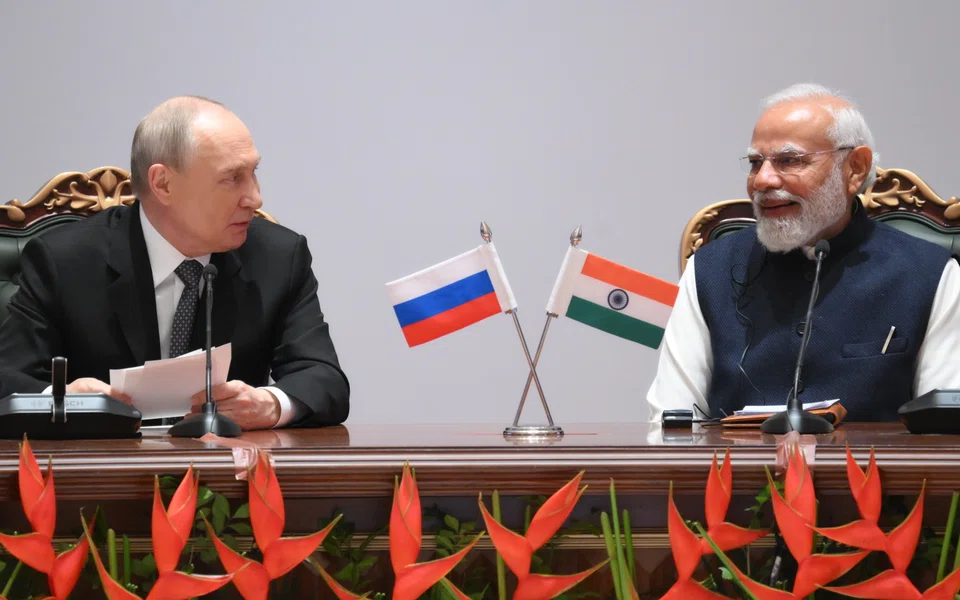
BUSINESS was at the heart of Russian President Vladimir Putin’s trip. New Delhi hosted the India-Russia Business Forum, where more than 100 commercial leaders tried to secure an economic cooperation programme to 2030. Deals agreed included critical minerals and civil nuclear technology.
Wider agendas under discussion include small modular reactors, floating nuclear plants and non-energy nuclear technologies in medicine. Agreements were also signed to boost cooperation in shipping and agriculture, including setting up a joint venture fertiliser plant in Russia.
The goal is to create faster momentum so that bilateral trade grows to US$100 billion by 2030, up from US$68 billion in 2024-2025. While that growth trajectory may appear a big stretch, bilateral trade has grown very rapidly since the pandemic. There are negotiations underway for a potential trade agreement between New Delhi and the Eurasian Economic Union, of which Moscow is a key part.
Another foundational stone for this 2030 target is a plan for greater labour mobility to enable Indian professionals to work in Russia’s construction, healthcare and hospitality sectors. This is part of a broader effort to increase the exchange of people and skills.
Indian-Russian energy and defence ties
Traditionally, energy and defence have been at the core of the bilateral economic relationship. However, these same topics lie at the heart of concerns of Western partners, especially Washington, about New Delhi’s ties with Moscow.
On the energy front, India’s consumption of Russian crude oil has increased massively. Russia accounted for only around 2.5 per cent of India’s imports before the war with Ukraine began in 2022.

This skyrocketed to more than 35 per cent in 2024-2025, significantly higher than supplies from other nations such as Iraq, Saudi Arabia, the United Arab Emirates and the US. Today, India is the largest buyer of seaborne Russian crude, followed by China, highlighting how big a market Asia has become for Moscow.
This is why US President Donald Trump doubled the US tariff rate on India’s exports to 50 per cent on the basis that New Delhi’s oil purchases are helping sustain Russia’s war effort. There are some signs that this is beginning to bite. India’s largest conglomerate – Reliance Industries – has stopped importing Russian crude, amid a recent decline in wider Indian imports.
Unsurprisingly, Putin used last week’s trip to encourage India to continue to make large purchases of Russian crude. This included offering additional discounts, and a proclamation that Moscow is ready to provide “uninterrupted shipments” of fuel to India.
Putin also accused Trump of hypocrisy for punishing New Delhi when the US buys nuclear fuel from Moscow, and other items such as palladium and fertiliser.
While Indian imports of Russian oil have been on an upward trajectory under Narendra Modi’s prime ministership, the opposite is true of its defence ties.
As at 2009 to 2013, Russia’s share of Indian arms imports was 76 per cent. Yet by 2019 to 2023, this had fallen to 36 per cent as a result of New Delhi finding more alternative international suppliers, and boosting domestic production.
For the West, the symbolism of the warm Modi-Putin meetings is striking. However, there is no question that Trump has encouraged India and Russia to hug each other more tightly, for now. Putin’s visit is clearly part of an Indian diversification strategy to reduce reliance on the US.
This is a challenge for Trump’s foreign policy. It exposes his transactional focus and lack of any coherent grand strategy with many US regional allies, including some in Asean.
In Trump’s first term from 2017 to 2021, he and his senior team invested much time in relations with India. Other allies also sought to deepen ties with New Delhi. This includes the UK, which signed a trade agreement with India this year.
There has been sizeable support across the political aisle in Washington favouring a strong relationship driven by the perceived strategic rationale for partnership. This has not always been evident. For much of the Cold War when India was aligned with the Soviet Union, bilateral relations were difficult.
Both India, the US and the wider West continue to have significant incentives to deepen ties building on growing closeness in recent years. In 2016, Washington declared New Delhi a major US defence partner and signed the Communications Compatibility and Security Agreement, which then-defence minister Nirmala Sitharaman claimed elevated bilateral relations “to unprecedented heights”. However, Trump’s new India tariffs have brought a chill to ties. This is not only a challenge to bilateral relations, but also US’ wider grand strategy in Asia of which New Delhi is a key part.
The writer is an associate at LSE Ideas at the London School of Economics (LSE)
Decoding Asia newsletter: your guide to navigating Asia in a new global order. Sign up here to get Decoding Asia newsletter. Delivered to your inbox. Free.
Share with us your feedback on BT's products and services