

Quest for Greenland and Panama fits well into the age of empire
Great powers are always in the quest for more territory
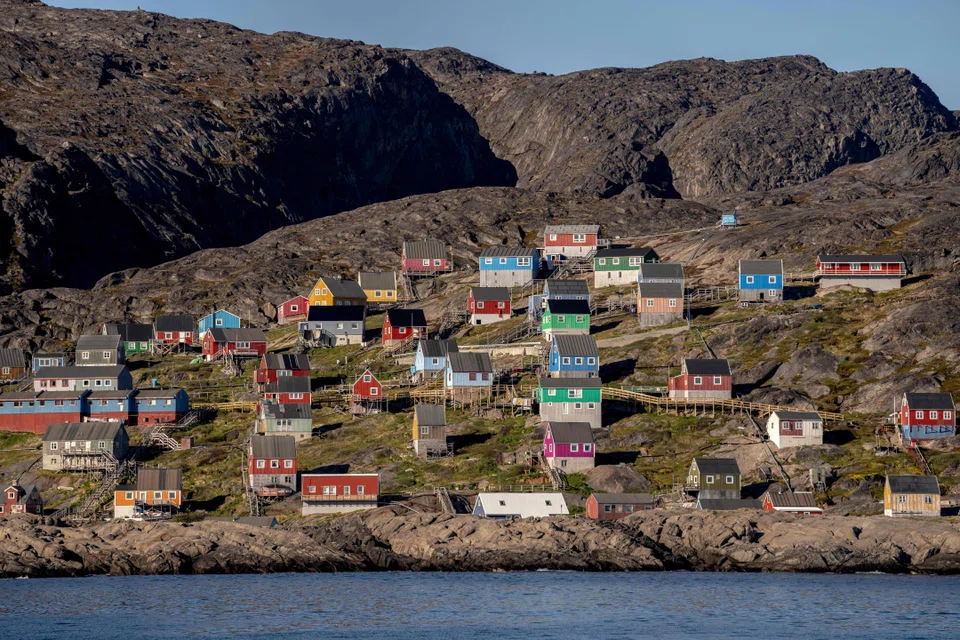

THERE is really nothing particularly extraordinary about the incoming Trump administration’s desire to add Greenland and the Panama Canal to the territory of the United States. It has always been that way. From the time of the 1803 Louisiana Purchase which added a huge swathe of the North American continent to US territory, to the 1867 deal with the Russian empire to buy over what is now the state of Alaska, it has been Washington’s modus operandi. When it was not feasible, for whatever reason, to buy over land, Washington turned to the old-style invade-and-annex playbook.
What makes the Greenland demand somewhat unusual this time is that the owner, Denmark, is currently a military ally of the US and had already rejected the offer during Donald Trump’s first presidency. Of course, that does not mean that the Danes cannot be made to reconsider. And there is some history between Denmark and the US on this score.
During World War I, America successfully pressured Denmark to sell their three-island colony, then known as the Danish West Indies, by threatening an attack on the then neutral nation in Europe. Denmark had colonised the three islands back in the 17th and 18th centuries. The Danes imported African slaves to work on sugar plantations at great profit to themselves until the 1840s, when sugar prices fell. By the late 19th century, the Danes were finding it expensive to run the islands.
At the same time, the US had been eyeing the islands. There were a few false starts with negotiations. Finally, it was the Americans’ construction of the Panama Canal and the need to ensure that approaches to the canal zone would not be in the hands of a hostile power that got the deal done. Washington bought the islands for US$25 million in gold. The islands are now known as the US Virgin Islands, with the descendants of slaves consigned to second-class US citizenship.
On the other hand, the Panama Canal was a classic imperial land grab. In 1977, when the Carter administration was finalising details of when and how to turn over the canal to the Panamians, the catchcry among those opposed, coined by a US senator, was: “We stole it fair and square”. Indeed, the land had been part of Colombia. Washington fomented a small rebellion that dutifully “liberated” the isthmus from the Bogota government in 1903 and turned the rights to build the canal over to the US. So Panama, the country, and the canal began life together as an American project.
Trump claims that US ownership of Greenland is “an absolute necessity”. The Truman administration also wanted to buy Greenland after World War II, as part of a Cold War strategy to keep out the Soviets. But Trump’s current maximalist position hardly leaves any room for negotiation.
The Danes have announced a huge boost in defence spending for Greenland. While that might sound heroic, what Denmark may be really saying is that Copenhagen will do its best to secure Washington’s interests without the need to transfer sovereignty. We shall see how that gambit works out. Meanwhile, Panama has totally rejected the US threat to reclaim the canal under any pretext.
Great powers are always in the quest for more territory. China has its nine-dash line. Russia has Donbas and Luhansk and South Ossetia. Truth be told, the age of empire never really went away.






