

From radical to Rihanna: The myths about Japan’s next leader
Who is Sanae Takaichi and what does Liberal Democratic Party leader stand for?
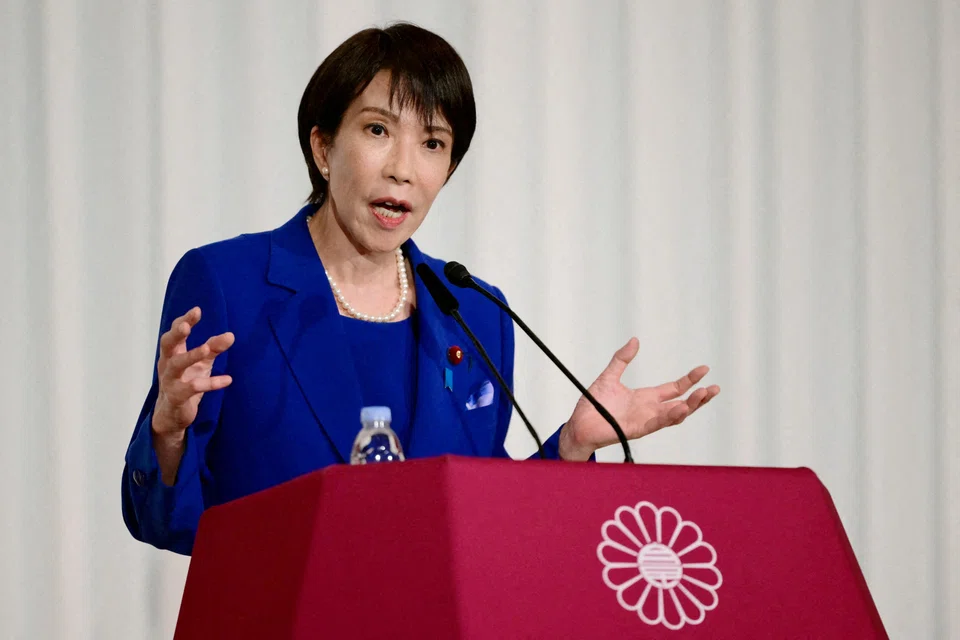
THE prospect of a new Japanese leader doesn’t always generate international excitement.
But Sanae Takaichi’s somewhat surprising victory in becoming leader of the Liberal Democratic Party (LDP), which puts her in pole position to become prime minister next week, jolted markets and energised both sides of the political spectrum.
It’s a vibe-shift moment that has led to a flurry of mis- and disinformation as demand for thought pieces on Takaichi outstrips supply. When the late Shinzo Abe returned as LDP leader in 2012, there was a similar flood of coverage attempting to cast him as a radical conservative who was “dangerously nationalistic”. Doomsayers predicted that Abe would seek the return of Japanese militarism and that his economic spending would collapse the economy.
That didn’t reflect reality. But we’re in danger of seeing a repeat. And the speed at which myths travel is far faster now than it was over a decade ago. Let’s separate fact from fiction on some of the claims.
Myth: She’s a radical right-winger
As with Abe, many want to make Takaichi out to be not just a right-winger or a conservative but an “ultranationalist”, a radical, or a female Donald Trump.
She doesn’t make it easy on herself, such as the ill-advised blurb she wrote as a junior lawmaker endorsing a book on Hitler’s electoral campaign tactics. But other frequently referenced controversies are more gotcha moments, such as being photographed meeting a Holocaust denier.
Expect to read a lot about Nippon Kaigi, a conservative advocacy group of which she is a member and that some like to portray as a sinister secret organisation pulling the strings of Japanese power. But it counts hundreds of lawmakers, including centre-left figures such as former leader Fumio Kishida, among its ranks.
This follows the playbook used with Abe, with hints at murky leanings and guilt by association. This largely did not stick – after all, he was in power for eight years, and not only did little that was radical, but he accomplished things such as greatly expanding women’s roles in the workplace, something Takaichi is now benefiting from.
Of course, she is deeply conservative, and has endorsed visits to the contentious Yasukuni Shrine, which commemorates Japan’s war dead, including those convicted as war criminals. She has no love for ideas such as separate names for married couples: Takaichi herself divorced and later remarried her husband, taking his name the first time, while he took her family name the second. She opposes same-sex marriage, though she says she supports same-sex partnerships.
But much of her platform would hardly be considered extreme in many countries – it centres on constitutional reform and a strong military. Those views should no longer be radical in Japan.
Myth: She wants to work you into the ground
Takaichi had been LDP president for all of five minutes when she generated her first controversy. Channelling her inner Rihanna during her acceptance speech on Saturday, she said she would “work, work, work, work, work” for the good of the country and encouraged lawmakers to do the same. While it was a welcome contrast to predecessor Shigeru Ishiba’s complaints about the toughness of the job, she struck a nerve with a pledge to “throw away the phrase ‘work-life balance’”.
Activists for reducing work hours and death by overwork slammed her. I have already noted her recklessness. But this wasn’t one of those occasions. She wasn’t talking to the public, but to LDP lawmakers – and who doesn’t want politicians to work hard?
Myth: She’s (somehow) a setback for gender equality
Assuming she is approved by parliament, the country will have a female leader years ahead of the US, and also become one of the few countries where both the national government and the capital city are led by women (Tokyo Governor Yuriko Koike).
Takaichi herself, it must be noted, doesn’t make a big deal out of her gender. And because she comes from the wrong side of the political aisle for some, this is being seen as an issue. “Takaichi breaks the glass ceiling, but there are concerns it may be a setback for gender equality,” said the Mainichi newspaper.
That seems harsh on a woman who, unlike many lawmakers, wasn’t born with a silver spoon in her mouth. She wants the number of women in her Cabinet to be on par with Nordic countries, though one obstacle is the low number of female lawmakers who could fill those roles. If, as Billie Jean King said, “You have to see it to be it”, then she’ll be an inspiration for others to follow.
Myth: She’s Abenomics 2.0
The Nikkei 225 Stock Average rose 4.8 per cent on Monday (Oct 6) in the wake of Takaichi’s victory. But colour me sceptical on the idea that she will be Abenomics 2.0, with a huge new surge of fiscal spending and the Bank of Japan following.
Takaichi in the past has certainly been an advocate for free-spending policies. But the LDP is not in a position to force through such radical plans these days. Indeed, even with coalition partner Komeito, it is not in a position to force through any policies at all, lacking a majority in both houses of parliament (thanks, Ishiba!).
She will also be indebted to calmer heads such as Taro Aso, whose political machinations reportedly proved instrumental in her victory.
There are lots of obstacles in the way of her success – including her own sometimes rash nature. In any case, that will be tempered by political reality. Let’s judge the real Takaichi by her actions, not by online rumours.
TRENDING NOW

Two Singapore-listed palm oil firms named in Greenpeace report on Indonesian plantation fires

Singapore Airlines flight returns to San Francisco after ‘unruly’ passenger incident

Singapore looking into which companies responsible for haze-causing fires: PM Wong
Deluge IPO 3.86 times subscribed ahead of SGX debut

