

As Raffles Medical celebrates its golden jubilee, the doctor calls for more patience
Growth from the group’s defensive plays in China and Vietnam will take time

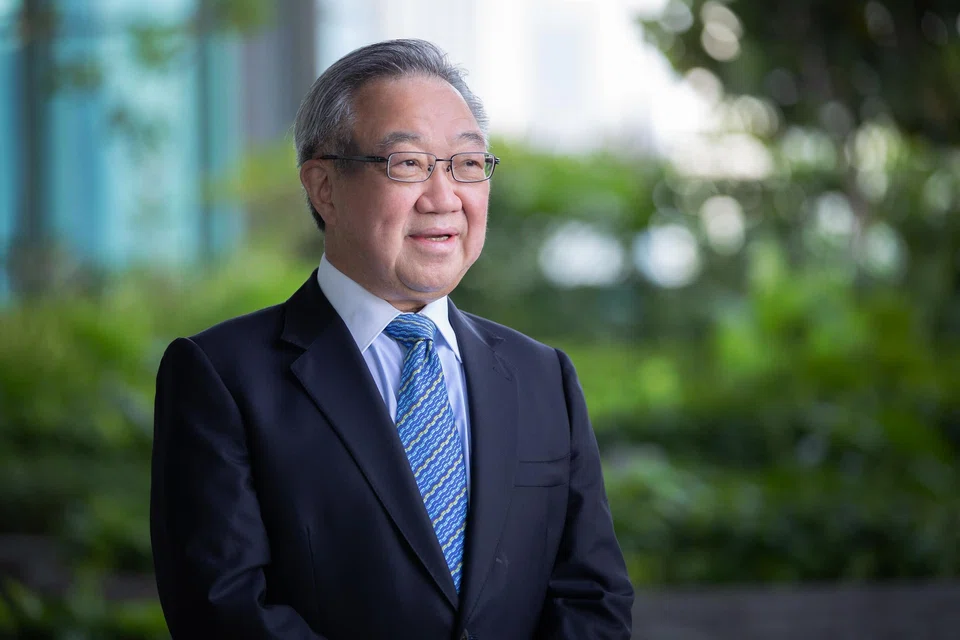
[SINGAPORE] For five decades, Raffles Medical Group (RMG) has been the reliable – if somewhat staid – pulse of Singapore’s private healthcare sector.
The critiques have been as consistent as its sterile hallways: too slow, too cautious, and too bogged down by the “gestational losses” of its ambitious China expansion.
And as the group enters its golden jubilee, executive chairman Dr Loo Choon Yong is doubling down on his “long-term play” philosophy.
But for shareholders watching the revenue growth slow to a pedestrian 0.3 per cent for the second half-year ended Dec 31, 2025, the bedside manner might be getting a little thin.
Dr Loo admitted that the regional middle class – the former lifeblood of Singapore’s medical tourism – is increasingly bypassing the city-state for destinations such as Kuala Lumpur and Bangkok.
In a sense, Singapore has become an “ICU for the ultra-rich”, catering to those who prioritise safety over cost.
“The very rich from the region will still come,” Dr Loo said at RMG’s results briefing earlier this week. “The top businessmen, the top generals or the top politicians – they will all come to Singapore because they feel safer.”
But banking on the elite is a niche strategy, not a volume one.
“The shift from treating expats to courting the hai gui Chinese middle class is a smart pivot that is likely to pay off for Raffles Medical Group in the long term. But it’s happening against a backdrop of a cooling economy, where even the wealthy are checking their receipts. ”
There is no denying that RMG’s Singapore core remains a formidable cash-generating machine. A 21.7 per cent jump in H2 net profit to S$38.5 million is a healthy result by any measure, underpinning a 20 per cent hike in dividends to S$0.03 per share.
According to analysts such as RHB Group’s Shekhar Jaiswal, there is a “favourable insurer-panel shift” that is reportedly diverting patient volumes towards RMG, away from more expensive private-sector peers.
RHB is maintaining “buy” on the stock with a target price of S$1.30 – implying a potential upside of nearly 24 per cent from its closing price of S$1.05 on Wednesday (Feb 25). Jaiswal believes the company has scope for “defensive growth” as catalysts start to line up.
However, a closer look at the Singapore recovery reveals a structural ceiling.
Among other things, Dr Loo cited the strong Singapore dollar and high property costs as reasons for the middle class in the region to seek treatment elsewhere. And it is a problem that he foresaw as far back as 20 years ago.
“In the past, we had more foreign patients coming; now, we cannot rely on this as a growth path,” he said. “That’s also the reason we progressively grew out of Singapore into the region.”
RMG’s solution is to follow the patients to China and Vietnam, but that’s a “build, don’t buy” strategy that eats cash today for the promise of a harvest a decade from now.
Defensive regional plays
Mainland China, however, remains the elephant in the consultation room.
Dr Loo is remarkably sanguine about its “painful” correction after decades of fast-paced growth, comparing the property overhang to Japan’s and Hong Kong’s past woes.
He points to China’s electric vehicle productivity – with sales outperforming those of Elon Musk’s Tesla – as a sign of underlying vigour.
But for RMG’s hospitals in China, the reality is a waiting game. The group is seeing some success, with Chinese patients – instead of expats – now making up the biggest share of its customers there.
These are mostly “hai gui” – a Chinese term for returnees who have studied or worked overseas, Dr Loo said.
“They don’t want to go to the state hospital because the waiting time is very long and the service is not very personal,” he added.
The shift from treating expats to courting the hai gui Chinese middle class is a smart pivot that is likely to pay off for RMG in the long term. But it’s happening against a backdrop of a cooling economy, where even the wealthy are checking their receipts.
Still, Dr Loo remains “very confident” about the Chinese market. “It was an investment seriously made, but it will take a bit of time to come to fruition.”
If China is the complex, ageing patient, Vietnam is the “young Singapore” of 30 years ago.
Dr Loo’s eyes visibly brightened when discussing the 100 million-strong population in Vietnam – young, eager, and increasingly willing to pay for personalised care to escape the long queues of a buckling public system.
The group is currently deep in due diligence – which it expects to come to a conclusion by H1 2026 – for a hospital acquisition in Vietnam. While it is a necessary hedge against Singapore’s maturing market, Dr Loo described it as a “medium to long-term play”.
After all, you don’t just buy a hospital and see earnings pop; you buy, you improve, and you wait years for the reputation to bake in.
The Malaysia conundrum
Then there is the Johor-Singapore Special Economic Zone, the shiny new toy that every Singaporean corporate wants to play with. This is where the narrative gets interesting.
While rival Thomson Medical is busy sketching out 500-bed mega-hospitals in Johor, Dr Loo remains notably unenthused.
He questions the logic of a hospital that would struggle to compete with Singapore’s own heavily subsidised public healthcare system just across the Causeway.
“We have not made up our minds. We are studying, but initially it does not appear to make a lot of sense to us,” he said.
Indeed, why fight for a patient who is already getting 80 per cent off at a Singapore government hospital?
As analysts pointed out, RMG has a number of catalysts lined up that could put it on a growth path. But it will call for a healthy dose of patience.
The group may have bought itself time with a share buyback programme that provides a floor and an 84 per cent payout ratio that keeps the yield-seekers happy.
However, the market will soon want more; it will want to see that the regional expansion isn’t just a defensive manoeuvre, but also a genuine growth engine.
For now, the doctor says to stay the course. But for those looking for a growth spurt, the recovery remains a strictly long-term prescription.






