Rallying the nation with hope, not fear
Lawrence Wong’s first National Day Rally eschewed technical policy justifications in favour of a personal framing

“PERSONABLE” and “personal” are swiftly becoming go-to descriptors of newly minted Prime Minister Lawrence Wong’s style. Both attributes were on display in his first National Day Rally (NDR) on Sunday (Aug 18), from his friendly manner to the photographs he shared, depicting him at various points from childhood through to his public service career.
Early in his speech, PM Wong all but summed up his public persona: “I may be prime minister, but I am also a fellow citizen and a friend, sharing the same experiences and concerns as all of you.”
Beyond stylistic concerns such as demeanour, tone or multimedia use, however, PM Wong’s personal approach showed up in his presentation of policy, too.
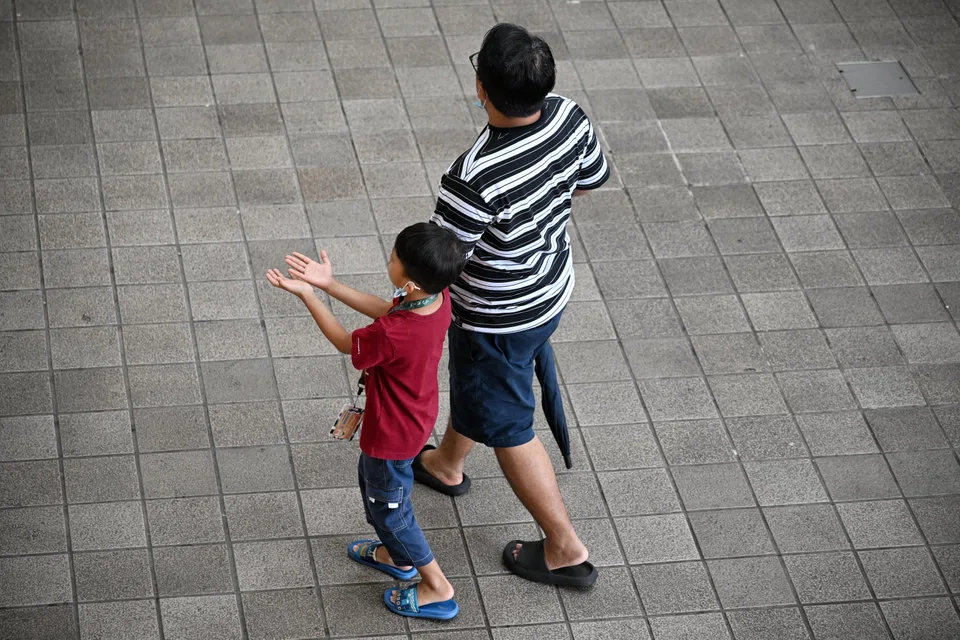
Easily the biggest announcement was the introduction of 10 extra weeks of government-paid shared parental leave, as part of ongoing efforts to support parenthood.
Population growth has long been framed as both an economic and existential issue for Singapore. Politicians have often warned of the dangers of a shrinking workforce.
It is understandable that policymakers should want to convey both their policy thinking and the very real challenges facing Singapore. But it was striking how none of this featured in Sunday’s NDR.
Instead, PM Wong framed the move as a response to Singaporeans’ hopes and dreams. There were no exhortations; indeed, he acknowledged that aspirations to parenthood, or otherwise, “are deeply personal choices”.
The government’s role, as he described it, is that of an enabler: “What the government can and will do is to create a more family-friendly environment in Singapore. And hopefully, this will motivate more Singaporeans to translate their aspirations into reality.”
Or take a smaller announcement: extending a previously-announced training allowance to part-time courses. Here, too, Singaporeans have grown used to warnings about becoming obsolete or outcompeted if they do not reskill.
Yet here, too, PM Wong sought more to reassure, saying: “Going for training is not easy, especially for older workers. But I assure you: you are not alone. The government will be there to support and help you, every step of the way.”
It is, of course, important that citizens understand the threats and imperatives that face Singapore. Yet hope can ultimately be a better motivation than detached knowledge – not least in decisions such as bringing a new life into the world.
Here, too, an early line of the NDR speech suggests the fundamental role that hope may play in PM Wong’s governing approach.
Speaking about the need for Forward Singapore – the fourth-generation leadership’s flagship consultation exercise, from which its policy agenda has been drawn – he noted that when “the broad middle falls behind... societies begin to fracture and collapse”.
Striking a rare note of warning, he said: “Do not assume this cannot happen here. It can – and it will – unless we take decisive actions to prevent it.”
“So we need a renewed social compact where every Singaporean feels there is hope,” he went on.
In other words, hope is a defence against very real threats. The task for the fourth generation is to ensure hope is not just a sentiment, but manifests in the form of concrete opportunities, support and enabling policies.