

From Reaganomics to Bidenomics
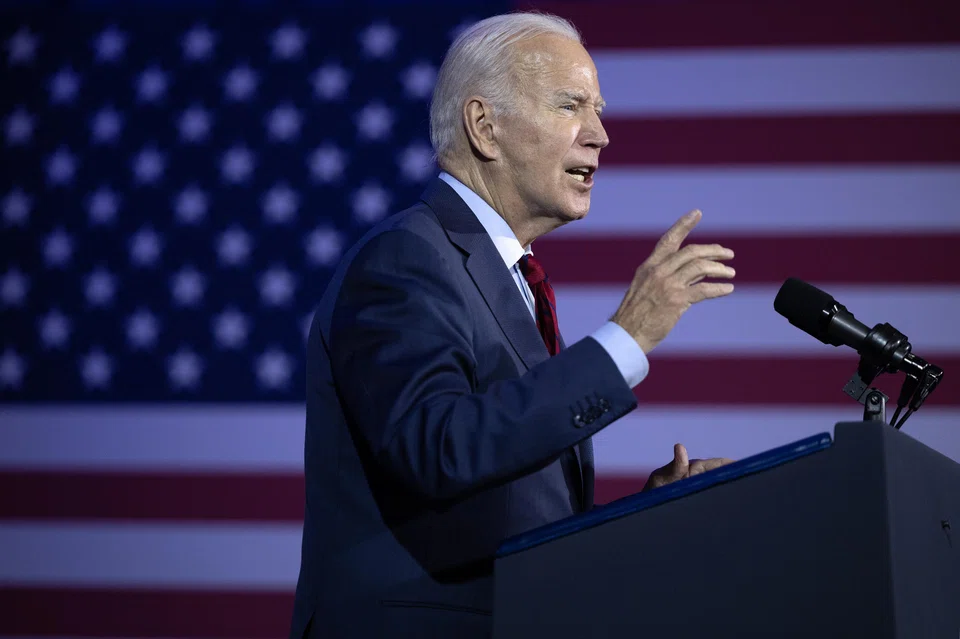
IN A speech in Chicago last Wednesday (June 28), US President Joe Biden used a term that has been employed by Republicans in the past to criticise his economic policies.
“I don’t know what the hell that is,” Biden said, referring to the term “Bidenomics”. “But it’s working,” he added, introducing his economic philosophy that centres on the role of an activist government in directing social-economic policies.
In a way, Bidenomics amounts to a rejection of the free market-oriented approach, also known as Reaganomics, launched by former Republican president Ronald Reagan in the 1980s. It was based on the notion that deregulation, privatisation, lowering taxes, cutting government spending, and promoting free trade would expand the economy with the benefits eventually “trickling down” to the American people, including the middle class.
Reaganomics, which ended up becoming the accepted economic orthodoxy, also helped to shape the policies of Democratic administrations that continued with the process of deregulating the financial markets and promoting global trade liberalisation.
Biden is now saying that Bidenomics would be a “fundamental break with the economic theory that has failed Americans for the last four decades now”. Reaganomics, with its promise of trickle-down benefits, has “failed the middle class” and “failed America”, he said in Chicago. Americans were “working as hard as ever” but “couldn’t get ahead”.
The result was the hollowing out of the American economy, the disintegration of its manufacturing infrastructure, with industries and jobs that constitute the entire supply chains of strategic goods moving abroad, and in the process, allowing China to emerge as America’s leading geoeconomic and geostrategic adversary.
Bidenomics would change all of that by downplaying the role of businesses and the markets, and by turning the government into an engine of economic growth that would help narrow social-economic inequality and create new jobs.
This new economic consensus would centre on developing an industrial strategy that would support economic sectors deemed to be foundational to economic growth and strategic from a national security perspective, and on moving beyond traditional trade deals to innovative new economic partnerships.
That approach, amounting to industrial policy and government oversight of markets, would help create a system that, as Biden put it, “would grow the economy from the middle out and the bottom up instead of just from the top down”.
And the policies that Biden promotes include, among other things, measures to subsidise green innovation, restrict the power of corporate monopolies, strengthen labour unions, retrain workers, boost critical supply chains, and advance an “America first” trade policy.
Whether Americans would support such an ambitious economic agenda is another question. Currently, against the backdrop of continuing inflationary pressures, around two-third of voters disapprove of Biden’s management of the economy.
And Biden clearly doesn’t have the required votes on Capitol Hill to pass any major government spending programmes in the rest of his term in office.
Moreover, some of the elements of Bidenomics reflect a dangerous shift to a protectionist agenda with nationalist overtones a la Trumpism, including the notion of a long-term economic warfare with China.
In particular, Biden’s rejection of global trade liberalisation policies could harm the US’ relationships with its economic partners abroad, including those across the Pacific that seek to expand their trade ties with the country.
TRENDING NOW

Who is Leo KoGuan, the Singapore-based billionaire backing Nvidia’s Jensen Huang?

Demand, tech capabilities position Apac and AI as Skyscanner’s next growth frontiers: CEO Bryan Batista

Higher rates, weaker spending: Is the Philippines entering stagflation?

South-east Asia has lost Nvidia’s best salesman

