

Real estate tokenisation: an emerging trend
BLOCKCHAIN has sometimes been criticised as a solution looking for a problem. This analysis may be overly simplistic in the context of real estate.
Tokenisation and the blockchain protocol for property are fast gaining traction around the world. They have shown that they can ease pain points in transactions even as they unlock new business opportunities and augment existing markets.
Blockchain-powered investment platforms such as United States’ Republic and RealT, Europe’s Blocksquare, and Singapore’s Fraxtor and CitaDAO, are boundary-pushing use cases that have been tokenising real estate investment assets, making them more accessible to a wider range of investors.
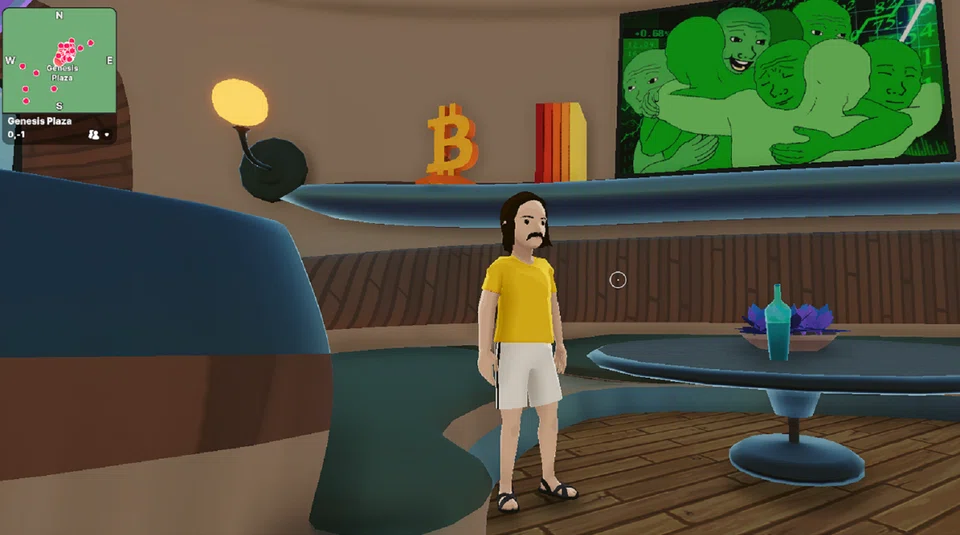
At the same time, a digital real estate market is taking shape in the brave new world of the metaverse. Decentraland, The Sandbox, Somnium Space, and Nifty Island are virtual players vying for early dominance.
Real estate is an illiquid asset class and existing securitisation models may be costly, time-consuming, and inappropriate for most investors. Bottlenecks may include inefficiencies in price discovery, due diligence, and data security.
Real estate institutions may further have to contend with siloed data, closed-source software and a lack of interoperability, resulting in increased transaction costs for processes such as payments, escrow, searches, conveyance, contracts, due diligence and funding.
The blockchain solution
Blockchain is a protocol on which other applications are built. It comprises the creation of a secure digital asset (that is, a token), transferring it peer to peer without permission from a third party, but mediated by conditional payment “contracts” (that is, smart contracts), and the recording of such transfers on an immutable public ledger.
Blockchain tokens can be used to represent full or partial ownership of a real estate asset, or even a right in a share of income derived from real estate, all of which can potentially be traded on a platform.
Tokenisation can help to standardise data formats and provide a single cost-effective solution for multiple processes in a frictionless and secure platform.
Blockchain is also being harnessed to tokenise real estate debt and equity. For example, digital asset-backed securities can be issued on a blockchain network in a Security Token Offering (STO), a process akin to an initial coin offering.
As with the conventional securitisation of real estate, a special purpose vehicle (SPV) might be set up to own the real estate. In an STO, however, the blockchain might record fractional ownerships through tokens that represent units of a subdivided interest in the SPV. Tokens can then be distributed to investors.
Smart contracts execute the terms of ownership in the SPV in accordance with the deal structure, for example, by granting rights to revenue/dividends and handling corporate management functions such as shareholder voting. From a regulatory perspective, the Monetary Authority of Singapore takes a ‘substance over form’ approach in determining whether a token constitutes a regulated capital markets product under the Securities and Futures Act 2001.
By fractionalising ownership, tokenisation has the potential to lower barriers to entry for new investors and open up channels of funding, particularly where tokenisation lowers issuance costs. It can also increase the liquidity of real estate securities by expanding secondary markets, thus enabling security tokens to be traded across a wider pool of investors.
Investors may benefit from greater flexibility when managing their real estate portfolios. Through harmonised data formats and improved data security, transfer, settlement, and asset valuation processes could all be streamlined. Smart contracts can potentially reduce administrative costs involved in compliance checks and investor management.
Virtual real estate
While the tokenisation of real estate assets relies on fungible tokens, the tokenisation of digital real estate involves non-fungible tokens (NFT), as virtual land on metaverse platforms such as Decentraland rely on the ERC-721 NFT standard that allows a unique token to be identified to a unique asset such as virtual land. In this context, parcels of land represented by coordinates on a map are linked to an NFT on a blockchain.
Demand for virtual land is currently fuelled by the tenets of scarcity, customisability, and commercial opportunity. Virtual land can operate as an effective store of value where the metaverse platform determines the specific quantities of land parcels available to be purchased at the outset.
3D programming not only provides users with an immersive user experience, but also enables the customisation of virtual land and avatars in a process of world-building that is not constrained by the laws of physics. Opportunities for monetisation – such as dealings in virtual land, e-commerce in the metaverse, and advertising and brand partnerships – also abound.
The emerging trend of real estate tokenisation has the potential to revolutionise the real estate market for investors, businesses and consumers. But like all new technologies, it is a journey requiring a balancing of industry, market and regulatory readiness.
The writers are from Rajah & Tann Singapore. Rajesh Sreenivasan is head, technology, media & telecommunications; Norman Ho is senior partner, corporate real estate; and Regina Liew, head, financial institutions group.






