
HOCK LOCK SIEW

The real prize in minority investor action at UOI could well be Haw Par Corp

UOI’s high capital ratios and concentrated position in Haw Par shares are probably not an accident; UOB is itself a holder of 17.4 million such shares

Summarise
Ben Paul
Published Wed, Mar 5, 2025 · 05:00 AM
    • Minority investors want UOI to distribute the nearly 4.3 million Haw Par shares it holds.
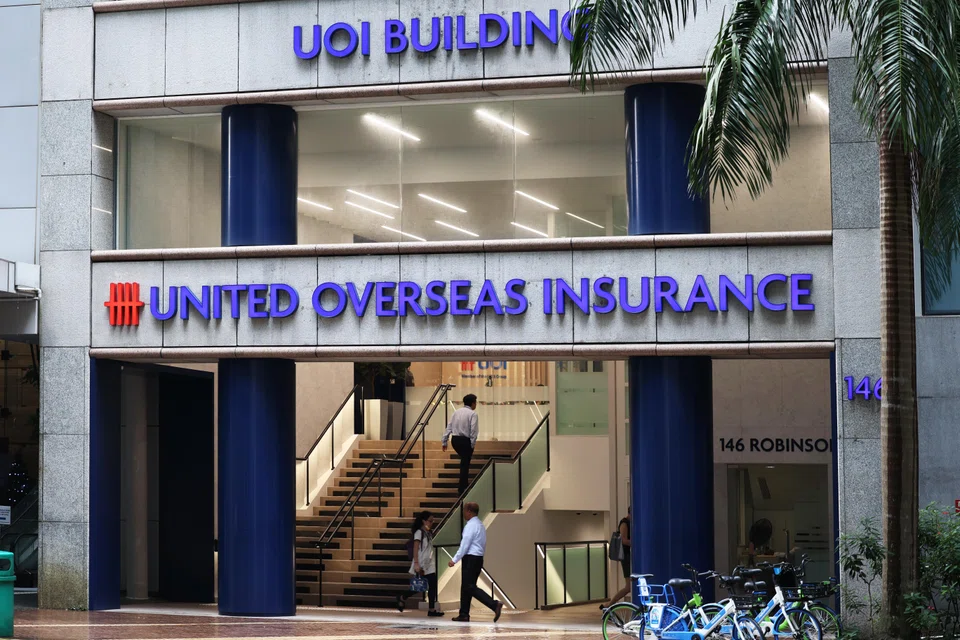
    • Minority investors want UOI to distribute the nearly 4.3 million Haw Par shares it holds. PHOTO: BT FILE

    WHEN former remisier Ong Chin Woo wrote to Great Eastern last year proposing to table resolutions at its annual general meeting (AGM) to address the steep undervaluation of its shares, the insurer sought legal advice and then announced that the request did not satisfy all the necessary requirements.

    The Securities Investors Association (Singapore), or Sias, said Great Eastern’s response was “somewhat legalistic”, and that it appeared to “sidestep the substantive concerns raised”.

    United Overseas Insurance (UOI) took a much more cordial tone when Ong wrote on Feb 28 asking for two resolutions to be tabled at its upcoming AGM.


    Ong’s first resolution is that UOI distribute the nearly 4.3 million Haw Par Corporation shares it holds to its shareholders. His second resolution is that UOI appoint a financial adviser to evaluate strategic options to maximise shareholder value.

    On Mar 3, UOI acknowledged Ong’s proposed resolutions, and said that its board and management welcomed constructive suggestions from its shareholders.

    UOI’s chief executive Andrew Lim later told The Business Times that all shareholder requests and questions will be addressed at its AGM next month. “We encourage all shareholders to attend and participate actively. UOI remains focused on delivering long-term stability and growth for the company and its shareholders,” he added.

    Yet, UOI and its parent UOB might eventually take exactly the same path as Great Eastern and OCBC in dealing with Ong and his petition to unlock value for minority investors.

    Some of the key arguments Ong put forward to support his proposed resolutions underscore the strategic importance of the Haw Par shares held by UOI – and, hence, why it is unlikely that UOI’s board will agree to their distribution.

    For instance, Ong noted in his letter to UOI on Feb 28 that the ratio of its shareholders’ funds to total assets at the end of 2023 stood at 70.4 per cent, well above the general insurance sector’s average of 33.5 per cent.

    UOI’s capital adequacy ratio of 415 per cent was also considerably higher than the sector’s average of 338 per cent, Ong said in the letter.

    He went on to point out that the 4.3 million Haw Par shares held by UOI accounted for 27.7 per cent of the insurer’s equity investments.

    This column would argue that UOI’s high capital ratios and its concentrated position in Haw Par shares are not an accident. Indeed, UOB is itself a holder of 17.4 million such shares.

    All in, the UOB group owns 21.7 million Haw Par shares, representing a 9.8 per cent stake.

    Haw Par’s most visible business is the Tiger Balm brand of topical analgesic products, but there seems to be significant strategic value in its holdings of UOB and UOL shares.

    So, what could UOI and UOB do for restless minority investors such as Ong if they have a strategic interest in holding on to their Haw Par shares?

    Here’s what happened at Great Eastern: Ong’s proposed resolutions to address the undervaluation of its shares were never tabled. Two weeks after the AGM, OCBC – which already owned 88.44 per cent of Great Eastern – made an offer for the insurer at S$25.60 per share, a 36.9 per cent premium to their market price.

    Could an offer for UOI at a premium to its current market price be in the offing?

    UOI closed Tuesday (Mar 4) at S$7.42, a 3.1 per cent discount to its net asset value (NAV) of S$7.66 per share. UOB holds a 58.4 per cent stake in the insurer.

    Whatever the case, the minority shareholder action unfolding at UOI may eventually turn the spotlight on Haw Par itself, and how value could be unlocked for its shareholders.

    Haw Par holds nearly 74.9 million UOB shares and more than 72 million UOL shares, which are worth nearly S$3.3 billion at current market prices – or about 16 per cent more than Haw Par’s own market capitalisation of S$2.8 billion.

    In fact, the UOB shares held by Haw Par alone have a market value of nearly S$2.9 billion.

    This is all the more remarkable given that Haw Par is in a net cash position. As at Dec 31, the group held cash and bank balances of S$745.8 million, versus borrowings of S$36.3 million.

    Haw Par shares have climbed nearly 6 per cent since Feb 21, when the group said it will pay a special dividend of S$1.00 per share. This brought its total dividends for 2024 to S$1.40 per share, up from S$0.40 per share for 2023.

    Haw Par closed on Mar 4 at S$12.69 – more than 32.2 per cent below its NAV as at Dec 31 of S$18.74 per share.

    It could be just a matter of time before activist investors such as Ong come knocking on Haw Par’s door, asking for a distribution of its strategic holdings of UOB and UOL shares.

    As with UOI, the solution could be for its controlling shareholders to make an offer for the group.

    The estate of the late Wee Cho Yaw holds a deemed and direct interest of 36.5 per cent in Haw Par.


