

Rebooting sustainable finance and ESG
AS THE dust settles from the 2022 United Nations Climate Change Conference in Egypt, there is clear criticism about the lack of impetus and action. Current commitments reviewed at the conference (commonly known as COP27) are so insufficient that projections show global temperatures may overshoot 3 degrees Celsius by 2100. Yet, even after recent and severe weather incidents, there was no clear signal of urgency.
Without new commitments for significant and additional funding, financing gaps remain – especially to help developing countries. That sense of urgency and insufficiency indicts governments, and also raises expectations for companies and the private sector to do more. There are increasing calls by concerned citizens, consumers and investors for companies, especially the largest ones, to take action.
Increasing private green finance
Much depends on money. Efforts to stem climate change and make the transition to sustainability will require massive financing. The Sharm El-Sheikh Implementation Plan from COP27 highlights that between US$4 trillion and US$6 trillion per year needs to be invested in renewable energy in order to reach net-zero emissions and transform into a low-carbon economy by 2050. Yet the bald fact is that developed countries have not met their previously agreed commitment to provide even US$100 billion every year.
Given this, green finance and private capital are absolutely critical. This is starting to grow and there are opportunities to integrate with efforts to build out new infrastructure and “smart” cities, especially in Asia as the region grows and urbanises. In 2017, when the Singapore Institute of International Affairs led the first green finance study in Singapore, most financial institutions and investors were only at the preliminary stages of integrating environmental considerations into their risk assessment and investment decision-making.
That report, supported by the Monetary Authority of Singapore (MAS) and Association of Banks in Singapore, put forward some key recommendations. In 2019, MAS launched a Green Finance Action Plan, followed by grant schemes in the following years to promote the issuance of green bonds and loans. The government and its agencies have issued green bonds, and Singapore’s stock exchange has mandated environmental, social and governance (ESG) reporting for listed companies. Our green finance market has grown very visibly.
Other Asean nations have also shown initiative, such as Malaysia’s SRI Sukuk and Bond Grant Scheme and Indonesia’s Green Bond and Green Sukuk Framework. Common frameworks are being developed, like the Asean Taxonomy for Sustainable Finance.
Yet volume remains insufficient. According to data from Climate Bonds Initiative, global sustainable debt volumes only crossed US$1 trillion for the first time in 2021. Much more money needs to be quickly mobilised. For infrastructure in the Asia-Pacific region alone, there is an estimated funding gap of US$22.6 trillion through 2030.
There is an opportunity, as the global financial system shifts to higher interest rates, that green finance can be boosted if borrowing costs could be lower than conventional finance. Governments can set this course through the use of incentives and subsidies.
One example of this is the Inflation Reduction Act introduced by the Biden administration in the United States this year. The largest piece of federal legislation ever to address climate change, it includes US$270 billion in tax incentives to invest in renewable energy and greenhouse gas reductions. Some see the efforts as industrial policy for America to push for a 21st century economy that has an edge over its rivals.
Push and pull
Yet even as some push forward, others are pulling back. Concerns are growing about greenwashing – that companies, products and funds do not live up to the environmental promises they make. This is compounded by the different sets of criteria used in claiming that something is “green” or “sustainable”.
To critics, ESG criteria allows Wall Street a bias to cut financing to fossil fuel producers. Politically, some Republicans say companies are forced to take on green commitments, aligned with the Biden administration, and at the expense of profit. That argument has gained some ground this year due to rising fossil fuel prices.
In the US, there is increasing blowback against ESG investment in some states. For example, Florida, under Governor Ron DeSantis, has banned state pension funds from incorporating ESG factors into their investment decisions. Texas has sought to bar investors like BlackRock because they weigh against investment in oil companies.
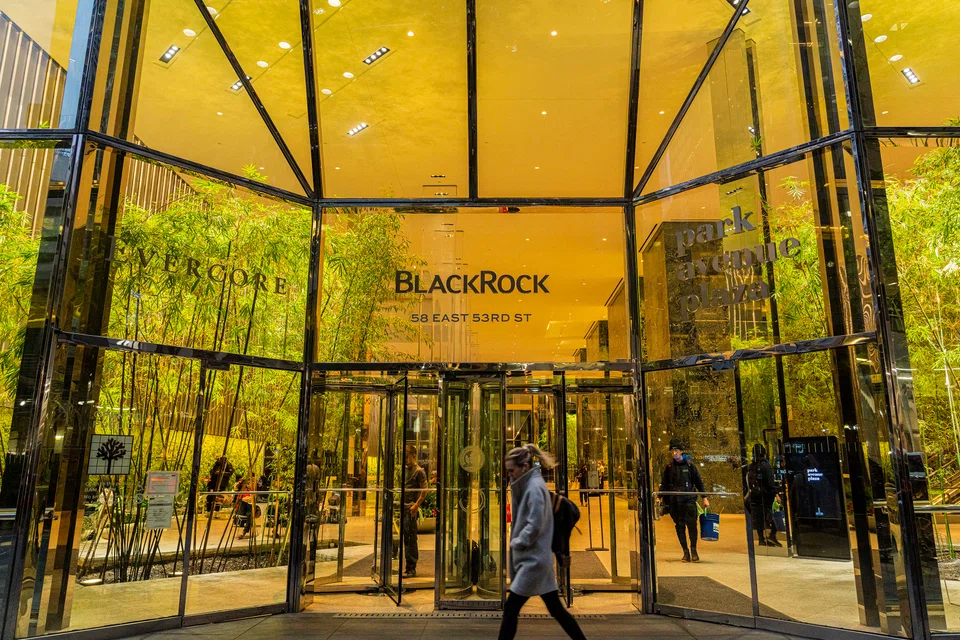
At the same time, deep green advocates take aim at the largest companies and funds. Shell, arguably the most forward-leaning energy major on climate, is being sued in the Dutch national courts. BlackRock, one of the first major funds to use ESG, is also being called out for its “hypocrisy” by an activist investor, Bluebell Capital.
Between the US Republican blacklisting and, on the other hand, these activist accusations, BlackRock is caught in the push and pull around ESG. They will not be the only ones.
Strengthening ESG
There is a need to adopt proper ESG standards that withstand scrutiny. Efforts can, and should, be made to encourage convergence around specific standards, like the International Sustainability Standards Board. Without standards that are universally accepted and monitored in key sectors, distrust can surface and doubts magnified about greenwashing.
For many companies – even the largest ones like Shell and BlackRock – there is something of a dilemma on ESG. The fear is that it is a case of damned if you do, damned if you do not.
This danger is especially real for those operating in Asia. Many economies are still developing and in recovery from the pandemic, and there are good arguments of why the region’s transition must be different from Europe and the US, which are more developed and can more easily access technology and funding. Yet, from a Western perspective, these may seem unacceptable excuses. A special and differentiated case needs to be made for a just transition in Asia.
Just five years ago, green finance in Singapore and across the region was lacking in both supply and demand. Since then, there has been considerable growth and ESG is now a must-have for companies to secure financing and take part in many global supply chains. Companies will need to prepare for the push and pull around ESG and finance.
The time may be ripe to take stock on how best to combine the practicalities of where the countries and their companies are, as well as their responsibility to address the common concerns around climate and the need to abate carbon. The region needs to come together on ESG standards that address local concerns, yet are universally accepted by international financing standards.
Simon Tay is chairman of the Singapore Institute of International Affairs (SIIA). Wong Hsu-sheng is COO at GoImpact Capital Partners and a SIIA senior fellow for sustainability. This is the first of a series of SIIA columns on The Politics that Matter to Business.
TRENDING NOW

Grab CEO’s wife Chloe Tong on life with Anthony Tan and finding her purpose

He built the Vingroup empire. Now South-east Asia’s richest man is handing some key roles to his sons

Can Mark Shaw bring Singapore back to Orchard Road and the movies?

Ex-Sembcorp Marine CEO Wong Weng Sun acquitted of charges in Brazil corruption case

