Reckless housing land bids? Developers’ faith in Singapore government can pay off
The Middle East war may hurt demand and raise costs, but authorities have led the nation through crises before

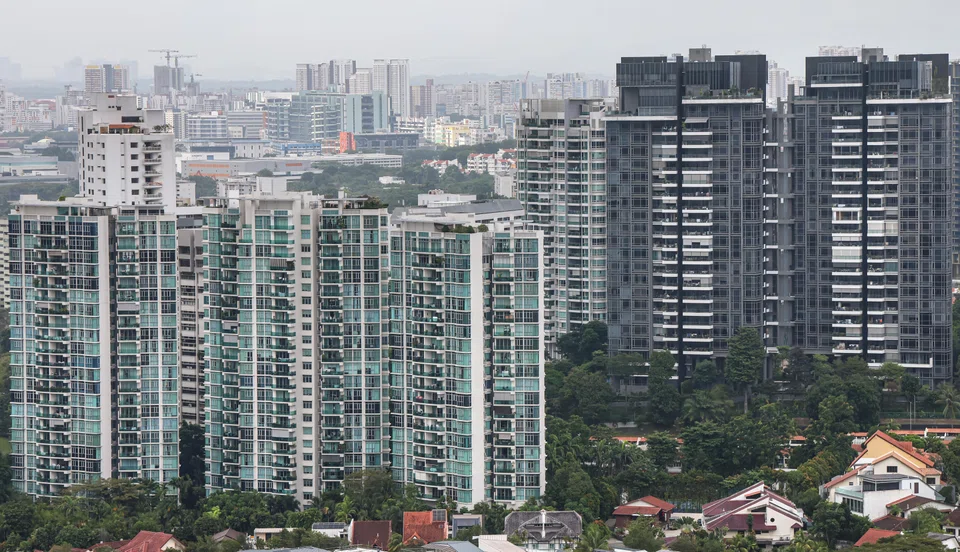
[SINGAPORE] Amid a seismic energy shock arising from the Middle East conflict, which will raise inflation and slow economic growth, developers submitted robust bids for housing sites at recent government land sales (GLS) tenders.
A Kallang Close private-housing site near Kallang MRT station drew four bids, with Frasers Property and Mitsubishi Estate securing the site for S$610.75 million, or about S$1,415 per square foot per plot ratio (psf ppr).
The land parcel has a maximum gross floor area of 431,615 square feet (sq ft), some of which will be used as a childcare centre, and can yield about 470 homes.
Separately, a Miltonia Close executive condominium (EC) site in Yishun next to Orchid Country Club drew three bids, with Hoi Hup Realty placing the top bid of S$340.85 million or about S$732 psf ppr. This site can generate about 430 homes and is several bus stops away from the Khatib MRT station.
Elevated risks
Given the economic pain unleashed by the energy crisis, are developers foolish to take on big-ticket housing projects?
Take the Kallang Close project. Gross development cost could be in the region of S$1 billion. And the average selling price of housing units may need to be close to S$3,000 psf to generate a net profit margin of about 10 per cent.
While recent new condo launches have seen strong take-up rates at bullish psf prices, might buying sentiment sour when the Kallang Close project launches possibly next year?
The energy crisis could dent economic growth and cause widespread job losses. Home loans might get pricier should interest rates rise in response to high energy prices driving up inflation.
If the above pans out, private-housing demand may be severely affected.
Furthermore, high energy prices might drive up construction costs. And with major projects such as the expansion of the integrated resorts and the building of Changi Airport Terminal 5 under way, the built sector’s resources could be stretched.
Weak demand combined with cost overruns and construction delays might lead to severe losses for housing development projects.
Moreover, a developer who is stuck with housing inventory will feel additional pain from the punitive additional buyer’s stamp duty (ABSD) regime.
Currently, the acquisition of sites by housing developers is subject to 40 per cent ABSD, of which 35 per cent ABSD may be remitted upfront subject to stipulated conditions.
Among various conditions, a developer must sell all the homes typically within five years of acquiring a site to avoid being subject to ABSD remission clawback.
The remission clawback rate ranges from 25 per cent for projects with 99 per cent of homes sold, to 35 per cent for those with below 90 per cent of units sold. The ABSD remission that is clawed back is subject to interest of 5 per cent per annum.
However, while housing developers face tough government regulations, developers’ bullishness on housing sites, despite huge global uncertainties, is probably underpinned by supportive government policies and faith in the government.
GLS sites
On the supply front, GLS sites are a vital source of private-housing sites. Developers generally have more certainty on the timing of site acquisitions with GLS sites versus collective sales sites – especially en bloc sites where some strata owners object to the sale.
Importantly, a buyer of a GLS site can carry out work expeditiously on the said land parcel. Also, the government’s track record of completing key amenities such as new MRT stations on time is good.
Critically, the government is generally measured in releasing confirmed-list GLS sites, which are launched for sale at pre-determined dates.
In the GLS programme for the first half of 2026, the confirmed-list sites can yield about 4,575 private homes, including 635 EC units. This is broadly similar to the 4,725 private homes, including 990 EC units, in the confirmed-list sites of the GLS programme for the second half of 2025.
By strictly governing the use of different land parcels and controlling the supply of GLS sites, the government helps ensure stable private-housing supply and that supply gluts do not arise.
Homeownership
On the demand side, government policy supports homeownership. The Republic has one of the highest homeownership rates globally, due to the commitment of the founding fathers since the very beginning of nation-building.
Today, nearly 80 per cent of Singapore’s resident population live in Housing & Development Board (HDB) flats. And many of them own their flats.
HDB sells homes at subsidised prices to eligible buyers, and some buyers receive generous housing grants. Many young local adults start their homeownership journeys by buying an HDB flat.
In short, the idea of owning a home is deeply ingrained in Singaporeans, including the younger generation.
Crucially, while these flats are high-quality homes, many people aspire to climb the housing ladder by purchasing a condo unit. And a fairly typical path to condo ownership comes via deploying funds from selling an HDB flat to help finance a condo buy.
Faith in government
Perhaps, most importantly, many developers have huge faith in the Singapore government’s competence.
Through the Republic’s history, the government has helped the nation navigate a range of crises.
While developers may be unsure of the impact of events in the Middle East and developments in the energy market, they have confidence that the government can help Singapore successfully navigate the energy crisis and other major challenges.
With diverse supply chains and money available to support businesses and individuals, Singapore can weather crises such as energy shocks better than many other nations.
In addition, the government’s efforts to create good jobs for locals and equip workers with relevant skills give developers assurance that they can tap into a large pool of high-earning locals as potential condo buyers.
Frasers Property and Mitsubishi Estate narrowly outbid City Developments Ltd (CDL) by 0.7 per cent for the Kallang Close housing site.
CDL and Frasers Property are Singapore-listed groups with geographically diversified businesses. The fact that these groups seek to grow in Singapore’s housing development market in these troubled times globally demonstrates confidence that the government here can navigate the current crisis.
Snaring the Kallang Close site is unlikely to turn out to be a Pyrrhic win for Frasers Property and Mitsubishi Estate. The risks in taking on residential development projects today are high, but with pro-housing policies and effective government leadership, developers could be right to bet big on private-housing projects in Singapore.