Relatively modest scale of new graduate traineeships may be a good sign
A more ambitious scheme would suggest an ominous outlook for jobs

PRIME Minister Lawrence Wong’s second National Day Rally – the first since the ruling party’s convincing win in the 2025 General Election – might have come across as a rather modest affair.
There were no additional celebratory packages for Singapore’s 60th birthday, nor game-changing policies to be discussed for weeks afterwards.
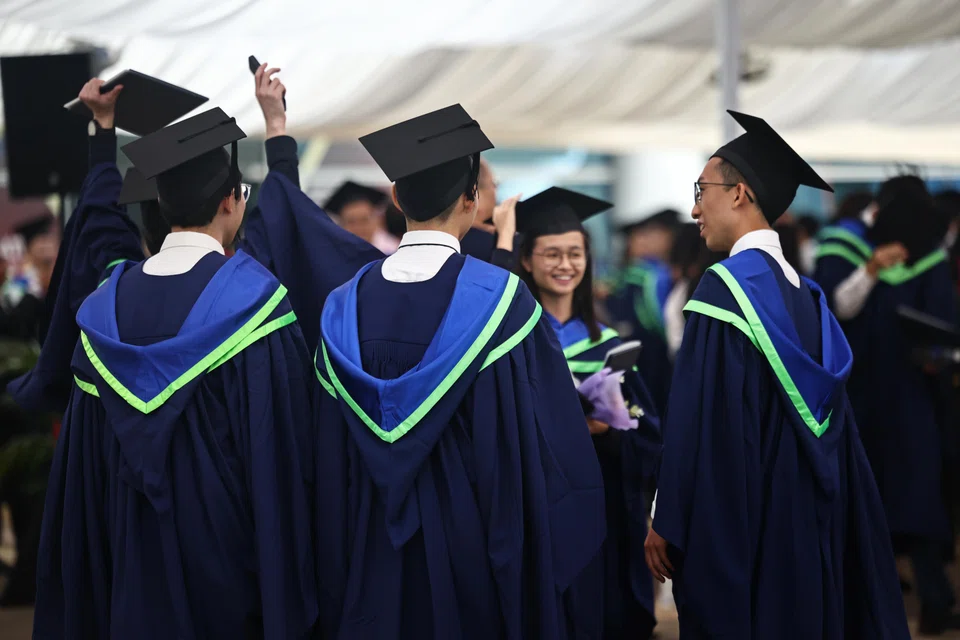
Of the new measures announced, some were similarly seen as being tame. These include government-funded graduate traineeships, under two programmes for private-sector and public-sector roles.
One early response, on social media and online forums, was that a similar scheme during Covid-19 had had mixed results.
Launched in mid-2020, the SGUnited Traineeships programme did produce success stories, such as the JPMorgan Chase trainee highlighted by PM Wong in his rally speech.
Yet a common perception is that some trainees were used as cheap labour, rather than gaining anything meaningful from the experience – let alone an eventual job.
Enthusiasm about the new traineeships did not perceptibly rise after more details were released on Aug 22.
The private-sector Graduate Industry Traineeships (Grit) scheme and public-sector Grit@Gov scheme will begin with 800 roles in total. Placements range from three to six months, lower than the maximum 12-month duration of SGUnited Traineeships.
Yet this relatively modest scope may arguably be cause for reassurance, rather than recrimination.
Fit for purpose
First, the limited number of roles might reflect Grit’s curated nature – which addresses concerns about the quality of such experiences.
The Grit scheme is not open to just any employer. Rather, Workforce Singapore is selecting “progressive” host companies in growth sectors such as financial services, information and communication technology, manufacturing and wholesale trade.
Even if not all traineeships lead to permanent roles, the experience should give trainees a head start in these sectors, and help to burnish their CVs.
Comparisons with the SGUnited Traineeships may not always be appropriate, either. The pandemic-era scheme is better understood as a response to dire economic straits; what it achieved should also be evaluated through that lens.
Even in the best of times, an internship or traineeship may not lead to a job offer. In a pandemic-induced downturn, such an expectation is even less realistic.
And while most SGUnited trainees did not land permanent roles with their host organisations, close to nine in 10 did find jobs within six months of going through the programme.
The scheme arguably served the recession-era role of keeping graduates engaged and in the labour force until the economy recovered, even if not in ideal roles.
Fortunately, the new Grit schemes do not seem designed for that purpose. Rather, the idea is to provide high-quality experiences that give participants a genuine edge.
If anything, a wider-ranging scheme might have stoked fears that the government expects job prospects to grow much grimmer.
On the contrary, at a doorstop on the scheme, Manpower Minister Tan See Leng noted that the labour market remains resilient, with good jobs for fresh graduates.
But he also gave the reassurance that the scheme can be scaled up if needed, saying: “We are prepared to increase the level of support for fresh graduates, including funding more traineeships, if the labour market worsens.” One should hope that this does not come to be.