

Reordering Asia’s energy security
Navigating supply risks in an era of weaponised trade
ASIA’S energy security frameworks have been built on decades of geopolitics and trade characterised by a multilateral system aimed at collective prosperity, market mechanisms that prioritised economic efficiency over political interest, and a rules-based order that allowed economic dependencies to flourish.
But in recent years, and particularly through 2025, this global order has been disrupted. Policymakers and businesses are being forced to recalibrate traditional approaches to energy security as Asia’s economies reassess their vulnerabilities in this new political and economic order.
For trade-dependent nations like Singapore, this forces a fundamental, and costly, recalibration.
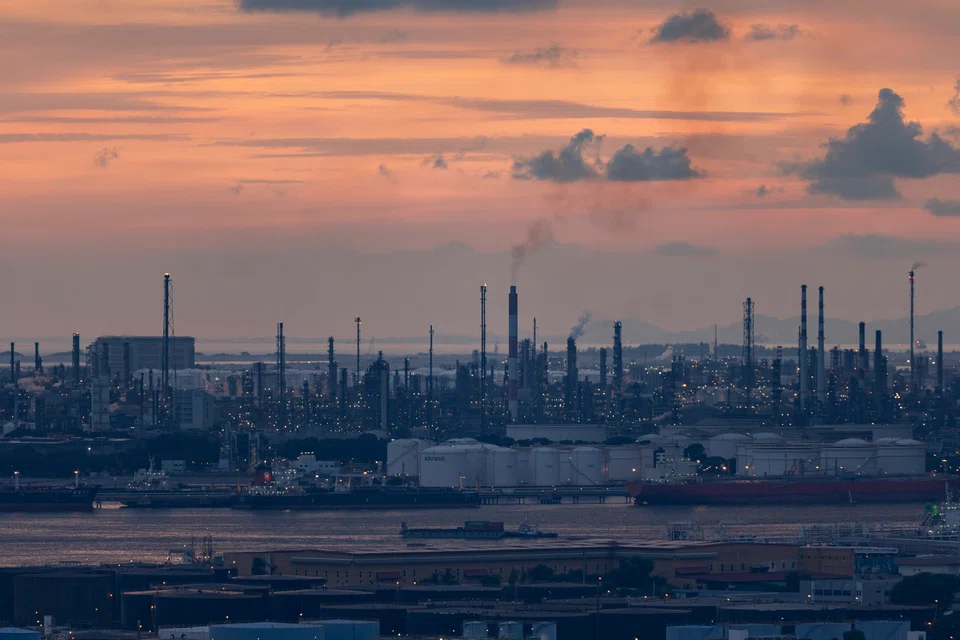
The rise of Singapore as a commodity trading hub, and more critically, a powerhouse of energy sector decision-marking, has been a multi-nation effort that surpassed political gains. For decades, Singapore’s refining sector thrived with investment from Japanese conglomerates (just a few decades after the war), and American and European oil majors.
At the turn of the century, Chinese state oil companies benefited from using Singapore’s refineries under a tolling model to refine their own crude, and regional oil and gas such as Petronas and Pertamina, accessed deep and liquid markets for their output.
Petroleum exports from Singapore are still strategic to the energy security of countries from Indonesia to Australia, where building new refineries has been impossible for various reasons. Much of this would not have materialised in a polarised and fragmented world.
Three broad developments are underway: the multilateral system and its public institutions are being undermined; trade and supply chain interdependencies are being weaponised; and US-China interests, on which much of global trade was built, are decoupling.
Challenges ahead
The public institutions that are the cornerstone of the multilateral global system are facing an existential threat, on the premise that they have not operated in the interests of the US.
The affected institutions include those that have guided policies related to energy transition, such as the UN climate bodies, the International Maritime Organization and the International Energy Agency (IEA), to name a few.
Maritime powers such as Singapore and Japan have expended significant intellectual and political capital over decades to establish rules and standards in areas like shipping emissions that now risk being dismantled. In recent years, Singapore has been at the core of the IEA’s efforts to widen its engagement in Asia-Pacific, recently announcing the agency would set up its regional office here.
The second major challenge to energy security is the weaponisation of trade and economic interdependencies.
International relations scholars Henry Farrell and Abraham Newman have written about how powerful nation states that control critical supply chains and choke-points use influence to exercise control. This has resulted in our current situation of weaponised trade and tariffs, as economic coercion replaces mutual benefit as the basis of trade.
“Weaponised interdependence is an unanticipated byproduct of the grand era of globalisation that is drawing to a close,” Farrell and Newman wrote in their September paper.
The third major challenge is the decoupling of the US and China and the risk of getting caught in the great power rivalry.
The gradual deterioration of bilateral relations and the framing of China as “America’s most consequential national security challenge” means that most businesses with a long-term view are moving from just managing uncertainty to hedging their exposure. The military power display in Beijing’s recent World War II Victory Day parade has only served to reinforce this derisking.
Few, if any, new large-scale businesses are expected to emerge between the two countries in the foreseeable future.
Impact on energy security
Today’s turbulent changes pose complex, and perhaps the most consequential, challenges for Asia’s energy security.
Asia’s energy security concerns had shifted from decarbonisation to supply security during the Ukraine crisis. Then, the weaponisation of trade by the US took policymakers by surprise. New risks emerged: destabilised trade flows, slowing economic growth, and financial market volatility.
This uncertainty has stalled new energy project investments, leaving energy transition initiatives in disarray. The messaging around emissions goals has become distorted, and growing supply-demand imbalances have created conditions for heightened volatility in commodities markets.
For instance, Japan’s offshore wind push is failing and decarbonisation investments in many parts of Asia are in limbo, creating uncertainty for decarbonisation pathways across the region. Singapore-led frameworks to establish a hub for carbon trading and boost regional carbon market systems now face uncertainty.
More strategically, Singapore faces a dilemma: extend its fossil fuel economy under economic coercion or double down on clean energy investment as its future.
Meanwhile, collective response mechanisms meant to deal with oil market disruptions are facing obstacles. These systems relied on multilateralism and the understanding that developed nations like the US would lead efforts to maintain emergency reserves and coordinate a supply response.
The post-Cold War economy also relied on American military strength to maintain stability in volatile oil-producing regions. The role of the US in financing these security frameworks is now under attack domestically.
Author and scholar Llewelyn Hughes’ book Globalising Oil published in 2014 covers energy security responses by industrialised states, including the use of free market forces and liberalisation of oil supply from the control of national oil companies.
In 2015, Hughes and Long wrote a paper titled, Is there an oil weapon? that explored the US government’s responses to the use of coercion in oil market supply chains and intervention in areas like shipping. They mentioned how US strategy against adversaries involved maritime blockades of oil transport in the Malacca Strait or the Strait of Hormuz.
Now, the tables are turned, and the US is one of the world’s largest oil and gas producers and exporters. The language around US energy exports has increasingly veered towards supporting energy security of “allies” – a term initially referencing Europe’s replacement of Russian supply, but which now has broader geopolitical connotations.
For a major LNG hub like Singapore, which depends on a diversity of suppliers, this raises critical questions about the future reliability and cost of securing “non-aligned” energy cargoes. More importantly, will energy trade flows via Singapore have to prove their “neutrality”?
Finally, the decoupling of US-China complicates this energy security landscape further. Not only are the energy policies of the US and China diverging – with Washington favouring fossil fuels and Beijing leaning towards clean energy – but Asian countries are also being forced to pick between China’s electric vehicle and renewables push and other energy pathways based on political allegiances.
The polarisation of energy pathways will only intensify as China competes with global peers on new technologies such as advanced nuclear reactors.
As the age of economic innocence ends, and energy trade gets increasingly weaponised, the energy security of Asian countries risks being further compromised. For Singapore and its neighbours, building resilience will require forging new energy alliances with middle powers, or creating its own “pole” in a multipolar world; and evolving a business strategy with a strong element of derisking and uncertainty management.
The writer is principal analyst, First Take Gas, at S&P Global Commodity Insights. Appec 2025, Asia’s biggest annual energy conference hosted by S&P Global Commodity Insights, is taking place till Sep 11 at Raffles City Convention Centre, Singapore.






