

‘Right to disconnect’ is impractical across many industries and job roles

WE REFER to the article ‘I want my life back!’: 80% of Singapore employees long to disengage after official hours (BT, Sep 26).
While the Singapore National Employers Federation understands the sentiments, the concept of a “Right to disconnect” from work is impractical across many industries and job roles.
In healthcare, one would expect a doctor to respond to emergencies outside their regular work hours. Similarly, IT and cybersecurity professionals may be required to handle urgent system outages to safeguard a company’s digital infrastructure. Likewise, a global supply chain manager might need to respond to unexpected logistical disruptions after regular hours to prevent delays in shipments and losses to the company.
In today’s dynamic and knowledge-based world, the occasional work exigencies are part and parcel of professional life. Going down the route to enforce a strict boundary between work and personal life via a “Right to disconnect” legislation would not only erode Singapore’s competitiveness, but also impede timely responses which are often critical to business operations. This is especially relevant in sectors that require global connectivity, where time zones and international collaborations mean that urgent issues may arise outside of local working hours.
Workplace flexibility and an outcome-based working model are premised on trust, reciprocity, and a sensible degree of give-and-take between employers and employees. The notion of a “Right to disconnect” runs counter to all these values. While employees can negotiate working hours to suit their personal needs, they may also need to accommodate business requirements.
Therefore, rather than narrowly focusing on a rigid and rule-based disconnection from work, a more sustainable and human-centred approach is to encourage open communication, where it is incumbent on both employers and the employees to establish and accept the organisation’s rules of work communications for each job requirement. This way, there would be trust and less uncertainty or surprises on both parties.
Sim Gim Guan executive director Singapore National Employers Federation
TRENDING NOW

‘We don’t want to stay as we are’: CEO Patrick Ng builds a more resilient Huationg

URA to review guidelines on floor space to give developers more design flexibility: Chee Hong Tat

He built the Vingroup empire. Now South-east Asia’s richest man is handing some key roles to his sons
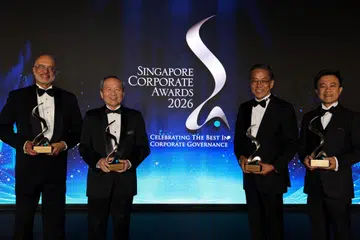
32 companies, 6 individuals bag accolades at Singapore Corporate Awards 2026

