

Rishi ‘rolls the dice’ with ex-PM’s return to Cabinet
PRIOR to the landmark 2014 Scottish referendum, then-prime minister David Cameron famously quipped: “If you don’t like me, I won’t be here forever. If you don’t like this government, it won’t last forever.”
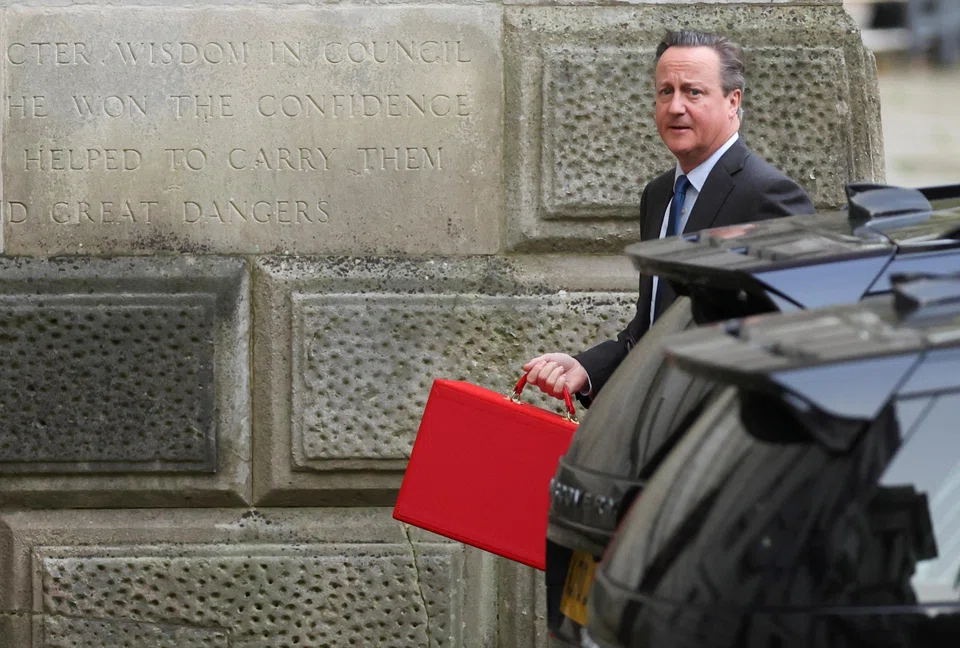
Almost a decade later, with the Conservatives still in power, Cameron was asked on Monday (Nov 13) by his successor-but-four in 10 Downing Street, Rishi Sunak, to return to office as foreign secretary.
Cameron’s appointment, extraordinary in many respects, highlights why a general election is now so badly needed so that the country can decide its future course some four years after the last pre-pandemic ballot in 2019.
Unfortunately, for the nation, the wide-ranging nature of Monday’s Cabinet reshuffle most likely means that Sunak (if he remains prime minister in the months to come) may not call the election till the last possible moment he can, legally, in the second half of next year. So a ballot in autumn or winter 2024 seems probable.
While Sunak is most likely to fight the next election as prime minister, he alienated many right-wing Conservatives in Monday’s reshuffle. This is largely, but by no means only, because of the sacking of controversial home secretary Suella Braverman, a darling of the right, while the more centrist Cameron returned to government.
It was former US president Harry Truman who famously said that “a statesman is a politician who’s been dead 10 or 15 years”. To the limited extent that Cameron has assumed the mantle of post-prime minister statesmanship since the 2016 Brexit referendum, Monday’s UK reshuffle shows Truman’s quote no longer applies in the UK of the 2020s.
Cameron’s appointment appears to indicate the limited talent pool in the governing party almost a decade and a half into office. He is only the second prime minister since World War II to later assume another Cabinet post (and fifth since 1900), and – following his ennoblement as Lord Cameron – only the third Cabinet minister in recent decades to serve from the House of Lords.
Sunak’s decision to bring Cameron into the fold is also so remarkable because he promised in his big annual conference party speech only last month to be a “change” prime minister. Specifically, he pledged to overhaul “30 years of a political system which incentivises the easy decision, not the right one”.
The decision is also curious given Cameron’s criticisms of significant slices of Sunak’s agenda. The former prime minister was the cheerleader-in-chief for the Remain campaign in the 2016 Brexit referendum, whereas Sunak voted for the UK to leave the EU.
Moreover, only last month, Cameron slammed Sunak’s decision to U-turn on the key High Speed 2 (HS2) project which will now be curtailed north of Birmingham. The project was given the go-ahead under Cameron’s premiership in 2012.
Cameron said last month that “HS2 was about investing for the long term, bringing the country together, ensuring a more balanced economy… it will help to fuel the views of those who argue that we can no longer think or act for the long term as a country; that we are heading in the wrong direction”.
Cameron’s accurate critique of Sunak’s decision is explained, in large part, by the massive amount of churn within the senior ministerial echelons. On Monday, the Institute for Government think tank said this regular turnover is “very damaging” and meant that ministers are focused on “quick wins” rather than long-term policymaking.
Since Cameron’s last general election victory in 2015, the four so-called “great offices of state” (prime minister, chancellor of the exchequer, home secretary and foreign secretary) have been occupied by 26 people. This includes Cameron, Theresa May, Boris Johnson, Liz Truss and Sunak in the top job.
There have also been seven home secretaries, seven foreign secretaries, and seven chancellors. Churn is even higher in some less senior positions, with, for instance, a staggering 16 housing ministers since 2010.
In terms of the implications of the reshuffle, there is a widespread perception among the ruling Conservatives that Monday’s developments point towards a shift back from the populist right. This is alienating MPs who are still loyal to Johnson and Truss, who perceive a move away from what they see as post-Brexit realignment to the failed centrist consensus of the past.
Former minister Simon Clarke, a close ally of Truss, made a dig on Monday at Sunak, saying “some controversial choices here from the manager, putting it very mildly. Never wise to lack options on the right wing – the squad risks being badly unbalanced”.
Equally, Andrea Jenkyns, an arch-Johnson loyalist, became the first MP to publicly submit a letter of no confidence in the leadership of Sunak on Monday, declaring “enough is enough”. She said on social media: “I have submitted my vote of no confidence letter… It is time for Sunak to go and replace him with a ‘real’ Conservative party leader.”
So it is not inconceivable that Sunak may face a leadership challenge within the Conservative Party, possibly even from Braverman, in the weeks to come. Truss and Johnson will stoke this right-wing discontent, with the latter saying in recent days that the Conservatives are “drifting to defeat” at a general election under Sunak who is a “stooge” prime minister.
Building from these controversies over domestic policy, the outlook for some key elements of UK foreign policy is also more uncertain now with Cameron as foreign secretary. For instance, he forged as prime minister in the period till 2016 what was called a “golden era” of UK-China relations.
Yet, since then the Western mood has turned against Beijing, and even Sunak has referred to Cameron’s approach as “naive”. The current prime minister said the UK’s approach to China needs to evolve as Beijing is “consciously competing for global influence using all the levers of state power”.
Sunak’s views on Cameron’s “golden age” policy towards China are mild compared to some other Conservative MPs. Former party leader Iain Duncan Smith, for instance, said Monday that he was “astonished at this appointment”. He said: “It seems to send a signal to China that we are pursuing business with them at all costs and any costs. Those who have been sanctioned (by Beijing) now feel more abandoned than at any time. Those facing genocide and persecution will feel more abandoned than at any time.”
Headline-grabbing, however, as Cameron’s appointment is, it is unlikely to change the fundamentals of UK politics. The government remains in trouble, and Sunak may yet face an internal leadership challenge before the next election which cannot come soon enough to end this latest scene of Conservative psychodrama.
The writer is an associate at LSE IDEAS at the London School of Economics
TRENDING NOW

First Resources blames El Nino, outside fires for Kalimantan hotspots amid haze scrutiny

High Court rules against Julius Baer’s Singapore trust arm in US$50 million family trust dispute

Singapore key exports jump by higher-than-expected 68.4% in September, led by non-electronics

MSCI proposes downgrading Indonesia to standalone market status

