Rubbish in Paris, rules in Brussels
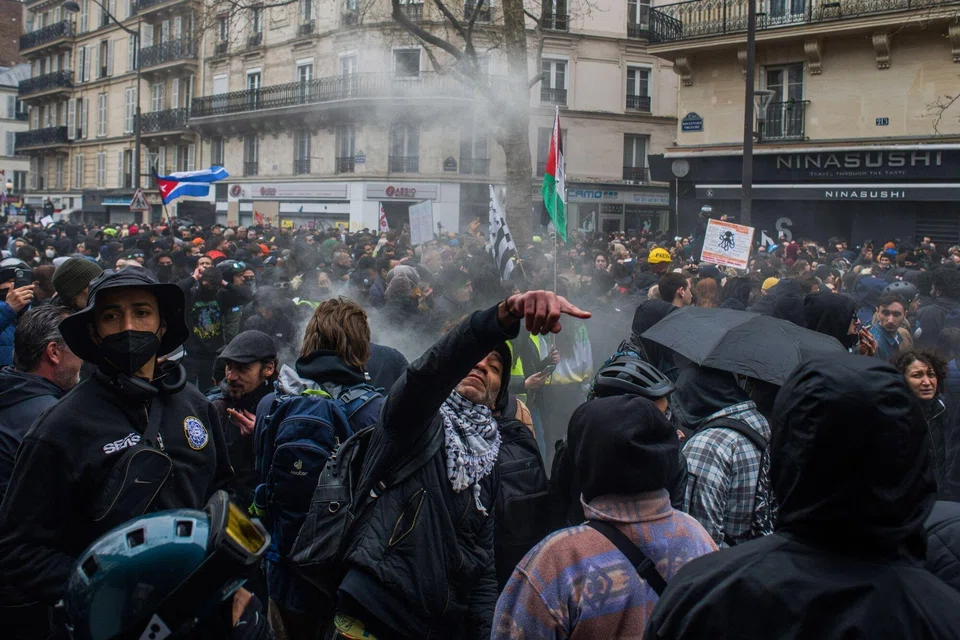
SPRING in Paris was not quite the same with the strikes and protests. Even if I did not get caught up by the marches nor get gassed in the streets, the famous sidewalk cafes were less idyllic with uncleared rubbish along the avenues.
The issue that triggered the anger is more than the details about the financial viability of national pensions from age 62, or President Emmanuel Macron’s decision to circumvent a parliamentary vote and just push through the measure by decree – as is allowed by the French Constitution.
Rationality and legalistic arguments are not always valued in the streets, especially given the Parisian record with revolutions. Some believe the president will tough it out. Others predict the Macron administration will be wounded, while the far-right faction of Marine Le Pen gains ground. If so, there are implications for leadership in the European Union (EU) and its tone of engagement.
Beyond French and European politics, the lesson we might more broadly take away is about how we deal with beliefs that people hold strongly.
These can be about their own rights and entitlements as workers and citizens, as in the case of Paris. There are also those who hold strong convictions about the climate and deforestation. Even if they seem more distant and indirect, these beliefs too can bite. Recall that previous protests against Macron by the gilets jaune (yellow vests) from late 2018 had been triggered by a proposal to increase fuel taxes.
Inclusive processes
One place to discuss beliefs is of course parliament, given its role in representing citizens. Yet these can be formal and even rarefied. Otherwise, there is recourse to the streets. Other avenues are also possible, and I took a train to Brussels to take part in one such process.
In the European Union-Singapore Free Trade Agreement (EUSFTA), both sides agreed to enable a dialogue on sustainability issues that concern trade. This is not centred on government officials and indeed at times expressly excludes them. Participation is instead focused on citizens and groups that hold beliefs and concerns.
For the EUSFTA, there is a Domestic Advisory Group (DAG) on each side. This comprises labour unions, environmental groups as well as federations of businesses and employers, nominated by the two governments. There are also public forums, open to all who wish to express their views.
For the EU, this is a standard practice whenever it concludes a trade agreement. For Singapore and indeed in almost all Asian free trade agreements, such a process is novel. There are those who may welcome it in good faith. Some others might cynically dismiss it as empty talk and an exercise in public relations.
One thing should be increasingly clear nevertheless. If such beliefs and the underlying issues are not addressed, consequences can follow. Maybe not outright street protests and rubbish left along city avenues like in Paris. But rules by governments responding to those sentiments – as is the case in Brussels.
Rules that bite
Europeans – both officials and non-governmental organisations – are quite open about the rules they want to see. These will apply not just on paper in a cold and rainy Brussels. They have bite in the real world, affecting business even on the other side of Planet Earth.
One such rule, made just last year, relates to the value that Europeans hold about conserving forests. All companies that trade in palm oil, cattle, soya, coffee, cocoa, timber and rubber (and derived products such as beef, furniture, or chocolate) are now subject to a thorough due diligence undertaking. They must act to ensure that any agricultural expansion to grow their products has not driven deforestation.
Another rule now being considered will aim to support basic human rights. The proposed regulation will prohibit entry to products made with forced labour, and give the authorities the power to seize such products. The United States already targets a range of products, including those that originate from Xinjiang in China, and some rubber gloves from Malaysia.
Some will decry these rules as irrational and sanctimonious. There is also suspicion that some rules are thinly disguised protectionist measures, to close their market and help more costly and less efficient European products. Maybe.
But there are true believers too. Those constituencies will take to the streets or change their votes to punish governments who do not respond and act on what they believe.
The option to exchange views and dialogue, whether in a public forum or behind closed doors, is therefore not to be dismissed. Such processes can be inclusive two-way consultations and give time to adjust. Otherwise, through protests like in Paris or else through laws and regulations from Brussels, what once seemed like morals and ethical concerns can bring a sudden shock to businesses.
The writer is chairman of the Singapore Institute of International Affairs (SIIA); he also serves as chairman of the domestic advisory group for Singapore in the EUSFTA. This is an occasional SIIA column on The Politics that Matter to Business.
TRENDING NOW
Temasek’s Wan Chee Foong to helm PIL, Lars Kastrup to be board adviser
Chagee, Mixue and Luckin won the market. Sustaining their edge is the harder part
He built the Vingroup empire. Now South-east Asia’s richest man is handing some key roles to his sons
One-third of Singapore-listed firms at risk in severe AI downturn: MAS