Russia’s financial crisis must come sooner
A low price cap for the country’s crude exports would render the Kremlin’s war economy untenable
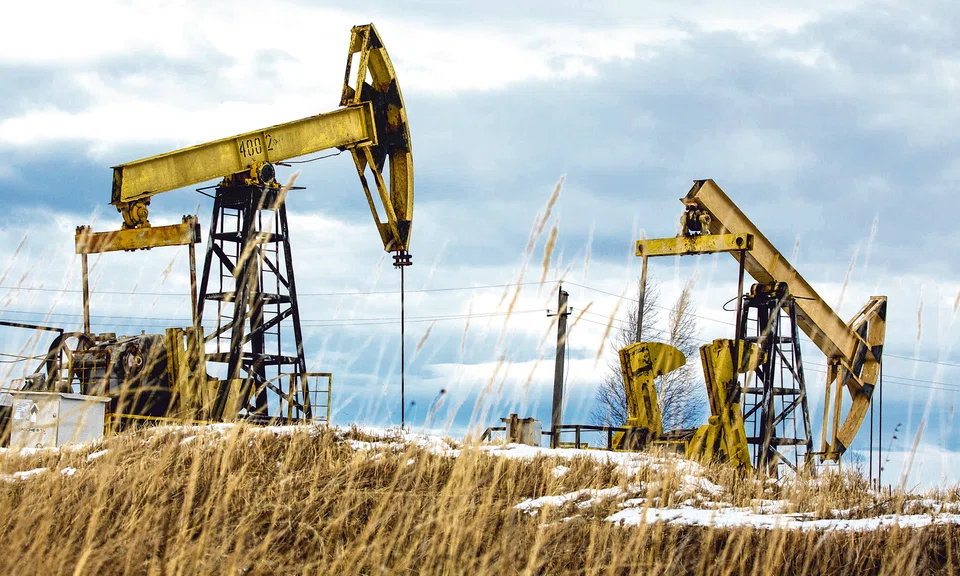
A DIPLOMATIC stand-off between European countries over the price cap to set for Russia’s oil exports threatens to hobble efforts to limit the Kremlin’s resources to wage its war of aggression against Ukraine. It’s time to break the impasse.
On one side are Poland, Estonia, and Lithuania, pushing for a price of no more than US$30 per barrel. On the other side are Greece, Crete, and Malta, which would prefer a price in the range of US$60-70. The European Commission reportedly has proposed US$62 as a compromise. The United States is urging the Europeans to agree among themselves ahead of the Dec 5 deadline, when the cap is supposed to go into effect.
Most of the argument is about the price cap’s possible effect on global oil prices. When the cap was first announced by the G7 in the summer, JPMorgan predicted that oil prices would soar – perhaps as high as US$380 per barrel. In fact, Brent benchmark oil prices have declined steadily since that time, falling from about US$100 per barrel to close to US$80. (Russia currently receives around US$60 per barrel, a discount that reflects the stigma of supporting the Kremlin war machine through oil purchases.)
This is an important discussion, but, as Robin Brooks, the chief economist at the Institute for International Finance, points out, it misses the main point of forcing down the price received by Russia for its oil exports. The goal is to cause a financial crisis that will severely impede the Kremlin’s ability to run a wartime economy.
The key first step in this direction was actually taken in late February, immediately after Russia invaded Ukraine, when the G7, the European Union, and others agreed to freeze Russia’s foreign reserves. This unprecedented stroke removed Russia’s buffer against economic and financial shocks, and the result was an initial depreciation of the rouble.
But then it quickly became clear that the Kremlin had been handed an enormous loophole: Russia could continue to export oil and gas, routing payments through Gazprombank and other approved financial institutions. As a result, Russia has continued to record strong foreign-exchange earnings, most of which are spent on the military effort, buying “sanctioned” Western goods, and stabilising the currency market. By late April, the rouble had recovered.
Foreign-exchange markets are forward-looking. If the oil price cap is set at US$60, market participants will shrug, and Ukraine is in for a long and painful struggle. An oil price at US$30, by contrast, would bring intense pressure for further rouble depreciation. The Russian central bank’s ability to maintain a stable exchange rate would be called into question. Interest rates would rise. The solvency of the banking system would be jeopardised. And Russia’s ability to buy weapons from abroad would be greatly weakened.
Is it possible that such a dramatic step would drive up world prices? In part, the reaction will depend on how much production Russia is willing to shut down. This is hard to predict – Putin makes belligerent noises about that, as he does about everything. But some simple math says the balance of risks does not favour the Kremlin.
Russia currently exports about eight million barrels per day. The price cap will apply to about six million barrels of oil and petroleum product shipped daily by sea (no cap is being considered for the rest, which is transported by pipeline). Let’s say Russia shuts down two million barrels of production, exports two million at the cap, and finds a way to divert two million onto grey markets at world prices.
Today, Russia receives about US$360 million per day from its oil sales (US$60 per barrel for six million barrels). Under a low cap (US$30), Russia would receive US$60 million for the capped sales, plus whatever it can get from the grey market.
How high the grey-market price rises will depend partly on the response from OPEC (and Saudi Arabia in particular), as well as the recent US initiative to allow Venezuela to increase its exports. The threat of global recession looms large in all commodity markets currently. And China’s “zero-Covid” policy shows no signs of unwinding in a calm manner – not while most elderly Chinese remain unvaccinated. If the net reduction in world supply is one million barrels, a world price of US$100 is possible – adding US$200 million to Russian revenues every day.
The world price would need to rise to US$150 per barrel for Russia to break even under the cap (selling two million barrels for US$300 million). Even if oil prices spike, the uncertainty about how much cash Russia could receive will be enormous, with the threat of future secondary sanctions putting real pressure on grey-market players who handle Russian oil that is trading above the capped price. All oil shipped by sea travels in tankers that are tracked, by transponder and satellite, every inch of the way. The professionals in this sector are very good at knowing who is doing what.
And what if Russia refuses to ship any oil? The fastest falling number in the world would be Russian GDP: no oil sales, no tax revenue, no foreign exchange, no economy. PROJECT SYNDICATE
Simon Johnson, a former chief economist at the International Monetary Fund, is a professor at MIT’s Sloan School of Management and a co-chair of the Covid-19 Policy Alliance.