

Sceptics of the Q50 are asking the right questions about Singapore’s newest ETF
What should investors make of its Reits concentration, fee structure and lack of track record?
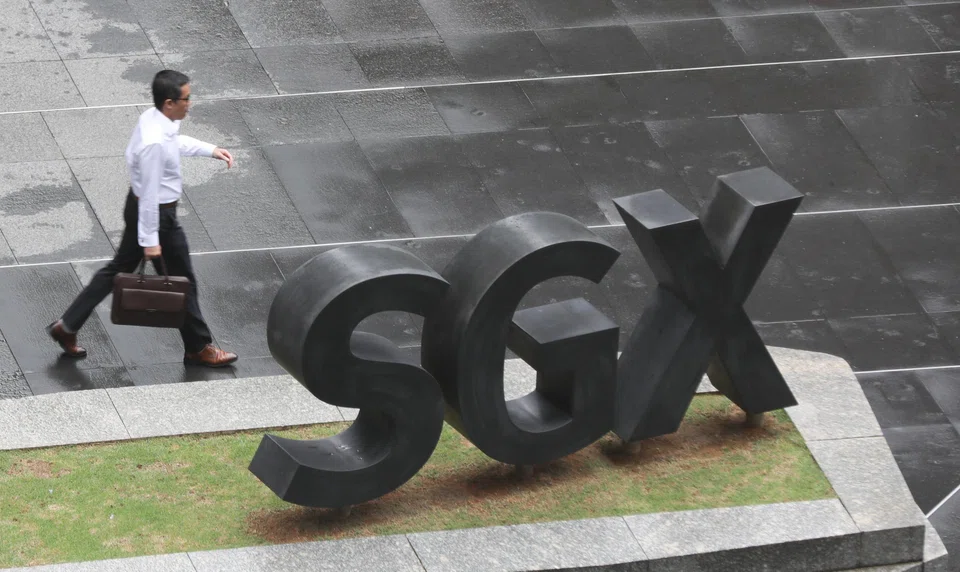
[SINGAPORE] The Republic’s newest exchange-traded fund, the CGS Fullgoal Singapore Next 50 Active ETF (Q50), will debut on the Singapore Exchange (SGX) on Thursday (Sep 3).
While it has attracted interest, a number of investors remain seated on the sidelines, undecided on whether it is a worthwhile addition to their portfolios.
We have heard the concerns: Is the property exposure excessive? Is the fee too high? How should investors judge a fund with no track record? And does Singapore need another equity ETF?
These are fair questions. In fact, they are exactly the questions investors should ask before buying any fund, especially a newly launched one.
The Reit exposure is too high
Property companies and real estate investment trusts (Reits) account for 39 per cent of the iEdge Singapore Next 50 Index (Next 50). As a fund benchmarked to the index, the Q50 cannot avoid having such exposure.
However, its active mandate assesses all constituents, including property companies and Reits, with their portfolio weights allowed to be adjusted within defined limits based on a systematic six-factor model.
This flexibility matters at the portfolio level.
The bank-heavy Straits Times Index (STI) and Reit-heavy Next 50 can respond differently to interest rate changes; higher rates may support bank margins while weighing on Reit valuations, with some of these effects potentially reversing as rates ease.
Their correlation of about 0.73 suggests that the two indices do not move in lockstep.
For investors whose Singapore equity exposure is anchored by the STI, the Q50 could serve as a complementary allocation by diversifying sector exposure, broadening exposure beyond just large caps and offering a fuller representation of the Singapore market.
The fee is too high
At a 0.65 per cent annual management fee, the Q50 is more expensive than a passive STI ETF. What are investors paying for?
The additional fee reflects professional portfolio management, rather than simple index replication.
In the Next 50 tier, active management is particularly important. Companies in this index generally receive less analyst coverage, and returns vary widely.
As at Aug 31, 2026, the median index constituent was covered by six analysts, against 16 for the median STI stock.
Excluding AEM, which gained more than 480 per cent, one-year performance of constituents ranged from a gain of 180 per cent to a loss of 58 per cent.
In such a segment, stock selection matters.
The Q50’s active mandate provides flexibility. While benchmarked against the Next 50, it may invest up to 20 per cent of its portfolio in the broader SGX universe, allowing the manager to pursue opportunities beyond the benchmark and potentially enhance risk-adjusted returns.
While active management does not guarantee outperformance, if investors see value in disciplined selection and greater investment flexibility, the fairer comparison would be with other active funds.
In this context, the Q50’s management fee is below that of the only other actively managed equity ETF on SGX, and less than half of what Singapore-focused active equity unit trusts typically charge retail investors.
The fund has no track record
It is true that a fund listing today will have no track record.
While noting this, rather than focusing on historical performance alone, investors could instead focus their assessment on its transparency, portfolio controls, benchmark discipline, liquidity and investment process from Day 1.
These criteria can be judged in the first month, without waiting for the third year.
The Q50 may be new, but it benefits from the expertise of its investment adviser Fullgoal Asset Management Hong Kong.
The company is part of Fullgoal Fund Management, which established China’s first quantitative investment team and has run systematic strategies in China since 2009, and in Hong Kong since 2018.
Fullgoal built its quantitative model using local market data, and adapted it to domestic market conditions.
The Q50 is the first application of the model to Singapore equities.
The combination of a systematic quantitative framework and CGS International’s local market expertise helps ensure that portfolio decisions are supported by both multi-factor, data-driven analysis and deep market knowledge.
The next story of Singapore’s market
This brings us to the central question: Can the Q50 deliver returns over time?
First, investors should consider what role the Next 50 plays in a Singapore equity portfolio. The STI is Singapore’s established story and has rightfully earned its place as the cornerstone of locally focused portfolios.
We see the Next 50 as a satellite portfolio. Owning both is owning a fuller version of the Singapore market.
Investing in the Next 50 does not mean a shortcut to returns.
Investors should approach the Next 50 with a long-term mindset. Those who look only at today’s blue chips may miss where tomorrow’s leaders are being built.
The STI tells the story of the Singapore market’s biggest constituents today; the Next 50 offers investors a stake in what is next.
The writer is group head of asset management at CGS International Securities, where he leads the expansion of its asset management business and investment solutions.
The commentary is based on the writer’s own experiences, observations and argument. Artificial intelligence tools were used for drafting and editing. The writer remains fully accountable for the commentary’s accuracy, originality and final form.
TRENDING NOW

ComfortDelGro appoints two new independent directors

Once staunchly pro-China, Malaysian Chinese businesses are now distancing themselves from Beijing

NoonTalk needs continued financial support from CEO Dasmond Koh, auditors warn

DP Architects sets the benchmark for sustainability disclosure and design

