

The secret to Ukraine’s remarkably resilient labour market
Flexibility, financial support and remote work have offset some of the economic upheaval of war
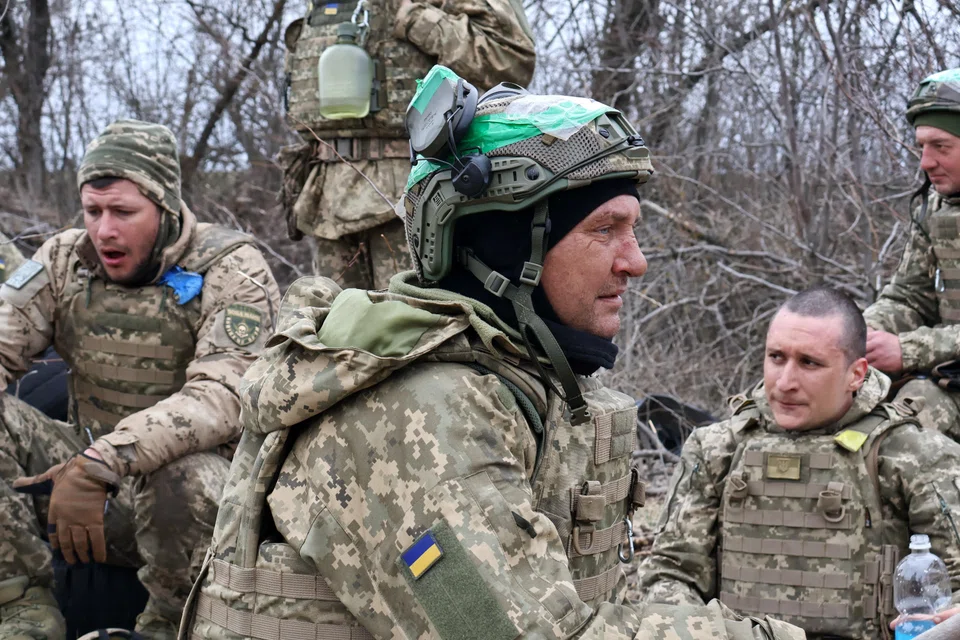
WHAT happens to an economy when a quarter of the labour force has to leave – either to become soldiers or refugees? If you had asked me that five years ago, I would have said, first, that it would be an economic disaster and, second, that nobody would be collecting labour market statistics in a scenario like that anyway.
But the war in Ukraine – now into its fifth year since Russia’s full-scale invasion – has proved me wrong on both fronts. Although the government’s labour market survey was suspended after the invasion in 2022, the country’s modern digital infrastructure means that economists can piece together an idea of what has happened via online job platforms and administrative sources.
Tito Boeri, economics professor at Bocconi University in Milan, told me the quality of data in Ukraine was “unprecedented” for a wartime economy. As a result, “this is the first time we can observe the way a labour market operates during a war”. What does that data show? A remarkable level of resilience given the circumstances.
Consider the scale of the shock. Because of mobilisation, refugees and war casualties, there has been “a contraction of about one-fourth of the initial labour force in areas still under government control”, according to a new paper co-authored by Prof Boeri for Rockwool Foundation Berlin.
There was also a demand shock. Posting of new online vacancies plummeted by half during the first year after the full-scale invasion.
There has been a skills-mismatch problem, too. As well as the millions who left the country (most of the adults who left were women; many of them university-educated), internally displaced people have often had to move into regions with very different local economies to the ones they left behind.
“Traditionally, eastern parts of Ukraine are more industrial – many people moved to central and western Ukraine, which is more agricultural and services-based,” Iryna Ippolitova, a senior researcher at Ukrainian think tank Centre for Economic Strategy (CES), told me.
On top of that, of course, the entire shape of the economy has changed rapidly, as sectors such as defence have expanded and others like tourism have contracted.
Given those upheavals, one might have expected to see both high unemployment and severe labour shortages, as employers and workers struggled to “match” with one another. But the Rockwool paper finds that so-called “matching efficiency” between workers and jobs proved “surprisingly resilient despite unprecedented disruption”, especially in western regions less exposed to active conflict.
Why? One big factor has of course been the ongoing financial support from countries in the West, which has helped to keep Ukraine’s economic wheels turning. Prof Boeri also said that both employers and workers have been flexible: about wages; about women doing traditionally male jobs; about working at older ages; and about making adjustments to integrate more people with disabilities.
Ippolitova is more cautious. The Ukrainian government is working on a new labour code and other measures to improve flexibility and more inclusion of those with disabilities, she said, but there is still a long way to go.
Both Prof Boeri and Ippolitova agree that remote work has been a factor in the labour market’s resilience, too, by enabling employers to hold on to white-collar staff who have left the country or been internally displaced.
This is a key difference with wars in the past, when remote work simply was not feasible, and underlines just how economically important it has been for Ukraine to keep the Internet working.
CES’ regular surveys suggest that about 16 per cent of adult refugees who worked in Ukraine still work for Ukrainian companies. By maintaining links with their employers and the wider economy, those people might also be more willing to return home when the war ends.
There are still plenty of difficulties ahead. An outright labour shortage is now a growing problem, both on the battlefront and in the civilian economy. And while an end to the war would bring soldiers home, it is clear that many refugees now plan to stay in their new home countries.
CES’ latest survey finds that about 43 per cent of refugees intend to return, while 36 per cent do not. Unfortunately for Ukraine’s already strained demographics, it is older people who seem more likely to go back, Ippolitova said, and younger people who are more likely to stay abroad.
But that is a problem for the future. For now, the Ukrainian labour market’s ability to keep functioning through years of active conflict is an impressive feat. It is also a reminder that fighting a war depends on economic resilience as much as military might. FINANCIAL TIMES
TRENDING NOW

LTA proposes combining car COE categories, adding rebate-surcharge system

StarHub to acquire MyRepublic’s mobile business amid ongoing telco consolidation

DBS, OCBC, UOB rout lops billions off STI as inflation, rate concerns spook investors

Grab CEO’s wife Chloe Tong on life with Anthony Tan and finding her purpose

