

Seeking a natural fit: Tapping the new TNFD framework
Singapore is addressing the challenges – and opportunities – that arise from the launch of the Taskforce on Nature-related Financial Disclosures
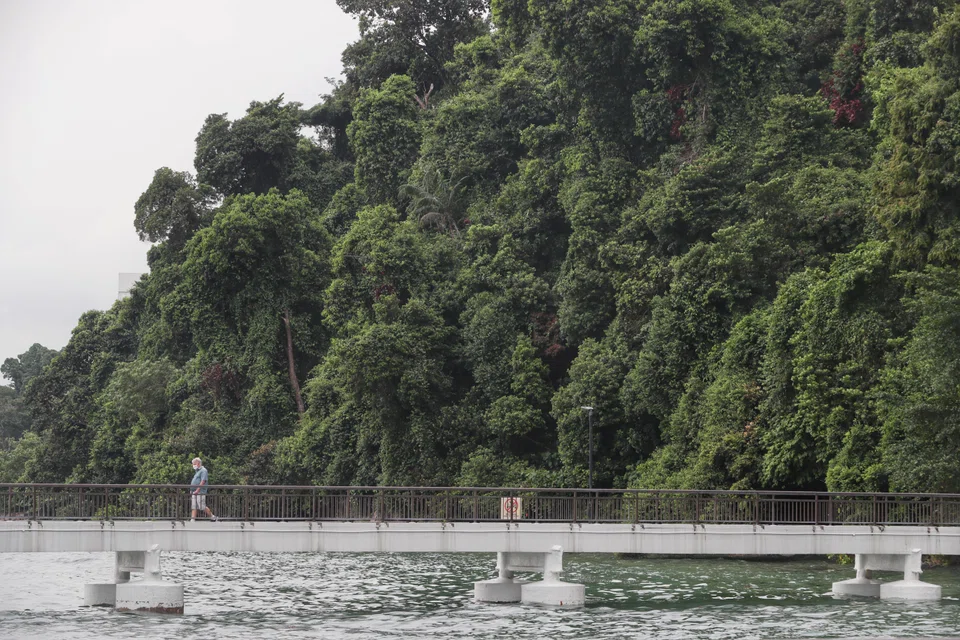
WHY do natural ecosystems matter to a city-state like Singapore? After all, the Singapore economy hums along on global trade, not on the resources that sub-tropical rainforests could provide.
One of the reasons why nature does matter to financial centres, as the new Taskforce on Nature-related Financial Disclosures (TNFD) points out, is that “nature loss poses a major risk to businesses, while moving to nature-positive investments offers opportunity”. Another, of course, is that we are part of nature and it has an intrinsic value.
The TNFD, launched in June 2021, aims to be a market-led, science-based framework that helps businesses integrate nature into their decision-making. Up to now, the natural world has been treated as a market externality. In other words, “what happens to nature” is not priced into financial decision-making. Agriculture, for example, relies on complex ecosystems in the soil. But no one has to consider what might happen to the soil microbiome when they develop new fertilisers, though the costs of any damage are, ultimately, borne by everyone.
There are reasons why nature is an externality, of course. For hundreds of years, there appeared to be no cost to the degradation of the natural world. It’s also very hard to price it in. The world is still working towards getting comprehensive data on carbon emissions, which is a much simpler task. Mapping the full complexity of an ecosystem, such as a rainforest, onto business decisions is several orders of magnitude more difficult.
Singapore as a country aims to play a leading role in helping to protect nature. One part of this is local. The city-state wants to develop over 130 hectares of new parks by 2026 and, by 2035, to add 1,000 hectares of green spaces. Given that Singapore covers just 71,900 hectares and has a human population of 5.64 million, that is an ambitious goal. As things stand, important nature conservation areas are relatively small. The Sungei Buloh Wetland Reserve, for example, spans 202 hectares.
Helping the world get to trusted data
The other part of Singapore’s work on protecting nature, though, will be global. Project Greenprint, run by the Monetary Authority of Singapore (MAS), is already working towards an important and elusive goal: trusted sustainability data.
As the MAS points out, collecting ESG data “is often manual, tedious and costly”. When it comes to gathering data on nature, finding it can include sending out “literally armies of research students…to count butterflies with binoculars”, said Prof Koh Lian Pin, director of the National University of Singapore (NUS)‘s Centre for Nature-based Climate Solutions, at the Singapore FinTech Festival’s Green Shoots Series in April 2022. He said the manual approach would have to give way to using remote-sensing technologies to collect the data, and machine learning to process it and derive useful information.
To streamline the collection and use of climate data, Project Greenprint aims to build “digital utilities” – comprising an ESG disclosure portal, an ESG registry of green certificates, a data orchestrator and a digital marketplace – all by 2023. There will be 27 core metrics. Firms input the data once, which is then mapped across a range of sustainability standards and frameworks, allowing sustainability reports to be generated automatically. Over time, disclosures will be interoperable across borders.
Singapore also plans to play a leading role in one of the primary sustainability challenges: reducing levels of atmospheric carbon. In his keynote speech to COP27 in November 2022, MAS managing director Ravi Menon told the conference that “Singapore is well-positioned to be a carbon services and trading hub”.
He gave three reasons : First, Singapore is a trusted marketplace with good governance and infrastructure. Second, Singapore sits in the heart of South-east Asia, a region that has more than one-third of the world’s mangroves and around 120 million hectares of land that could be reforested. That offers significant opportunity for carbon sequestration, where plants absorb carbon from the atmosphere. Third, Singapore is boosting its ability to certify, validate and monitor carbon credit projects.
It’s more complex than carbon
But as Project Greenprint and the TNFD initiative make clear, Singapore will also be tackling a bigger challenge than cutting carbon: protecting nature in the widest sense and integrating its value into financial decisions.
It won’t be easy. As NUS’s Prof Koh put it: “When we think about nature-based climate solutions, there is a risk that we might end up investing in growing monoculture plantations just for the sake of capturing carbon. There may be similar risk in biodiversity…of perverse incentives.”
To get around that, investors will need substantial data and a way of analysing that data automatically. These automated approaches will also have to be creative and diverse to try to capture the subtle complexities of the natural world.
Tony Goldner, executive director of TNFD, said: “This really is the time for fintech innovators to come forward…In a complex, multi-dimensional challenge like this we need to let a thousand flowers bloom and see which can be taken to scale.”
We are still some way off finding solutions. Dr Alistair Douglas, founder of Eachmile Technologies, which is based in Singapore and uses technology to help redesign fishing and agricultural supply chains, pointed out that seafood – which most of us simply take for granted – is the most traded food commodity on the planet and that one in ten people globally derive their income wholly, or in part, from the industry. Ninety per cent of these people are in developing nations.
The need for finance to play its part
If seafood is to be sustainable, those fishermen – however small – will need access to finance and insurance. “The finance industry could finance the application of technology, find ways and interesting business models, to get the technology onto … the vessels and through the supply chains,” says Dr Douglas. He also wants to see fishermen properly incentivised to protect the environment and to provide data.
That will be a challenge for the financial system in the near term as it changes to come to grips with sustainability. However, the forward-looking approach of regulators like MAS is helping to lay the foundations on which banks and fintech entrepreneurs can build.
Ang Kar Wee is business development director at The London Institute of Banking & Finance
TRENDING NOW

South-east Asia has lost Nvidia’s best salesman

Higher rates, weaker spending: Is the Philippines entering stagflation?

Who is Leo KoGuan, the Singapore-based billionaire backing Nvidia’s Jensen Huang?

Demand, tech capabilities position Apac and AI as Skyscanner’s next growth frontiers: CEO Bryan Batista

