

Sembcorp stays on transformation course, but big bet on renewable energy comes with risks
The threat of US tariffs, for example, could dampen global trade and electricity demand, and weaken the drive to invest in fossil fuels

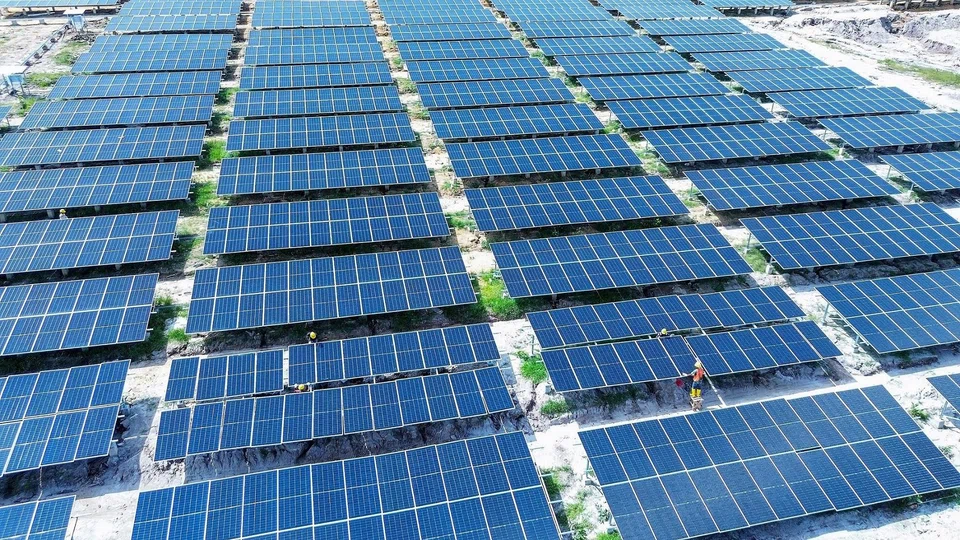
HARDLY a month goes by without Sembcorp Industries announcing a renewable-energy contract or strategic deal, the latest being a 300 megawatt (MW) wind-solar hybrid project in India that it will build, own and operate.
The deals reflect an aggressive multi-year shift into the energy transition space, putting the company on track to becoming one of the purest renewable energy plays on the Singapore Exchange. But the big bet on renewable energy comes with its own risks, including the possibility that demand for renewable energy will not be as high as expected.
Sembcorp first made a strategic decision in 2021 to transform itself, once one of the biggest oil and gas rig builders in the world, into a sustainability solutions group. Two years later, the company reaffirmed its commitment to the transition with a 2024-to-2028 road map that included S$14 billion of capital investment over the period.
A good 90 per cent of that planned investment will go to sustainability-related businesses: About 75 per cent of the investments are earmarked for the renewables segment. Another 10 per cent will go towards decarbonisation solutions, a new business segment that Sembcorp is trying to develop. A further 5 per cent is reserved for integrated urban solutions, which is largely a sustainable real estate development arm.
Most of the remaining 10 per cent will be invested into “hydrogen-ready” assets and replacement capital expenditures. These can include natural gas projects, which Sembcorp undertakes as a transition business that should eventually be replaced with more sustainable solutions.
Sembcorp’s renewables business is now significantly bigger than it used to be. In 2022, its renewables gross installed capacity was just 8.3 gigawatts (GW). With the new India project, its global renewables capacity increases to 16 GW, including a 49 MW acquisition that is pending completion. In India, Sembcorp’s renewables capacity now stands at 5.4 GW.
Uncertain demand
The big bet on renewables means that Sembcorp’s future performance is indelibly tied to its thesis that the energy transition will be a strong driver of growth.
While the brisk pace at which Sembcorp has been able to secure renewables contracts suggests that the thesis is sound in the long term, it is not without some short-term bumps.
Renewables net profit in the first six months of 2024 slipped 7 per cent to S$113 million from S$120 million the year before, despite new acquisitions in China and India and an increase in capacity. Sembcorp explained that the decline was due to weak energy demand in China amid a slowdown in economic activity, which led to higher curtailment. Curtailment refers to a slowdown in energy production or supply to balance out lower demand.
With the threat of US tariffs casting a shadow on the outlook for global trade, the export economies in Sembcorp’s key Asian markets could face speed bumps in their growth for the next few years. That could not only dampen overall electricity demand, but also weaken appetites for investing in replacing fossil fuels in the short term.
Gas mileage
The net profit of the gas and related services business, which remains Sembcorp’s largest single business segment, rose 30 per cent to S$809 million in 2023 from S$622 million a year earlier, driven by Sembcorp’s cogeneration plants in Singapore.
The gas operations provide an important buffer for Sembcorp as it invests in the transition. The gas assets mean that Sembcorp has some margin for error if national electricity policies in the company’s various markets move more slowly than expected towards renewables.
But Sembcorp might have to lean on its gas business for longer than its ambitions indicate. In the first half of 2024, gas and related services still accounted for almost two-thirds of net profit.
Busy dealer
All the same, Sembcorp will probably be active on the mergers and acquisitions front for the next few years.
A major divestment is set to take place by the first half of 2025 with the planned sale of its integrated waste management arm Sembcorp Environment. Buyer TBS Energi Utama, an Indonesian integrated energy group, is expected to pay S$405 million for the unit.
The proceeds of the sale will go towards Sembcorp’s renewables business.
The sale will shrink Sembcorp’s Integrated Urban Solutions business. Sembcorp Environment made pre-tax profit of S$13 million in the first half of 2024, about 16 per cent of the Integrated Urban Solutions segment’s profit of S$83 million over that period.
It will also change the nature of the Integrated Urban Solutions segment, shifting the business unit more towards development.
In August, Sembcorp announced its strategy for the Integrated Urban Solutions segment, centred on an ambition to be a leading low-carbon industrial park player in Asia.
This will involve:
- Stepping up land development by expanding the company’s land bank from 14,000 hectares as at end-June 2024 to 18,000 ha by 2028;
- Increasing industrial properties to 1.5 million square metres by 2028 from 0.1 million sq m as at end-June 2024; and
- Targeting a net profit compounded annual growth rate above 15 per cent from 2022 to 2028 and a return on equity of 10 per cent in 2028.
Sembcorp has largely stuck to the roadmaps it laid out in 2021 and 2023, and it is on track in terms of its investments targets. However, the transition’s success in profit terms remains to be seen.
This article first appeared in BT’s ESG Insights newsletter on Nov 29
TRENDING NOW
High Court rules against Julius Baer’s Singapore trust arm in US$50 million family trust dispute
MSCI proposes standalone status for Indonesia; Jakarta stocks plunge 8%

Once staunchly pro-China, Malaysian Chinese businesses are now distancing themselves from Beijing
No chicken feed: How Malayan Flour Mills built an empire from flour to fowl

