

Setbacks for Sunak as key elections approach
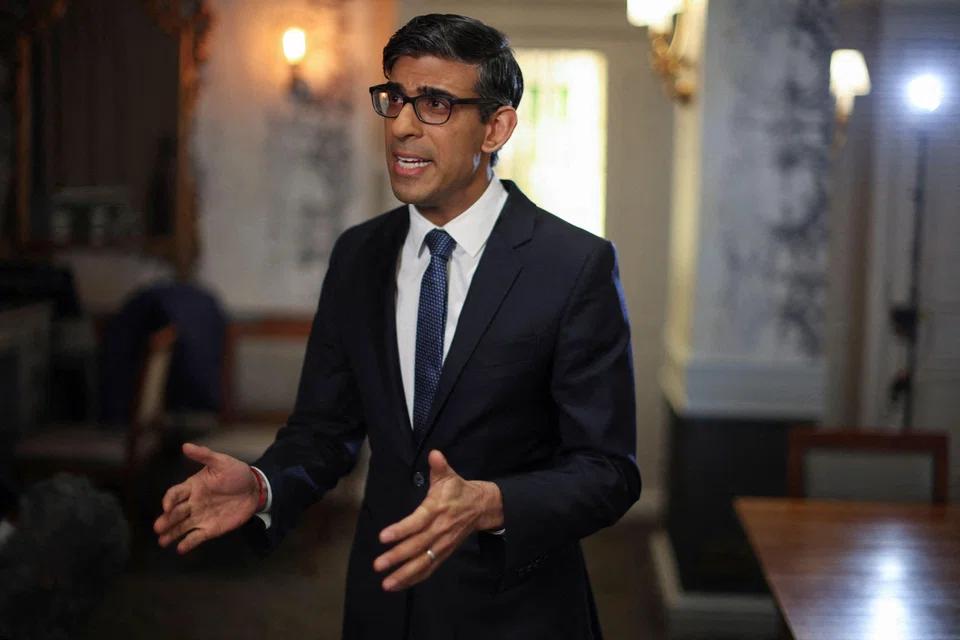
RISHI Sunak faces his first major electoral challenge as UK prime minister on May 4, yet his government is “on the rocks” following the resignation last Friday ( April 21) of Deputy Prime Minister Dominic Raab.
More than half a year into his term of office, Sunak has had a very mixed start in 10 Downing Street. To be sure, he has not experienced a similar disastrous chain of events that his predecessor Liz Truss did last year which saw her prime ministership implode within 50 days.
However, the tenure of Truss is an exceptionally low baseline from which to judge Sunak’s term. In practice, this has had some “ups” but a lot of “downs” too, including the significant number of Cabinet resignations for ethics-related reasons starting with Cabinet Office minister Gavin Williamson last year and culminating (so far) with Raab last Friday.
To be fair to Sunak, there have been a small number of successes. This includes the negotiation of the Windsor Framework which seeks to resolve the challenges of the originally negotiated Northern Ireland protocol.
That protocol was agreed as part of the UK–EU Withdrawal Agreement that formally took the United Kingdom out of the European Union. Its purpose is to prevent a hard border on the island of Ireland, by requiring Northern Ireland to align with EU law, allowing it to maintain frictionless access to the EU. However, it also means that goods entering Northern Ireland from England, Scotland and Wales need to prove they comply with EU law in these areas.
The new Windsor Framework, which is being opposed so far by much of the Democratic Unionist Party in Northern Ireland, would see a majority of controls and checks disappear on goods destined to remain in Northern Ireland, and the role of the European Court of Justice as the ultimate arbiter of disputes largely removed, while the EU will no longer have the right to automatically launch proceedings against so-called infraction of the protocol.
There would also be a new “Stormont brake” giving assembly ministers in the devolved legislature in Northern Ireland (Stormont) a say on EU laws, allowing them to stop them applying in that nation. Moreover, Northern Ireland ministers will be given sight of new EU laws as they are drafted.
It is Raab’s resignation, however, that may well be more salient in terms of shaping the May elections. These ballots include district councils, unitary authorities, and directly-elected mayors in England, and all local councils in Northern Ireland.
A majority of the seats up for grabs were last elected in May 2019. In those ballots, the Conservatives lost over 1,000 seats and control of several councils while the Liberal Democrats managed to make the most gains. If the Conservatives lose 500 of the more than 3,300 seats they are defending across England to Labour on May 4, it would be the first time in over two decades that the Conservatives are not the biggest local party in England.
While it is by no means sure that Labour will win a big majority at the next general election, a significant win for the party on May 4 would fuel the growing perception that it will emerge with the largest number of MPs in Westminster after the next big battle at the ballots, which will most likely be in 2024. This is encouraging growing numbers of Conservative MPs to announce their retirement from politics.
With the Conservatives almost certain to lose seats on May 4, a key question for the government will be whether it can regain political momentum after. This is possible, but is made less likely because it lacks energy after almost a decade and a half of Conservative rule.
This is, in part, because so many ministers in Sunak’s Cabinet are holdovers from Johnson’s governments from 2019 to 2022 (a significant number of whom were in “political exile” under Truss’s administration): including Michael Gove, Oliver Dowden, and Ben Wallace who occupy the same roles as in Johnson’s last Cabinet. Other ministers who served in Johnson’s top team who are now in new Cabinet jobs include Sunak himself; James Cleverly; Grant Shapps; Gillian Keegan; Therese Coffey; Steve Barclay; Penny Mordaunt; Robert Jenrick, and Suella Braverman.
However, even if the Conservatives have a very bad night on May 4, Sunak may yet escape a leadership challenge. This is, in part, because of the declining political fortunes of Johnson whose standing within the party has slipped (perhaps only temporarily) recently.
Firstly, he received last month a grilling from the House of Commons Privileges Committee where he was flustered by questioned posed by a cross-party group of MPs, including Conservatives Bernard Jenkin and Charles Walker, about the so-called “partygate” scandal during the lockdown era of the pandemic. Added to this, Johnson hoped to lead a major backbench rebellion against Sunak’s Windsor Framework, but this failed to materialise.
So, barring a major calamity in coming months, it is most likely that Sunak will lead the Conservatives into the next general election next year. Yet, he has a massive political hill to climb as he, like other previous prime ministers who take over in mid-term, tries to give himself time to establish himself before going to the polls.
The task is so difficult for Sunak because much public opinion is sceptical of him and his government. He also knows that no party in modern UK political history has won five elections in a row, and he must try to do this against the backdrop of a divided Conservative caucus of MPs, high inflation, increased interest rates, and cuts in government spending.
So he has a huge challenge ahead, and he faces this in a context where Johnson (and indeed the much wider number of ministers leaving office in recent years, including Truss) could become significant political thorns in his side. In recent weeks, Truss has been renewing her push for a radical low-tax agenda in the face of the threat from authoritarian regimes. In a recent speech to the Heritage Foundation, a US think tank, for instance, she argued that a “cartel of complacency” is damaging economic growth in the West and accusing key governments of aiding China, Russia and other authoritarian regimes by refusing to offer tax cuts.
Taken together, this is why Sunak’s prime ministership is so potentially perilously positioned. While he is now likely to last in office to fight the next general election, the political winds are blowing against him winning a fifth term of office for the Conservatives.
Andrew Hammond is an associate at LSE IDEAS at the London School of Economics
TRENDING NOW

First Resources blames El Nino, outside fires for Kalimantan hotspots amid haze scrutiny

High Court rules against Julius Baer’s Singapore trust arm in US$50 million family trust dispute
Singapore key exports jump by higher-than-expected 68.4% in September, led by non-electronics

MSCI proposes downgrading Indonesia to standalone market status

