

Seven years, four areas, one chance
Expectations of businesses to tackle our global challenges have been mounting, but in response, have they stepped up or back? Will they play the role of hero or villain, and where should they focus?

“I’d be foolish to tell you that I thought my kids are going to enjoy a planet that is remotely the same shape as the one I’ve enjoyed in my life… …I think we have lost the right to be pessimistic and just sit around and say, ‘I guess this isn’t going to work out’.” – Ryan Gellert, CEO, Patagonia
WHEN I read these words from an interview with Ryan Gellert, it highlighted the need to be both crystal clear about the polycrisis humanity faces—defined by the World Economic Forum as a cluster of related global risks with compounding effects, such that the overall impact exceeds the sum of each part—and also the imperative to use this as a wake-up call to fundamentally transform how our societies and our economies work.
With the future of civilisation in the balance in what is undoubtedly the decisive decade, now is not the time to sit on the sidelines or fall into despondency. As calls for businesses to step up intensify, what role are they playing? How can they respond?
Businesses: supervillains or unlikely heroes?
Some, particularly in civil society and philanthropy, can adopt an almost cartoonish, villainous characterisation of business. This isn’t completely unfounded, with some business value chains rooted in exploitative, colonial mindsets and with many businesses operating in a way that is actively damaging human and planetary health.
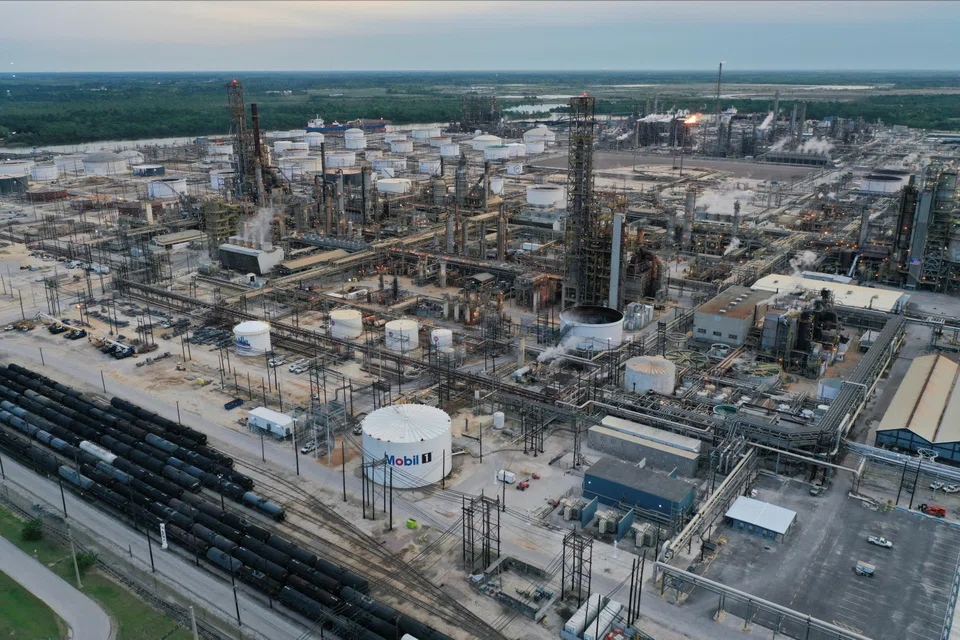
This damning view is reinforced when chilling business practices come to light, such as the testimony to the US Congress that exposed Exxon’s startlingly accurate predictions of climate breakdown in the 1980s while continuing to raise doubts about the need for climate action. For people working in large corporations, the pressure of unspoken norms to accept approaches that are exploitative, extractive or even harmful as “just how business works” can be deeply difficult to overcome.
But as the window to meaningfully address our deeply interconnected climate, nature and inequality crises narrows, we need every part of our societies and economies to take bold action. This includes the private sector. According to the Edelman 2023 Trust Barometer, businesses are the most trusted institution right now , ahead of governments and the media, with around 80 per cent of people looking to businesses to solve our global challenges.
Incrementalism or transformation; breakdown or breakthrough?
Business leadership and innovation has become critical in determining whether we will be successful in creating the breakthrough we need. Yet conventional “sustainability” strategies and incrementalist, tick-box approaches to ESG are falling short of the systemic and urgent transformation needed.
Instead, we must focus on catalysing an urgent transition—one that sees us shift away from business approaches that are exploitative and extractive to ones that are socially just and that regenerate the natural living systems our civilisation depends upon, seeing humans as part of nature, not somehow separate from it. This is a just and regenerative mindset and approach, which strengthens the capacity of all living systems to adapt, replenish and generate; where everyone’s human rights and potential to thrive are respected, and where our economies and societies are rewired to serve both people and planet.
This should be at the heart of running any business, and there are four key areas that can unlock a business’s ability to transform, and catalyse deep and urgent change in the purpose of business in society and our economy.
1. Inspire visionary leadership
The 2022 Gartner Sustainability Opportunities, Risks and Technologies Survey found that 86 per cent of business leaders see sustainability as an investment that protects their organisation from disruption, and 83 per cent say their sustainability activities are directly creating both short- and long-term value for their companies.
These are promising signs. Yet, the same survey reported that only 9 per cent of CEOs put environmental sustainability among their top three business priorities. What’s more, the majority of 2,000 global companies tracked by the World Benchmarking Alliance have yet to set explicit sustainability goals.
If businesses are to step up to survive today and thrive tomorrow, they will need to have inspiring, visionary leadership that drives transformative change. Business owners, particularly family-owned ones, and leaders from executive teams to non-executive boards need to transform their understanding of the potential of business to make a hopeful, liveable future possible and deliver purpose-led change.
2. Rethinking value chains
From human rights violations and growing emissions to gaps on our shelves and excessive price hikes, the spotlight on value chains has never been so intense. Our value chains shouldn’t cost the Earth; yet, many of them have ingrained environmental, social and ethical issues, from distressing working conditions and the unequal distribution of power and profits to growing carbon pollution.
In addition, these value chains now face extreme volatility due to the intersecting pressures of the climate emergency, geopolitical conflict, shaky economies, and increasing regulatory demands, each of which have a significant impact on logistics and supply.
Businesses have both an urgent need and opportunity to rethink them. New approaches to procurement, value network relationships, governance and market mechanisms must be put in place to enable businesses to be just and regenerative. The 2020s are calling for a shift from narrowly focusing on cost and efficiency to creating and distributing value more equitably across value networks, within planetary boundaries and in ways that restore ecosystem health.
3. Transforming consumption
Endless growth in resource consumption on a finite planet is simply untenable and there is an urgent need to reimagine how and why we consume goods and services. Even natural resources that can be replenished are being consumed in ways that will exhaust them; Earth Overshoot Day, the date where our consumption of natural resources exceeds the ability of our planet to replenish them, gets earlier and earlier each year.
If we continue with “business as usual” and exhaust these essential resources, our civilisation faces collapse. What’s needed is an understanding of how we can all enjoy a good life that meets our needs and wellbeing within planetary boundaries.
Media, brands, citizens and others need to come together to envision and explore how more sustainable ways of consuming and living can be aspirational, affordable and actioned—and reimagine how we consume, with rapid deployment of approaches such as the sharing economy and circularity. Facing these consumption challenges is both an urgent imperative for the future of our planet, but also a huge opportunity for enlightened businesses, societies and citizens.
4. Creating an enabling context
The need for businesses to transform their raison d’être and operations is faced by a huge obstacle: they are operating within an economic system that is not conducive to this transformation. At the same time, the influence of business extends well beyond its immediate operations, so how can this influence be leveraged? How can key actors such as investors, accountability institutions and civil society shape an enabling context for business that supports the transformation needed, rather than locking in the status quo?
If businesses step up to help influence, rethink and reshape our economic structures from intellectual property rights, corporate tax regimes, limited liability legal entities, the global financial structure and more, change may well be possible.
It sounds daunting, but we must remember that our economic systems are not determined by “natural” laws. These are created by us: our collective decisions, assumptions and mindsets, and we have the power to reshape them.
To address these four critical areas, we only have seven years left in this decisive decade. The polycrisis is intensifying everyday and there is no case for business inaction. We need to create a more liveable future; it’s within our grasp. Whether or not we realise it will depend on just how transformational businesses choose to be.
The writer is the global strategic lead, purpose of business, at international sustainability non-profit Forum for the Future. A version of this article first appeared on their website.
TRENDING NOW

South-east Asia has lost Nvidia’s best salesman

Demand, tech capabilities position Apac and AI as Skyscanner’s next growth frontiers: CEO Bryan Batista

Peter Kwee’s Ridley Park bungalow on the market with S$100 million asking price

Beyond the greenback, Vietnam’s big borrowers turn to Asian-currency bonds

