MARK TO MARKET

SGX RegCo’s IFA guidelines commendable, but it’s time to look at other protections for minorities

Here’s one suggestion: Regulators could require real estate companies to be valued at a minimum of their NAV when they are taken private

Ben Paul
Published Mon, Jul 10, 2023 · 05:00 AM
    • SGX RegCo has set out guidelines for IFAs in the context of its listing rules.
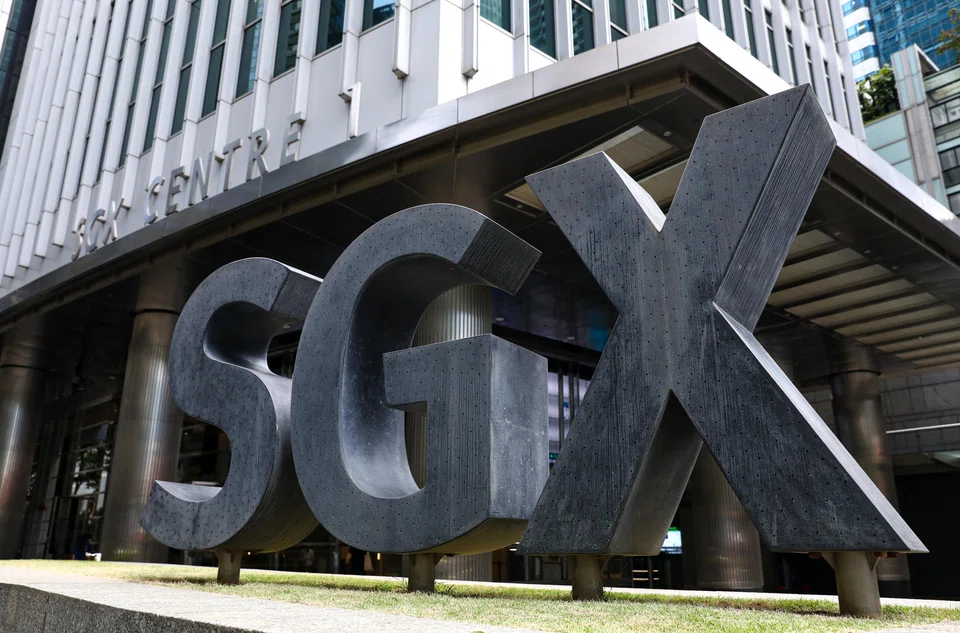
    • SGX RegCo has set out guidelines for IFAs in the context of its listing rules. PHOTO: YEN MENG JIIN, BT

    EARLIER this month, Singapore Exchange Regulation (SGX RegCo) set out guidelines on independent financial advisers (IFAs) in the context of its listing rules.

    Much of the eight-page document dated Jul 3 was about IFAs having to be independent and unburdened by conflicts of interests; exercising diligence, objectivity and transparency in their analyses and opinions; and flexing their skill and professional judgement in the application of various valuation methodologies.

    These are, of course, things many investors would reasonably assume IFAs are already expected to do. But SGX RegCo also provided some hints in its new guidelines – which are to supplement guidance on IFAs provided by the Securities Industry Council in relation to the Takeover Code – on where it sees potential for trouble.


    Under a segment titled “Observations by SGX RegCo”, the frontline regulator noted that the opinion of IFAs tend to come under scrutiny by investors when the offer price is below the target company’s net asset value (NAV) per share or its revalued net asset value (RNAV) per share.

    “Where the IFA has chosen an asset-based approach, and the offer price is below the NAV per security or the RNAV per security, the IFA should clearly explain the fairness and reasonableness of the offer (as appropriate) in relation to this point, when queries are raised,” it said.

    SGX RegCo also warned that if a company has a listed asset and the market price of this listed asset were to rise or decline materially after a proposed transaction is announced, the IFA should take this into account in its opinion.

    Which companies might SGX RegCo have been flagging?

    Some investors will remember that Chip Eng Seng was delisted earlier this year following an offer from its controlling shareholders at S$0.75 per share. The company’s appointed IFA – a firm called Xandar Capital – said the offer was fair and reasonable, even though the offer price was significantly below Chip Eng Seng’s NAV and RNAV per share.

    Chip Eng Seng responded to queries from SGX RegCo about its IFA’s opinion on Dec 27 last year, and again on Jan 26. The latter set of queries followed a Hock Lock Siew column in The Business Times that questioned the basis of the IFA’s recommendation.

    Investors were also lowballed by the break-up and delisting of Golden Energy and Resources (Gear) – a coal-mining group with key assets consisting of separately listed entities. After the deal was unveiled, a strong rally in shares of Gear’s 64 per cent owned Australian subsidiary made the terms look even more miserly.

    The offeror group later improved the terms of the two-step transaction, and Gear’s appointed IFA – a firm called W Capital Markets – declared the whole deal to be fair and reasonable. But the IFA’s opinion was partly the result of valuing Gear’s 62.5 per cent stake in its Indonesia-listed arm at much less than the plainly visible market price of its shares.

    Corporate governance angst

    SGX RegCo’s attention to the manner in which IFAs evaluate corporate transactions is clearly warranted.

    Companies seeking to delist are required to make an exit offer that is determined by an IFA to be fair and reasonable. Companies are also required to appoint an IFA to determine if its interested-party transactions are on normal commercial terms, and not prejudicial to minority investors.

    Yet, policing the work of IFAs is not a simple matter. There is usually more than one way to value the shares of a listed company. Indeed, SGX RegCo expects IFAs to use more than one methodology when evaluating an offer and to comment on the results of using different methodologies.

    Another problem is that IFAs and independent directors (IDs) – who are all paid fees for their services – have no real incentive to find fault with deals put forward by a company’s controlling shareholders. If anything, asking too many questions could well be against their interests.

    On top of that, low stock valuations across much of the Singapore market give controlling shareholders a strong reason to consider taking their companies private and testing the limits of the regulatory protections upon which minority investors rely.

    This toxic mix of factors is perhaps one reason there has been so much angst in the market about corporate governance in recent years.

    Alternative protections

    To be clear, I am not suggesting that SGX RegCo’s efforts to raise the standards expected of IFAs and IDs are entirely futile.

    Yet, it could be time for Singapore’s market regulators to consider alternative ways of protecting minority investors when certain types of companies are taken private. For example, would it be fairer for minority investors if market regulators required real estate companies to be valued at a minimum of their NAV when they are taken private?

    Property-based companies often trade at large discounts to their NAV in the public market, partly because investors do not expect they will ever get to participate in the realisation of the full value of the underlying assets of these companies – despite everything IFAs and IDs are required to do.

    Just last week, the controlling shareholders of Lian Beng Group succeeded in pushing their stake in the company past the 90 per cent threshold. The controlling shareholders had offered minority investors S$0.68 per share, which was less than half of Lian Beng’s NAV as at end-November 2022 of S$1.54 per share.

    Lian Beng’s IFA – which was Xandar Capital – said the offer was neither fair nor reasonable.

    Lian Beng said last week that trading in its shares would be suspended due to the loss of its public float. The company also reiterated that the offeror intends to exercise its right of compulsory acquisition.

    If one accepts the principle that a company’s shareholders are the ultimate owners of its assets, and that the book value of those assets is a good indicator of their realisable value, it seems only fair that minority shareholders are paid at least NAV per share when the company is taken private.

    One possible drawback is that controlling shareholders may give up making lowball offers for their companies but attempt to expropriate minority investors through other means. Yet, it is also possible that controlling shareholders will try to realise the value of the assets held by their companies without taking them private, resulting in shares of these companies trading close to their NAV.