

Share buybacks: Good or bad for investors?
Singtel, ST Engineering and Nanofilm are now trading below average prices at which they repurchased shares in 2022
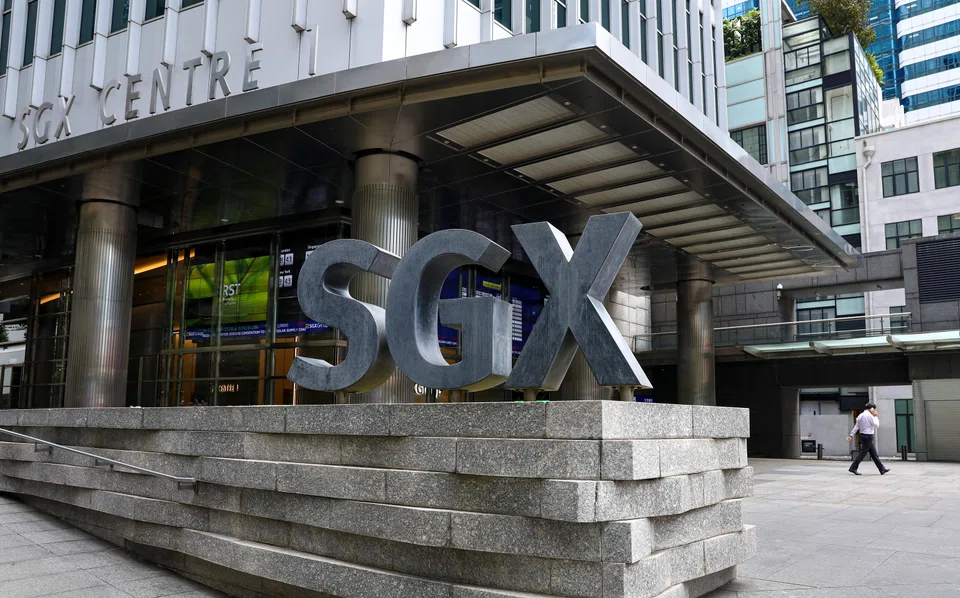
EVEN as interest rates around the world climbed sharply in 2022, share buyback activity in the Singapore market increased significantly.
A total of 86 companies with primary listings in Singapore repurchased more than S$1.69 billion worth of their own shares last year, said a report by the Singapore Exchange (SGX) on Jan 9.
In 2021, 85 primary-listed companies spent nearly S$1.19 billion buying back their own shares. In 2020, 100 primary-listed companies repurchased nearly S$1.04 billion worth of their own shares.
Share buybacks are often taken as a signal from a company’s board and management that its business is thriving and that its share price might be too low.
Companies that repurchase their shares in the market are effectively returning cash to shareholders who want to exit. Shareholders who remain invested stand to benefit from an increased share of the company’s future earnings.
Returning cash to shareholders in this manner is sometimes an integral part of a company’s strategy to unlock value and achieve a higher market price for its stock.
For instance, the company that conducted the biggest share buyback operation last year was Keppel Corp – it spent nearly S$500 million repurchasing 75.9 million shares.
Keppel said in January 2022 that it had established a S$500 million share buyback programme, after making significant progress in its asset monetisation initiative. The company said in September 2020 that it would monetise as much as S$5 billion of assets within three years. Keppel has since said it is on track to exceed this target by end-2023.
Shares in Keppel have been trending higher since September 2020. The stock closed Friday (Jan 13) at S$7.26 – more than 10 per cent above the average price of S$6.59 at which it repurchased its shares last year.
Another well-known company that has seen its share price rise after buying back its shares last year is Raffles Medical Group. SGX said in its report that the company spent more than S$24.3 million scooping up nearly 20.9 million shares in the market last year, paying an average price of S$1.17.
The stock closed Friday (Jan 13) more than 17 per cent above this average price – at S$1.37.
Raffles Medical was a beneficiary of the pandemic, with its revenue and earnings in 2020 and 2021 buoyed by its participation in the government’s Covid-19 vaccination and polymerase chain reaction (PCR) test programmes.
The share buybacks by Raffles Medical in 2022 were done during the first six months of the year, as the pandemic waned and the market price of its shares sagged.
The last reported transaction was done on Jun 28, 2022, when the company bought 700,000 shares in the market at between S$1.12 and S$1.13 per share.
Only a month after that, on Aug 1, 2022, the company reported a 51.3 per cent rise in its H1 2022 earnings to S$59.7 million. Its revenue rose 11.2 per cent to S$382.3 million. This seemed to spur a recovery in Raffles Medical’s share price, which continued into 2023.
Raffles Medical went on to report a 57.3 per cent rise in its net profit to S$98.2 million for the nine months to Sep 30, 2022, on a 9.6 per cent increase in revenue to S$581.8 million.
Badly-timed buybacks?
One risk associated with share buybacks is that companies tend to have the inclination and wherewithal for these exercises only after a period of strong financial performance – when their share prices might already be elevated and their businesses might be on the brink of a cyclical downturn.
Indeed, the increased share buyback activity in the local market in 2022 came after a rebound in the Straits Times Index back to its pre-pandemic levels. With the global economy now slowing in response to tighter monetary policy, some companies have already seen their share prices fall below the levels at which they repurchased their shares last year.
For instance, Singtel is currently trading nearly 7 per cent below the average price of S$2.68 that it paid for the more than 12.5 million shares it repurchased in 2022.
ST Engineering ended last week more than 9 per cent below the average price of S$3.78 that it paid for the seven million shares it accumulated in the market in 2022.
On the other hand, OCBC is trading nearly 6 per cent above the average price of S$11.95 at which it bought 20.9 million shares last year. Wilmar International is trading nearly 1 per cent above the average price of S$4.11 it paid for the 67.6 million shares it repurchased in 2022.
Nanofilm’s big slump
For me, the biggest problem with share buybacks is that companies generally do not explain how they determine whether their shares offer good value. Companies may also overestimate their own intrinsic value – or, at least, hold a very different view than the rest of the market on what that value is.
Back in late 2020, this column pondered whether the supposedly growth-oriented Nanofilm Technologies would excite local investors and enliven the whole market. After a wobbly start, the stock soared well above its issue price of S$2.59 – to more than S$6.00 by mid-2021.
The stock sold off sharply in August 2021, however, after announcing weak results for H1 2021 as well as management changes. It has since drifted steadily lower, despite the company buying back its shares.
In 2021, Nanofilm repurchased more than 5.2 million shares at an average price of S$4.06. Last year, the company bought back another 5.2 million shares at an average price of S$2.51. The stock closed last week more than 41 per cent below this average price – at S$1.48
Nanofilm reported a 5.1 per cent rise in earnings to S$18.8 million for H1 2022, on a 15.2 per cent rise in revenue to S$111.3 million.
In November last year, the company acknowledged it faces a challenging operating environment – with the global economy slowing, supply chains in disarray and its customers curbing their investment spending. But it added that it is working towards key strategic goals that could see it post earnings of S$100 million and revenue of S$500 million by 2025.
If it does achieve these targets, perhaps its recent share buybacks will finally make sense to the market.
TRENDING NOW
Who is Leo KoGuan, the Singapore-based billionaire backing Nvidia’s Jensen Huang?

Demand, tech capabilities position Apac and AI as Skyscanner’s next growth frontiers: CEO Bryan Batista

Higher rates, weaker spending: Is the Philippines entering stagflation?

South-east Asia has lost Nvidia’s best salesman

