

Shareholders can gain from DBS buying back shares, even at record prices
Shareholders benefit when companies actively manage capital, whether through dividends or share buybacks

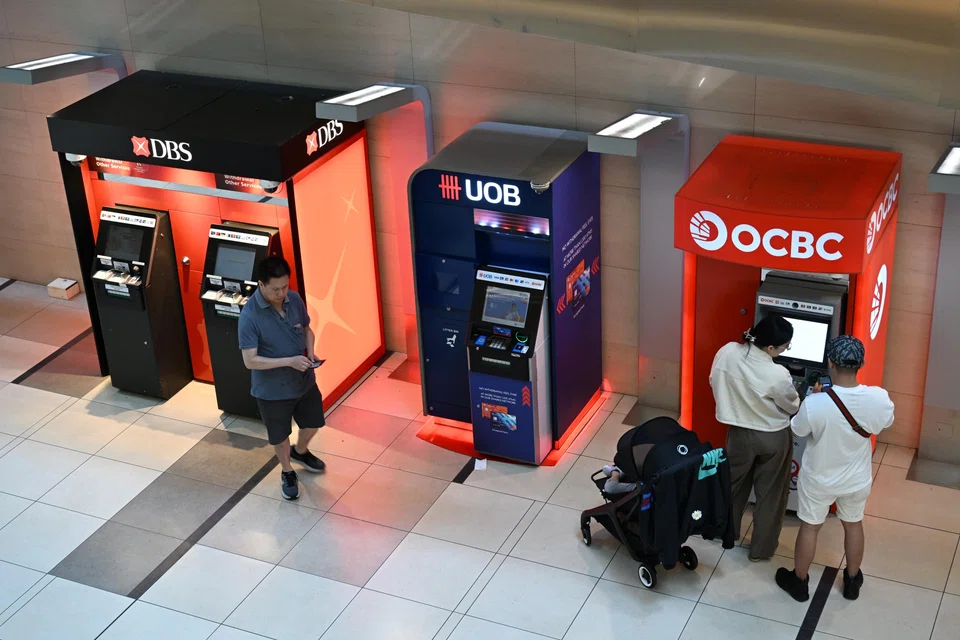
CALL me agnostic. I am happy to receive extra cash, be it from my employer, the government or a company whose shares I hold.
Like many retail shareholders, I welcome listed groups rewarding shareholders with higher dividends on the back of business growth. Cash received can be used to fund new investments, or to treat oneself.
Is it a no-brainer then that a listed group with excess capital should choose dividends over share buybacks, especially as many retail investors in the local market are dividend-fixated?
Possibly not. Singapore’s largest listed group DBS has doubled the ordinary dividend over the past five years, paid occasional special dividends, and recently issued bonus shares that effectively raised dividends.
Earlier this month, the bank added to its capital management toolkit a new share buyback programme of S$3 billion. Shares will be bought in the open market and then cancelled. The buybacks will be carried out at management’s discretion and subject to market conditions.
Rationale for repurchasing shares
Dividends return cash to all shareholders, but share buybacks return cash only to shareholders who sell their shares, namely the exiting shareholders.
Nonetheless, as one who typically holds his shares for many years, I welcome companies doing share buybacks.
Share buybacks can help drive long-term share price performance. And share price gains are great, especially when one does not pay taxes on capital gains.
When a company buys back shares and cancels them, this can slowly raise future earnings per share (EPS) as any earnings growth is shared by a smaller total number of shares. Higher EPS can in turn push up the share price, assuming the price-earnings multiple stays constant.
Share buybacks also improve key metrics such as return on equity by shrinking the company’s equity as a result of buying back shares, as well as return on assets.
Moreover, share buybacks improve the prospects of shareholders receiving higher dividends per share (DPS) going forward, because what a company earmarks to pay shareholders by way of dividends is shared by a smaller total number of shares.
Timing of share buybacks
However, is it inopportune for DBS to buy back shares if it does so at prices which are at or close to historical highs?
Not necessarily – provided there are sound reasons behind the share price doing well. In short, a share trading around a historical high need not be indicative of share price over-valuation.
In recent times, DBS has hardly disappointed in its results announcements. In Q3, the bank posted a 17 per cent year-on-year rise in net profit to S$3.03 billion.
The bank has a strong franchise and a robust balance sheet. It is well placed to gain from continued inflows of money to Singapore in a world fraught with geopolitical tensions.
Also, the bank may benefit from possible inflationary effects of incoming US president Donald Trump’s policies, as interest rates could stay higher than currently projected, which can in turn help net interest margins of lenders.
Indeed, if DBS consistently grows its profits, its share price may continue on a generally upward trajectory. Under such a scenario, there is nothing wrong in continuously buying back shares at ever higher prices, as long as the bank is adequately capitalised.
Based on the counter’s share price as at Nov 19, the dividend yield on DBS’ shares is over 5 per cent, assuming it pays a quarterly dividend of S$0.54 per share in Q4, in line with the DPS for the first three quarters. For perspective, extending a Singapore dollar loan or placing cash in risk-free Singapore dollar instruments may generate under 5 per cent per annum in interest.
Disciplined capital management
Ultimately, I am indifferent when it comes to whether listed groups buy back shares or pay dividends to drive shareholder value. For one, I hope that DBS actively does share buybacks while improving its DPS over time. DBS board’s policy is to pay ordinary dividends that are sustainable and which progressively rise with earnings.
Having applied new international standards for capital requirements under Basel IV, Singapore’s banking trio of DBS, OCBC and UOB have Common Equity Tier-1 ratios above regulatory and historical levels, leaving room to return capital to shareholders.
Should OCBC focus more on raising dividends than doing share buybacks, that is fine. And if UOB actively buys back shares, while not forgetting growing dividends, that is welcomed too.
Taking a step back, shareholders gain when a company doing well focuses on driving shareholder value by returning excess capital.
Certainly, a company should actively deploy cash to pursue growth opportunities and strengthen its platform, such as by investing in innovation and building technological resilience. Also, keep some cash available for potential inorganic growth opportunities. And have buffers to help mitigate events such as an economic downturn, an international financial crisis or a global pandemic.
Nonetheless, holding excess cash poses risks. Such a company may binge on acquisitions and pay too-high prices for inorganic growth as management pursues empire building.
Undertaking capital management moves can be much more useful to shareholders than paying silly prices for acquisitions. Also, a company which actively manages its capital instead of hoarding too much of it will probably be far more disciplined in evaluating various growth opportunities.
Backed by financial strength, DBS has returned plenty of capital to its shareholders in recent years. As the leadership baton passes from long-serving chief executive officer Piyush Gupta to his deputy Tan Su Shan in March 2025, may DBS keep up the good work of actively managing its capital for years to come and set the standard for others to emulate.
The writer owns shares in the three local banks
TRENDING NOW

Once staunchly pro-China, Malaysian Chinese businesses are now distancing themselves from Beijing

Britain’s mansion tax shows the difficulty of targeting wealth

Three hats, one goal: How Ng Kian Swan runs sustainability at NUHS

COE review: The gap between luxury and mass-market cars isn’t the only one worth bridging

