Shein’s IPO quagmire in the West: An opportunity for Singapore
Given the pushback against the ultra-fast fashion retailer’s attempts to list in the West, the Republic could be its next best bet
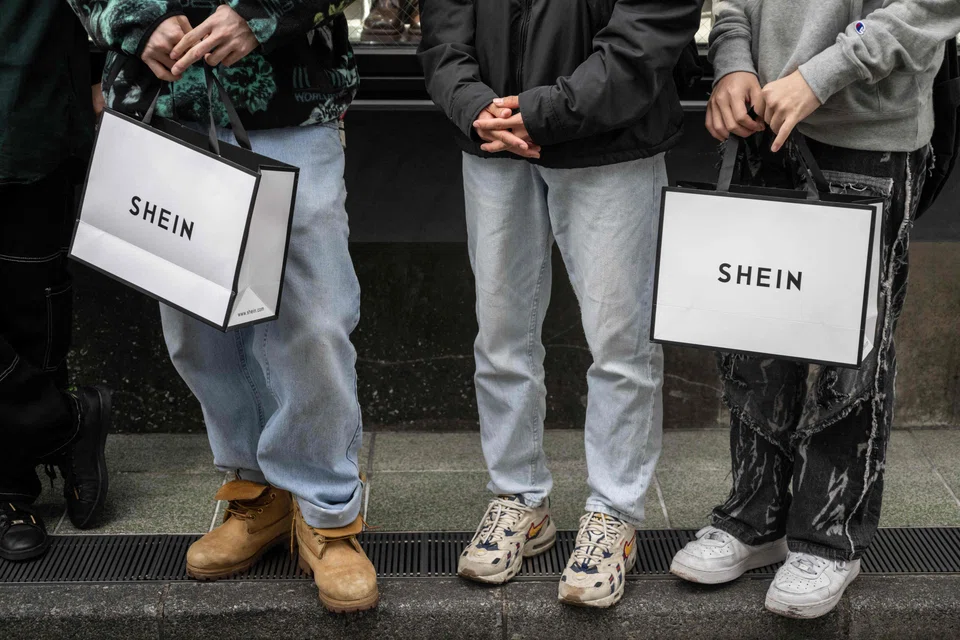
SHEIN, a global fashion retailer headquartered in Singapore, has revolutionised the industry with its ultra-fast fashion business model. However, its initial public offering (IPO) application in the United States, submitted in late November 2023, has encountered delays and challenges due to increased scrutiny from regulatory bodies and politicians.
Given the political tensions and regulatory hurdles in the US, Shein’s IPO filing is unlikely to succeed. However, Singapore would be the company’s best bet for an IPO.
Founded in 2008 by Chris Xu in China, Shein’s success lies in its innovative supply-chain operations and data-driven design process. This approach enables the swift production of fashionable clothing that accurately reflects real-time consumer demand.
Shein employs artificial intelligence (AI) tools to provide personalised recommendations based on each user’s history, browsing behaviour, and interests. Also, it utilises AI to analyse real-time customer data and predict fashion trends. This information then informs its in-house designers, who swiftly create new designs.
Shein works in close collaboration with its supply partners in China, enabling the production of new products within a matter of days. This close-knit, on-demand collaboration allows the company to respond rapidly to fashion trends, thereby establishing its image as an ultra-fast fashion brand.
Unlike traditional supply-chain models, Shein adopts a unique approach to design and product testing. New products are launched in small initial batches, typically ranging from 100 to 200 items. Customer feedback is assessed in real time, and items that resonate with consumers are promptly restocked. This strategy minimises overproduction and waste by ensuring that only items in demand are manufactured on-demand by its suppliers.
This on-demand supply-chain system allows Shein to realise cost savings, which in turn enables it to maintain incredibly low prices.
Shein has thus successfully penetrated a global market that spans over 150 countries. In 2021, reports indicated that the company introduced more new items at a rate 20 times greater than that of H&M or Zara. By 2023, it had an impressive estimated annual revenue of US$30 billion. As at October 2023, it held the position of the second-most downloaded shopping app in the US, captivating over 47 million monthly active users.
With success comes scrutiny. Investigations raised concerns about Shein’s business practices and ethics.
First, Shein’s operations are characterised by a lack of transparency. Despite its global success, the company’s billionaire founder Xu maintains a low profile and seldom participates in interviews. Not only is Shein privately held, but its operations are also opaque: it publishes no financial data, so profitability is a secret.
The lack of transparency fuels speculations. When Shein relocated its headquarters from Nanjing, China to Singapore in late 2021, no public explanations were provided. Some observers speculated that it may be aiming to diversify its supply base beyond China.
Some investors have conjectured that the move to Singapore was designed to mitigate the scrutiny of Chinese government regulations imposed on domestic firms seeking IPO in foreign countries. This conjecture follows the ill-fated IPO of Didi in New York, which lasted only 11 months due to China’s tech crackdown in 2021.
In retrospect, Shein’s decision to relocate appears prudent, especially considering the new Chinese laws enacted in 2023. These laws require domestic companies to comply with national security measures and personal data protection laws before pursuing public offerings overseas.
Second, Shein’s has encountered compliance and legal issues. In 2022, it faced accusations of shipping garments to the US that had been made with cotton sourced from China’s Xinjiang region, raising concerns about forced labour. This was in violation of a federal law enacted by US President Joe Biden in 2021.
Also, Shein has been confronted with legal challenges. In 2023, three designers in California sued the company for copyright infringement, and in January this year, Uniqlo in Japan sued Shein for copying its popular shoulder bags.
Third, Shein has been accused of exploiting the US’ de minimis provision, which exempts products valued below US$800 from duties. This provision, intended to alleviate the burden on US customs, enables Shein to ship an estimated one million duty-free packages daily.
This practice engenders unfair competition, as evidenced by Gap paying US$700 million in import duties in 2022, compared to Shein’s zero. This discrepancy prompted Senators Sherrod Brown and Rick Scott to call on the Biden administration to address this loophole.
Amid these challenges, Shein confidentially submitted an application for an IPO in the United States in November 2023, with a valuation of US$90 billion. However, the move drew unwanted attention and encountered obstacles as geopolitical tensions between the US and China escalated.
In February, Republican Senator Marco Rubio asked the US Securities and Exchange Commission (SEC) to halt Shein’s bid for a public listing in New York unless it disclosed its business operations and its operating risks in China. This request was prompted by the lack of transparency in the company’s operations.
At the same time, concerns arose about the accuracy of Shein’s IPO filing following the 2023 rules that permit the China Securities Regulatory Commission to scrutinise offshore listings and block offerings that could potentially jeopardise China’s national interests.
Recognising that the SEC is unlikely to approve Shein’s IPO, British Finance Minister Jeremy Hunt suggested that it consider listing on the London Stock Exchange.
With a valuation of US$90 billion, a Shein listing would rank among the largest corporate floatations in London’s history. Reports indicated that Shein was in the early stages of exploring a listing in London.
But the London bid too met with negative response. A UK-based think tank highlighted in March that Shein’s registration with Companies House, the British government’s executive agency responsible for maintaining the register of companies, listed Roadget Business, a Singapore-based entity, as its “person with significant control” instead of an individual.
Failing to disclose its ultimate ownership could be a breach of company law, potentially disrupting Shein’s prospective listing in the UK.
Although Shein was valued at US$90 billion in November, Bloomberg reported that its investors were trying to sell shares in private market deals that valued the company as low as US$45 billion in late January.
Given its Chinese roots and the escalating geopolitical tension between China and the West, Shein should consider filing for an IPO in Singapore instead.
The writer is a distinguished professor at the UCLA Anderson School of Management