

Short selling is simply part of normal market functioning
Why this worry about an activity that is routine and commonplace in the currency, futures and commodities markets?
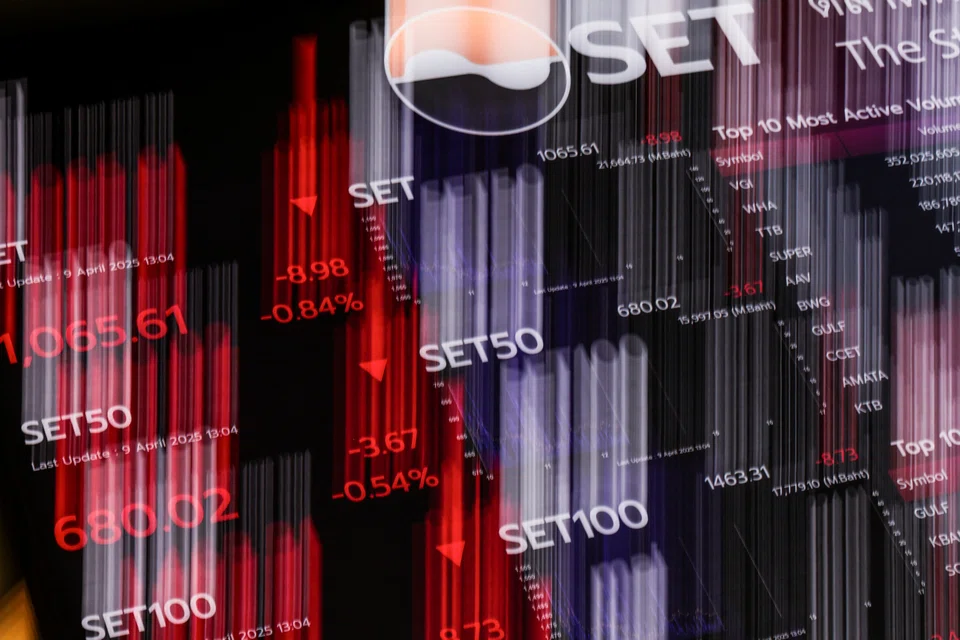
EVERY time stocks plunge as drastically as they did in early April following the announcement of the Trump tariffs, the issue of whether to curb short selling gets revived.
On Apr 8, for instance, in response to the US tariff-led pressure, Thailand announced a ban on short selling of stocks and tightened other share trading rules to curb volatility. The ban on short selling of all securities, except for market makers, lasted until Apr 11.
Also in early April, Taiwan’s Financial Supervisory Commission limited for about one week the number of shares that could be sold short and raised the minimum short selling margin ratio from 90 to 130 per cent.
Perhaps the most extreme example of short-selling curbs were to be found in South Korea which, ironically, lifted year-old measures at the end of March only days before the US-led tariff turmoil.
This came after Korea Exchange introduced a system that can detect naked short selling, which involves selling stocks without borrowing them and is illegal in South Korea.
Fines for illicit profits have also been raised, and enforcement measures have been tightened. A profit of five billion Korean won (US$3.5 million) or more can even result in a prison term between five years and life imprisonment.
Why this worry about an activity that is routine and commonplace in the currency, futures and commodities markets?
One is the view that it is morally objectionable to profit from a company’s demise or losses by others. Another is that it is somehow wrong to sell something not originally owned so as to make a profit by buying it back after the price has fallen (as in via a naked short). Yet another is that it adds unnecessarily to market volatility.
Back in the 1980s and 1990s, there was a belief in Singapore that short selling should be made illegal and banned. Many also felt that short sellers should be severely punished.
Regulators here took a more enlightened view and, consistent with how a disclosure-based regime is supposed to work, opted for a prudent middle ground. For example, if a sell on the Singapore Exchange is a short sale, it has to be marked as such and the data on such sales is then compiled and published.
As for penalties, this comes via the exchange’s buying-in process which kicks in for naked positions that result in failed scrip delivery, a process which can result in painful financial losses if prices had risen in the intervening days.
The reality – apart from the fact that regulators should really not be in the business of mandating rules that only push prices in one direction – is that for every objection, there can be an equally plausible counter justification.
For example, those who see shorting as aggravating volatility and raising risk should also acknowledge that short sellers actually take on an inordinate amount of risk since their upside is limited while the downside is theoretically unlimited.
This is why institutions in Korea welcomed the lifting of the ban. Market analysts saw the resumption of short selling as “likely to be neutral to positive for the broad market” and to “improve market efficiency and price discovery, presenting potential alpha opportunities’’.
This is not to say that short selling should be encouraged or discouraged. But the activity should be recognised as being part of normal market functioning and be treated as such.
TRENDING NOW

Once staunchly pro-China, Malaysian Chinese businesses are now distancing themselves from Beijing

Stocks to watch: HPL, Aims Apac Reit, Zico, Advanced Systems Automation, ComfortDelGro

‘How many will survive?’: Bubble fears arise as China’s humanoid robotics face reality check

Smaller board lots can’t fix a market run by three banks

