

A shortcut to the C-suite: MBA grads raise ‘search funds’ to buy SMEs in Singapore
The first traditional search funds have been launched in Singapore by aspiring entrepreneurs who want to run a company – without starting from scratch. What’s next?


GOH Aik Chuan has always dreamt of being his own boss.
But in pragmatic Singapore, it was a path he dismissed as a pipe dream. For most of his twenties, he was busy climbing the corporate ladder – first as an analyst at UBS Group, then as an operations manager at Uber.
In 2019, while pursuing his Master of Business Administration (MBA) at Insead Singapore, he came across the concept of a “search fund”: an investment vehicle through which a budding entrepreneur raises capital from investors to find, acquire, and eventually run a small business.
This time, the idea stayed with him, even as he advanced his career at consulting giant McKinsey & Co and, later, an education technology company.
In April 2024, he took the plunge and launched Garlic Equity Capital – Singapore’s first traditional search fund – after raising S$500,000 in search capital from 19 institutional and private investors locally and overseas.
The goal? To acquire a small and medium-sized enterprise (SME) in Singapore or Malaysia with an annual revenue of between S$7 million and S$30 million by mid-2027.
Goh, now 36, is among a growing number of Singaporeans embarking on entrepreneurship through acquisition (ETA) as a shortcut to the corner office.
ETA is a strategy where an individual – usually referred to as a “searcher” – buys an existing established company, instead of taking the riskier approach of starting one from scratch.
The appeal was clear for Goh. “Rather than being disruptive, it’s like buying an old house and turning it into something more modern, more reliable. That excites me,” he says.
Search funds are not new. The origins of the predominant model of ETA date back to 1984 in the Stanford Graduate School of Business (GSB), where it began as an experiment.
Today, search funds are taught at most business graduate schools and have emerged as the darling of MBA graduates hoping to fulfil their CEO ambitions.
In a traditional search fund model, backers usually fund at least two years of searching.
This includes paying the searcher a nominal salary, as well as covering administrative and deal-related expenses during the search. Beyond the initial search capital, the full acquisition amount is raised once a suitable target is identified.
For the longest time, search funds were largely confined to North America; nearly 700 search funds have been launched in the US and Canada since 1984.
But the winds of change have begun to blow.
International search fund activity has spiked of late, with a record 59 new international search funds launched in 2023, a 2024 study by the IESE Business School shows.
Search funds have trickled down to Asia, too. Besides Singapore, Malaysia and Taiwan saw the launch of their first traditional search funds last year.
Growing momentum
Like Goh, Kenneth Cheng came across search funds while pursuing an executive MBA at Insead Singapore in 2021.
Last year, the 42-year-old left his job as the regional director of a testing and certification services multinational corporation to start a traditional search fund.
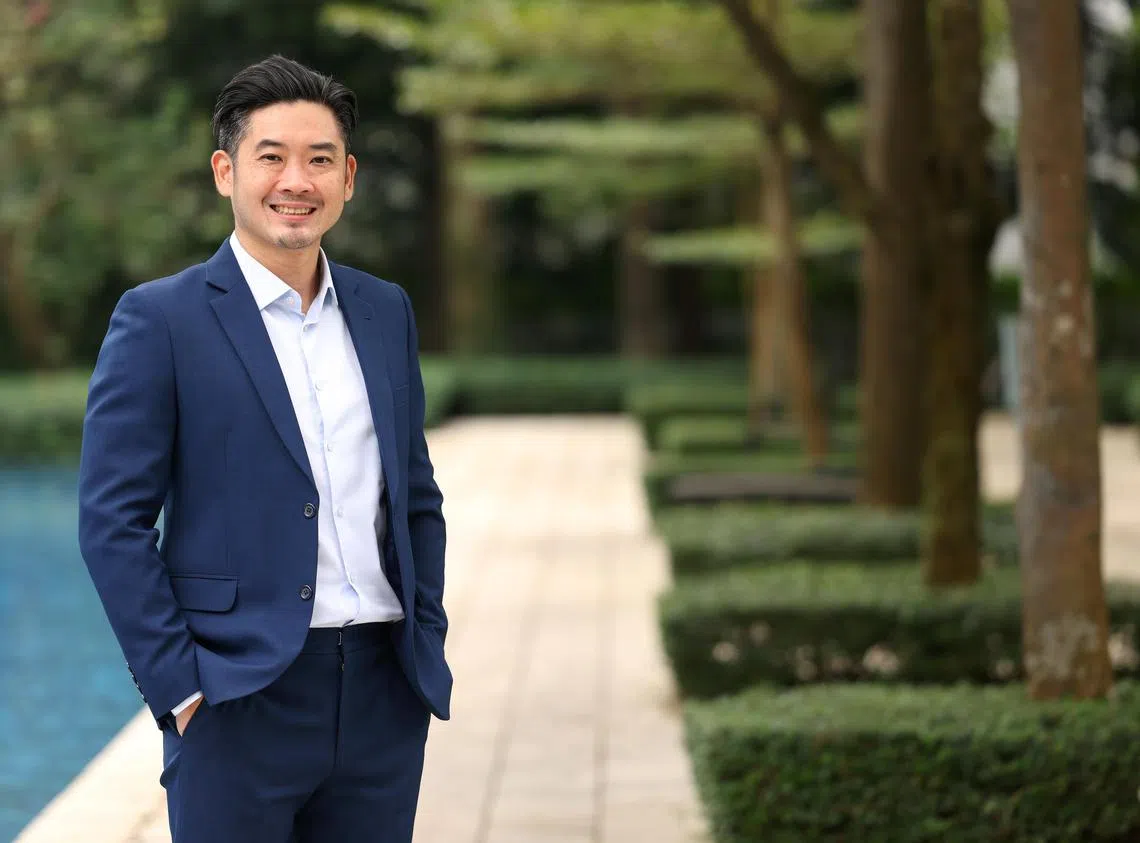
After spending five months raising more than S$500,000 in search capital from 14 investors, he launched Mission Kay Capital on Jan 10.
He hopes to acquire an SME with an annual revenue of S$10 million to S$30 million in Singapore or Malaysia by the end of 2026.
The prospects of this asset class are understandably attractive. As at end-2023, search funds generated an average return on investment of 4.5 times and an internal rate of return of 35.1 per cent, based on the Stanford GSB 2024 Search Fund Study.
Alternatives to the search fund model exist. There is the self-funded search, where searchers forgo raising the initial search capital and fund their operating expenses themselves, seeking out investors only when they have a ready target.
To date, only self-funded searches have been attempted in Singapore. In 2022, The Business Times reported on a niche group of Singaporean millennials who had acquired SMEs through this route.
The search ecosystem in Asia was “basically non-existent” three years ago, notes Tycen Bundgaard, a Singapore-based search fund investor.
“The first wave of searches in Asia, and in Singapore, almost needed to be entirely self-funded. This was because the idea of a traditional search fund – where someone raises capital first without having a business to buy – was very difficult for many investors to understand back then,” he says.
Asia’s maturing “search” ecosystem
Momentum has gathered since those early days.
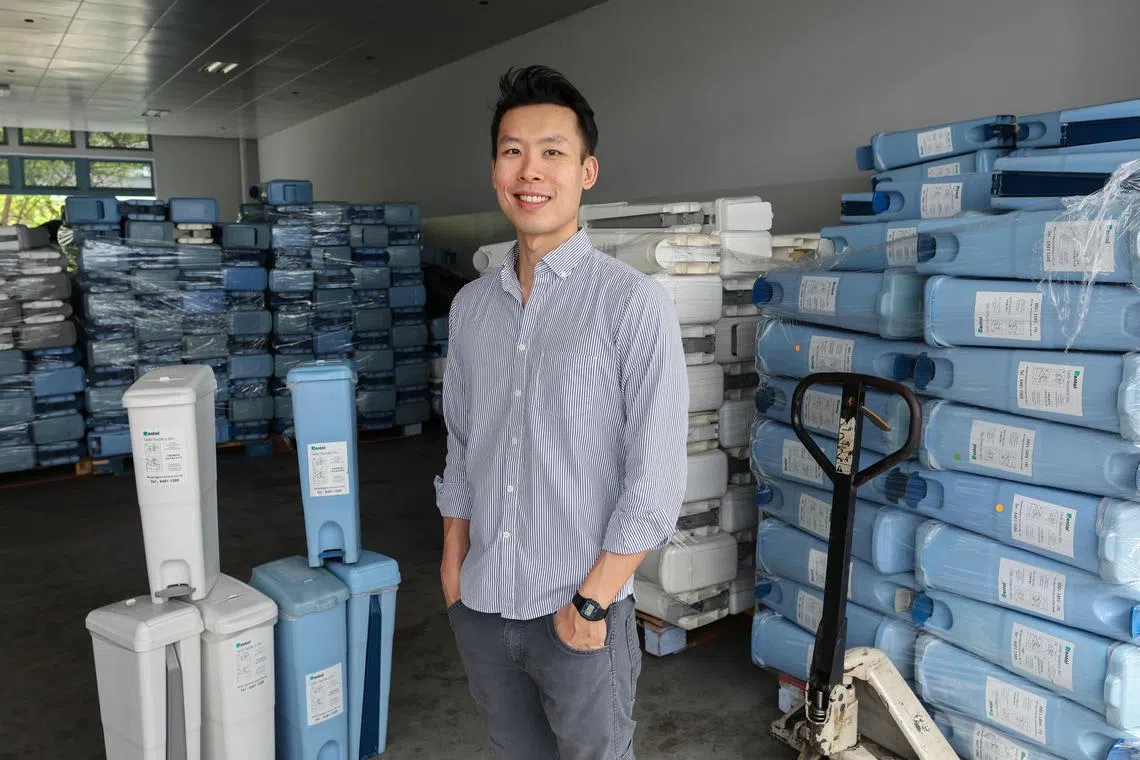
Today, entrepreneur Scott Lee – acknowledged by many as one of the first individuals to succeed at a self-funded search here – is approached by at least one Singaporean every month for advice on acquiring an SME. This is up from just four to five inquiries annually three years ago.
He acquired washroom care company Rental Hygiene Services in 2019, and has also invested in Garlic Equity Capital and Mission Kay Capital.
“ETA is the hottest thing right now,” says Lee, who estimates that there are currently at least eight or nine individuals actively searching for an SME to buy in Singapore.
Meanwhile, search fund investor Bundgaard now wants to lay the building blocks for a stronger search ecosystem, as he also sees opportunity in this space.
In December 2024, he set up investment fund Lighthaven – which bills itself as the first Asia-focused institutional search fund investor. It aims to provide long-term capital to both traditional search funds and self-funded searches across the region.
Bundgaard is currently backing seven traditional search funds in Asia with his personal capital. Besides Garlic Equity Capital and Mission Kay Capital, the list includes search funds in Malaysia, Taiwan, China and India. He is also mentoring four other self-funded searches across the region.
“Search is really starting to move in Asia,” says Bundgaard, who left his role as the CEO of the Les Amis Group of restaurants to work on Lighthaven full-time.
“That gave me the conviction to move from just doing personal investing to actually raising outside funds.”
To support more searchers, Lighthaven will hold its first close – where it secures enough committed capital from anchor investors to begin investing in the market – in the first quarter of 2025. Bundgaard has a target fund size of US$30 million and aims to deploy this to search funds over the next five years.
The plan is for Lighthaven to contribute between US$1 million and US$2 million to each new search fund, and take minority stakes in the businesses which are eventually acquired.

Another player facilitating ETA is Singapore-based mergers-and-acquisitions (M&A) marketplace Match.Asia, which sees search funds as an emerging buyer base for smaller deals in the market.
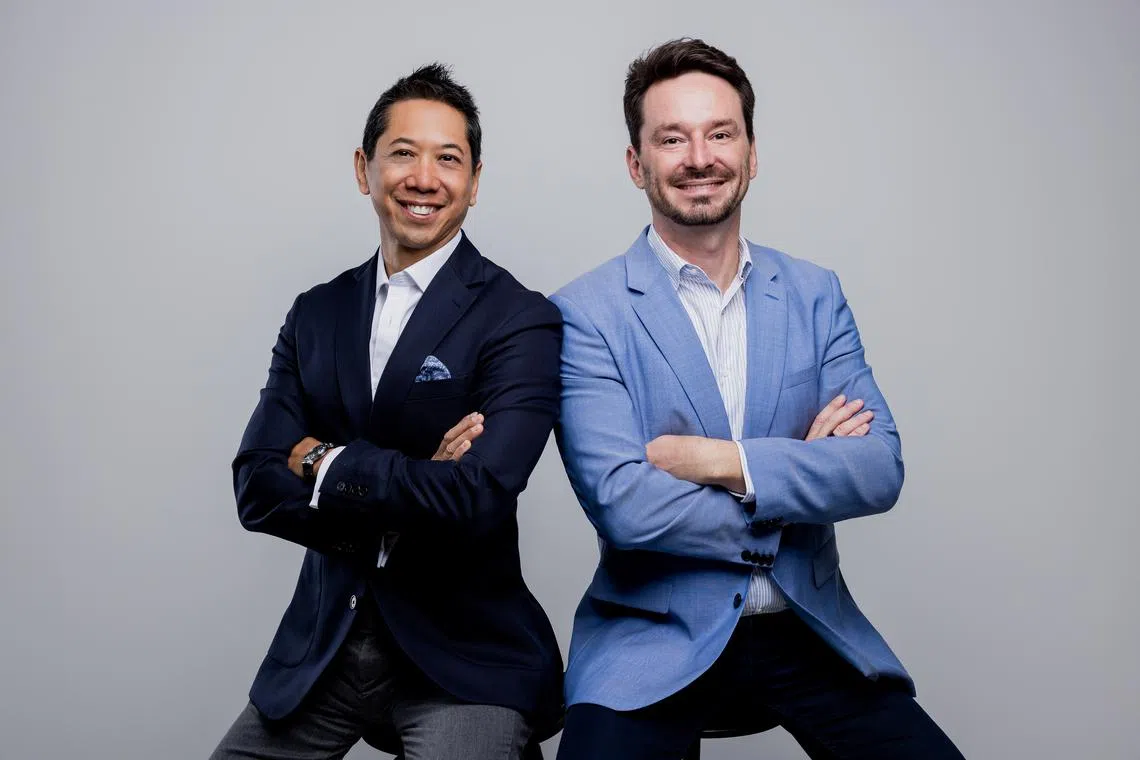
Launched in January 2024, the platform matches buyers and investors with businesses for sale across South-east Asia. It focuses on closing small-cap and mid-cap deals, an “underserved” segment of traditional M&A, says Match.Asia co-founders Marcus Yeung and Patrick Linden.
About 5 per cent of Match.Asia’s registered buyers based in South-east Asia are pursuing some form of ETA through an investment vehicle. This group tends to target companies valued under US$25 million.
The case for a traditional search fund
Though the traditional search fund model was uncharted territory in Singapore, both Goh and Cheng were drawn to it for one key reason – the opportunity to be mentored by a board of experienced investors, who are committed to seeing their searches succeed.
“Some of the investors on my (capitalisation) table have done so much M&A that they know exactly what to look out for in a deal… Only veterans with deep industry knowledge can provide such insights,” says Cheng.
It may appear odd to pay someone to look for a business to buy. But the rationale is ultimately an economical one, Goh explains.
Receiving a regular salary gives the searcher more time to find a “high-quality” deal that will generate good returns, rather than resort to panic-buying.
Says Goh: “My investors said to me: ‘At the end of the day, we don’t want you to feel like you’re falling into a deal because you’re hungry, or need to meet your lifestyle needs... It should be a deal you’re truly excited about.’”
Garlic Equity Capital and Mission Kay Capital share broadly similar parameters for their acquisition target. The company should be operating in a growth industry and have a strong and recurring revenue model. And chiefly, the owners should be looking to retire and step away from the business over time.
Still, there is no guarantee of a successful search, both in terms of an acquisition and financial gain.
IESE Business School’s 2024 study shows that about one in three international search funds fail to make an acquisition after concluding the search. Among those that succeed, one in three makes a loss.
“Of course there is a risk (of failure),” says Goh, who has spoken to 50 SMEs so far in his search. He neared closing a deal twice; both eventually fell through.
“But as an entrepreneur, you try to remove that bridge behind you. You don’t think about it – you just do the best you can.”
Solving succession woes
With more SME owners approaching retirement age, search funds and self-funded searches can serve as a viable solution for legacy businesses struggling to find successors.
The demand-supply dynamics for ETA appear favourable in theory. In reality, however, many SME owners are unfamiliar with the concept and resistant to selling their business to an outsider who lacks experience, says Lee.
“For these owners, it’s their legacy – they care about the business so much and want it to be in safe hands. So the less of a ‘brand name’ attached to the buyer, the more apprehension.”
But there are merits to selling one’s business to a search fund, instead of a conventional private equity (PE) fund.
In Goh’s case, he intends to “get his hands dirty” from Day One by being directly involved in the business’ day-to-day operations and steering it in the long run.
Search funds also have a longer investment horizon, giving entrepreneurs more room to unlock value in the business. On the other hand, PE funds are expected to maximise returns and exit the investment within three to seven years.
Match.Asia’s Yeung says: “We’ve met with some very good search funds that can offer a slightly different angle to traditional strategic or financial investors.
“They’re much more proactive. They are a little bit more entrepreneurial, and more empathetic towards the sellers. So for certain deals, search funds are a very good option.”
What’s next for Singapore?
Jake Nicholson, managing director of SMEVentures – an Australia-based search fund accelerator with an interest in the Asia-Pacific – is eagerly watching out for developments in Singapore’s search ecosystem.
To date, SMEVentures has supported search funds only in Australia and New Zealand – markets that already see a material volume of ETA activity.
While Nicholson is not ruling out expanding to Singapore in the future, awareness of ETA in the Republic remains relatively low.
“There needs to be a sufficient volume of entrepreneurs here wanting to do this before we can decide to confidently devote more resources to the market,” he says.
Another big question is ease of financing from Singapore’s banks to fund ETA-type acquisitions, due to unfamiliarity with the asset class, he notes.
Most ETA transactions are funded by a combination of debt and equity. In the US, searchers can apply for small business administration loans to fund their acquisition, up to 80 to 90 per cent of the loan amount.
Says Nicholson: “In Australia, for instance, we see banks starting to compete with each other to participate in these types of ETA deals.
“So if we had, say, DBS, OCBC or other banks come up to say that they’re interested (in playing) a part in small ETA-type acquisitions and are willing to offer searcher-friendly terms, that could give us more impetus to pay attention to Singapore.”

The launch of Singapore’s first traditional search funds could pave the way for more aspiring entrepreneurs to take a stab at ETA.
But more public education on the search model and mentor-investors are needed before search funds can find success here, says Bundgaard.
“We don’t want the floodgates to open. It’s not a success to me if, say, 30 searchers enter the Singapore market in the next year, because they wouldn’t be able to receive enough support from people familiar with the search model.
“So there is big potential in Singapore, but it’s going to take some time.”
More resources are already on their way.
On Jan 20, Insead launched an online ETA and search funds hub for aspiring entrepreneurs, investors and business owners keen on learning more about these strategies.
The hub will also facilitate matching stakeholders, who can fill in their contact details in a form on the webpage, says Insead Associate Professor Ivana Naumovska, who is also the hub’s academic director.
As part of the hub’s long-term initiatives, Insead plans to organise more educational and networking events on ETA both on and off its campuses. The next edition of the business school’s ETA conference is set to be held for the first time in Singapore, either in the second half of this year, or 2026.
Says Bundgaard: “The fact that the search model has been carried out 1,000 times across other markets – it’s crazy to me that it’s not bigger here. We need to make that change.”






